Your EV battery plays a central role in your vehicle’s driving range, performance, and long-term reliability. Unlike routine engine maintenance, battery health depends largely on how the vehicle is charged, driven, stored, and managed over time.
The good news is that extending EV battery life does not require complicated routines. By understanding the right charging habits, protecting the battery from excessive heat, and following your manufacturer’s recommendations, you can reduce unnecessary battery degradation and help maintain dependable performance for longer.
In this guide, we’ll look at the practical ways to care for your EV battery, from everyday charging and temperature management to driving habits, long-term storage, and professional battery checks.
Table of Contents
Keep Your EV Battery Within a Healthy Charging Range
How you charge your EV on a regular basis can have a direct impact on how well its battery performs over time. For everyday driving, keeping the battery away from prolonged periods at either a very high or very low charge level can help reduce unnecessary stress on the cells. Many manufacturers therefore recommend a moderate charging limit for routine use rather than charging to 100% every day.
The exact limit, however, is not the same for every EV. Tesla and Ford commonly recommend around 80–90% for regular use, while Volkswagen recommends an 80% limit for many IDs. models. Hyundai also advises avoiding very low charge levels, particularly below 20%. If your EV uses an LFP battery, such as certain Tesla models, the recommended routine can be different, with Tesla advising regular 100% charging for battery-management-system calibration.
The practical approach: use your vehicle manufacturer’s recommended charging limit for everyday driving, and reserve a full charge for journeys that genuinely require the extra range. This simple habit can help you maintain battery health without unnecessarily changing how you use your EV.
Protect the Battery From Excessive Heat
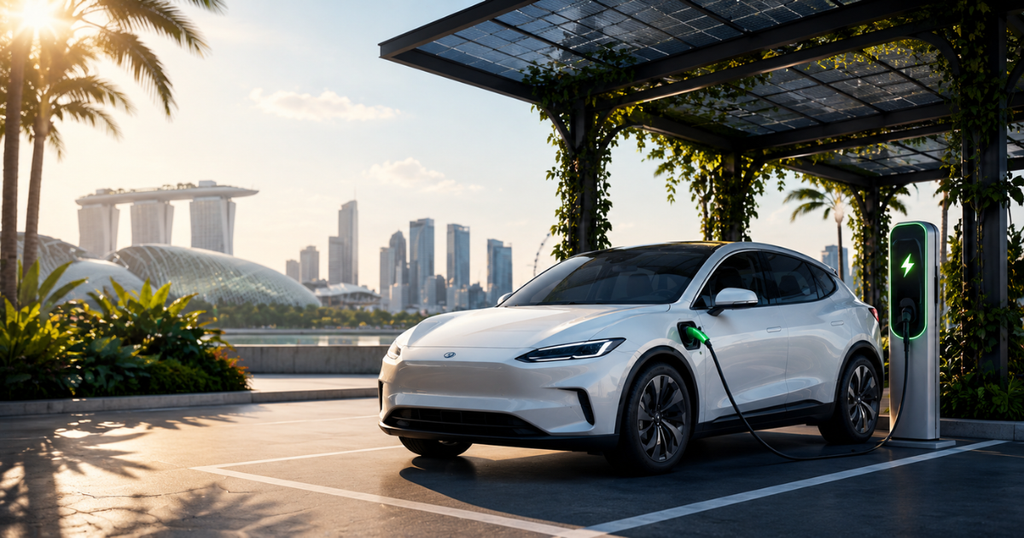
Singapore’s hot and humid climate makes temperature management an important part of EV battery care. High temperatures can affect battery performance and place additional demand on the vehicle’s thermal-management system. Whenever possible, park in a shaded or covered area, especially when the vehicle will remain parked for several hours.
Your EV is designed to manage battery temperature automatically, so you do not need to control it manually. During charging or before a fast-charging session, the vehicle may heat or cool the battery to bring it closer to its optimal operating range. Tesla, BMW and Ford all provide battery-conditioning functions for this purpose.
Practical tip: Avoid unnecessary exposure to direct heat, and use your vehicle’s battery pre-conditioning or thermal-management features when available. If you regularly notice unusual charging behaviour, reduced performance or battery-related warnings, a professional EV inspection can help identify whether the battery or its thermal-management system requires attention.
Choose the Right Charging Method for Everyday Use
For daily driving, AC charging is usually the best option. Level 2 charging at home or work provides a steady charge without the high power and heat associated with frequent DC fast charging.
Fast charging is useful when you are travelling or need extra range quickly, but it does not need to be your everyday routine. Frequent high-power charging can put more heat and stress on the battery over time.
You also do not need to charge after every short trip. Follow your EV manufacturer’s recommended charge limit and charge based on your actual driving needs. Use AC charging for everyday use and keep DC fast charging for when you really need it.
Prepare Your EV Before Long-Term Storage
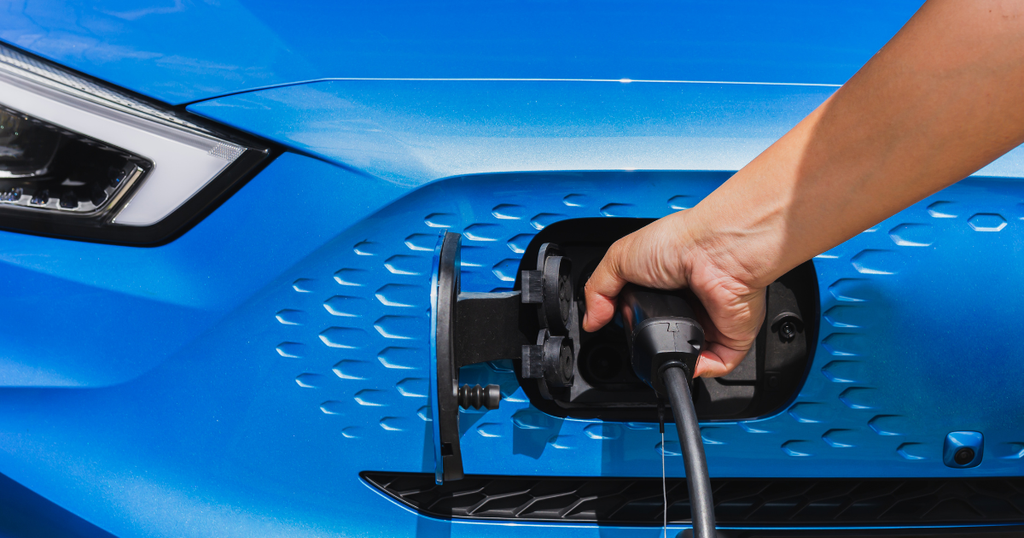
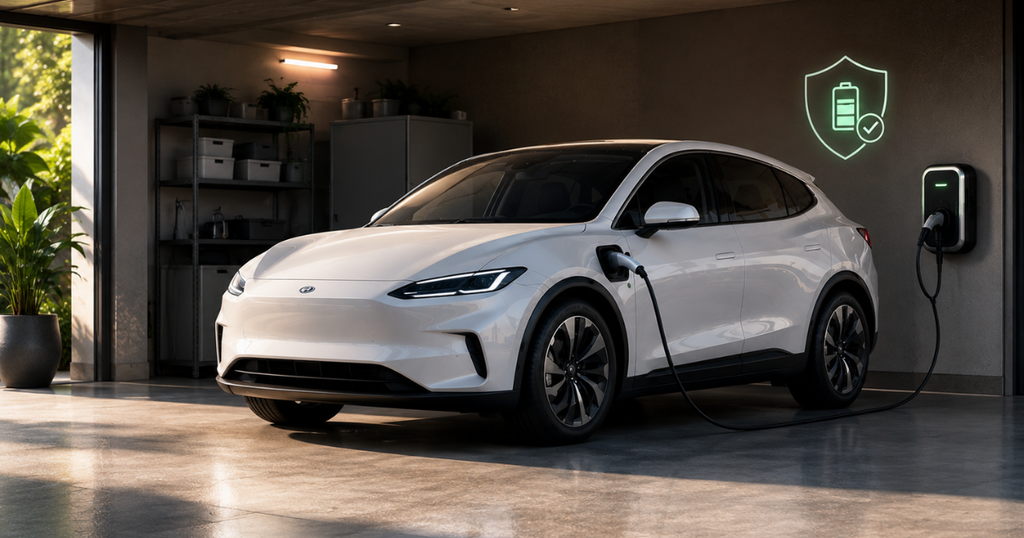
If you plan to leave your EV unused for several weeks, preparing it properly beforehand can help protect the battery and prevent unnecessary energy loss while it is parked. Avoid leaving the battery at 100% or close to empty for a long period; for many EVs, keeping it around 50% to 60% charge is a practical storage level, although your vehicle manufacturer’s recommendation should always take priority. Park the car in a cool, covered or shaded location where possible, as prolonged heat exposure can place additional demand on the battery’s thermal-management system.
If your EV manufacturer recommends leaving the vehicle plugged in during extended storage, this can allow the car to use external power for functions such as battery monitoring and temperature management instead of drawing unnecessarily from the main battery. Before leaving, check the charge level, confirm any recommended storage or charging settings, and make sure the vehicle is protected from excessive heat. These simple preparations can help reduce unnecessary battery drain and make sure your EV is ready to drive when you return.
Adjust Your Driving Habits to Reduce Battery Stress
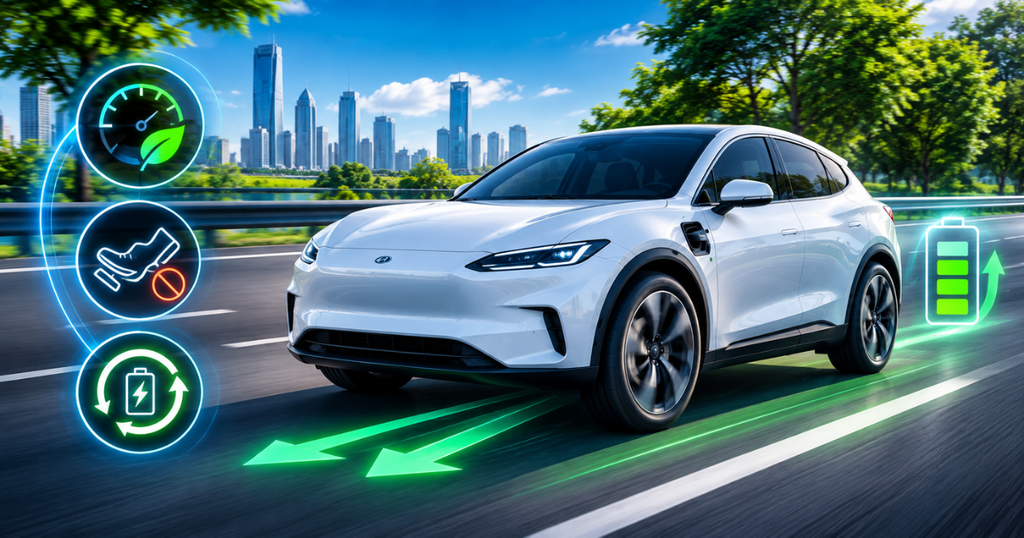
The way you drive can also affect how quickly your EV uses energy. Smooth acceleration, steady speeds, and avoiding unnecessary hard braking can help reduce sudden power demands and improve overall efficiency. When suitable for your vehicle, regenerative braking or one-pedal driving can recover some energy during deceleration and return it to the battery instead of losing it as heat through the conventional brakes. You do not need to drive unusually slowly; the goal is simply to avoid repeated aggressive acceleration and sudden changes in speed. Over time, these small changes can make your battery work more efficiently while helping you get more useful range from each charge.
Keep Your EV’s Battery Management Software Updated
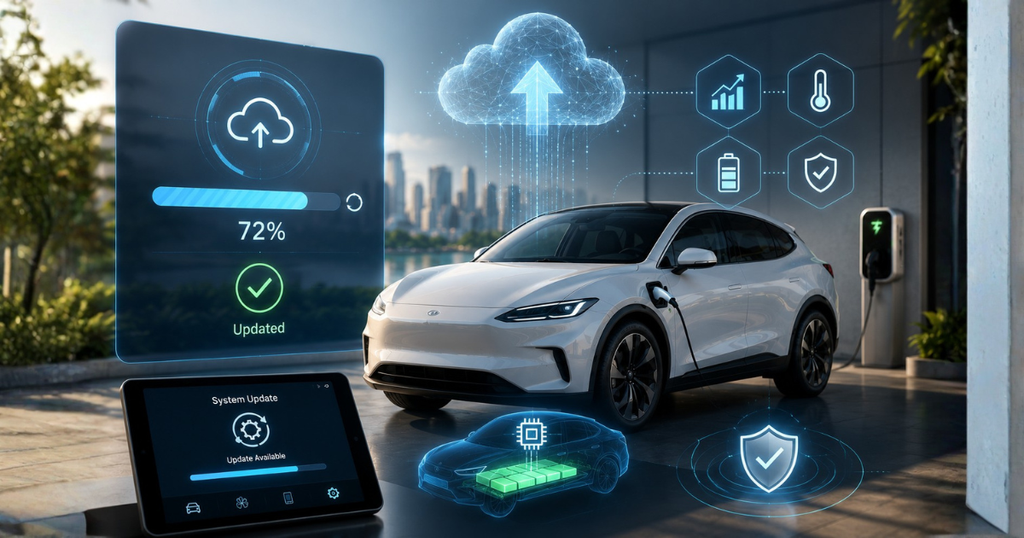
Your EV’s battery is managed by software that constantly monitors important factors such as charging, temperature, battery condition, and energy use. Manufacturers can improve these systems through over-the-air (OTA) software updates, which may refine battery-management and charging functions as the vehicle receives newer software.
For EV owners, keeping the vehicle’s software up to date is therefore a simple part of battery care. Check for available updates through your vehicle’s normal system and install them according to the manufacturer’s instructions. If you notice unusual charging behaviour, unexpected range changes, or a battery warning after an update, it is worth having the vehicle professionally diagnosed rather than assuming the issue is only software-related.
Regular software updates do not replace physical battery maintenance, but they help ensure that the vehicle’s battery management system (BMS) is operating with the latest manufacturer-supported settings and functions.
Know When Your EV Battery Needs a Professional Check
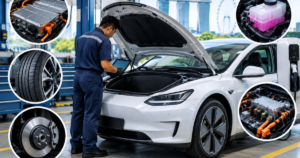
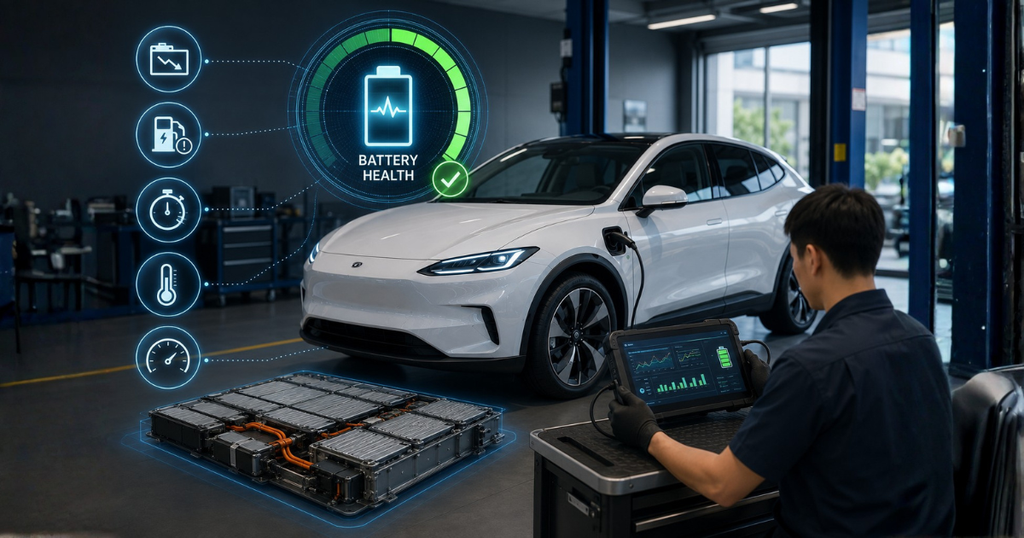
Not every change in driving range means there is a problem with your EV battery. However, a noticeable and repeated drop in range, unusual charging behaviour, longer charging times, unexpected battery warnings, or a sudden change in performance should not be overlooked. These signs may come from the battery itself or from other parts of the charging and thermal-management systems, so it is important to identify the actual cause rather than simply guessing.
A professional battery check can give you a clearer picture of the battery’s condition, including its State of Health (SOH), through suitable diagnostic equipment. At Motoserv, this type of assessment can be particularly useful when buying a used EV, planning long-term ownership, or noticing changes that continue despite normal charging and driving habits. Checking the issue early can help you understand the vehicle’s actual condition, identify potential problems before they become more serious, and make a more confident decision about the next step.
How Long Does an EV Battery Last?
An EV battery is built to last for many years, but its lifespan depends on the vehicle, battery chemistry, climate, charging habits, and how the car is used. Recent real-world data from more than 22,700 EVs found an average battery degradation rate of around 2.3% per year, with modern EV batteries generally expected to remain useful beyond the normal service life of the vehicle.
Instead of waiting for the battery to suddenly fail, think of its life in terms of gradual capacity loss. As the battery ages, the maximum driving range may slowly decrease. Keeping the battery away from prolonged extreme temperatures, relying mainly on regular AC charging, and following the manufacturer’s charging recommendations can help slow unnecessary degradation. If you want to know how your own EV battery is performing, a professional State of Health (SOH) check can give you a more accurate picture than judging battery condition from range alone.
A Practical EV Battery Care Routine for Singapore Drivers
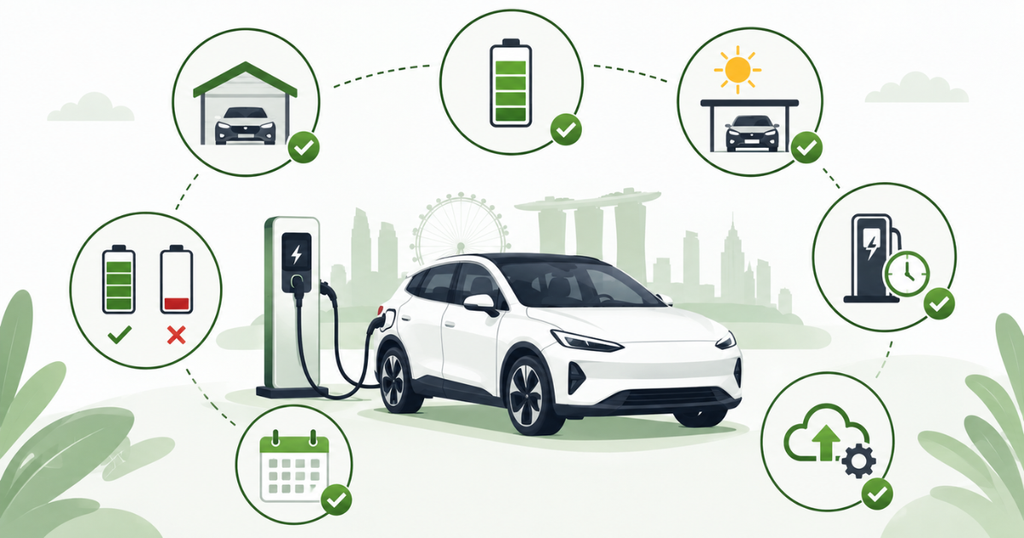
For EV owners in Singapore, battery care can be kept simple: use AC charging for regular driving, follow your vehicle’s recommended charging limit, and avoid leaving the battery at very high or very low charge for long periods. Where possible, park in a sheltered or shaded location to reduce prolonged heat exposure, use DC fast charging when you genuinely need a quick recharge, and keep the vehicle’s software updated so its battery-management system can operate with the latest manufacturer settings. If the EV will be unused for several weeks, prepare the battery before storage rather than leaving it almost full or nearly empty. These practical habits can help reduce unnecessary battery stress while keeping your EV reliable for everyday driven.
When to Get Your EV Battery Health Checked
You do not need to check your EV battery after every service, but certain changes are worth paying attention to. If you notice a consistent drop in driving range, slower-than-usual charging, unexpected battery warnings, unusual power delivery, or changes in charging behaviour, it is a good time to have the battery assessed. A professional check can also be useful before buying a used EV, especially when the battery’s condition is an important part of the vehicle’s value.
A battery health assessment can look at the battery’s State of Health (SOH) and use diagnostic information to understand how the battery is performing. At Motoserv, this type of EV battery assessment can help identify potential issues and give owners a clearer picture of the battery’s condition. Checking early can provide peace of mind and help you decide whether the vehicle simply needs monitoring or requires further attention.
Professional EV Battery & Vehicle Service in Singapore
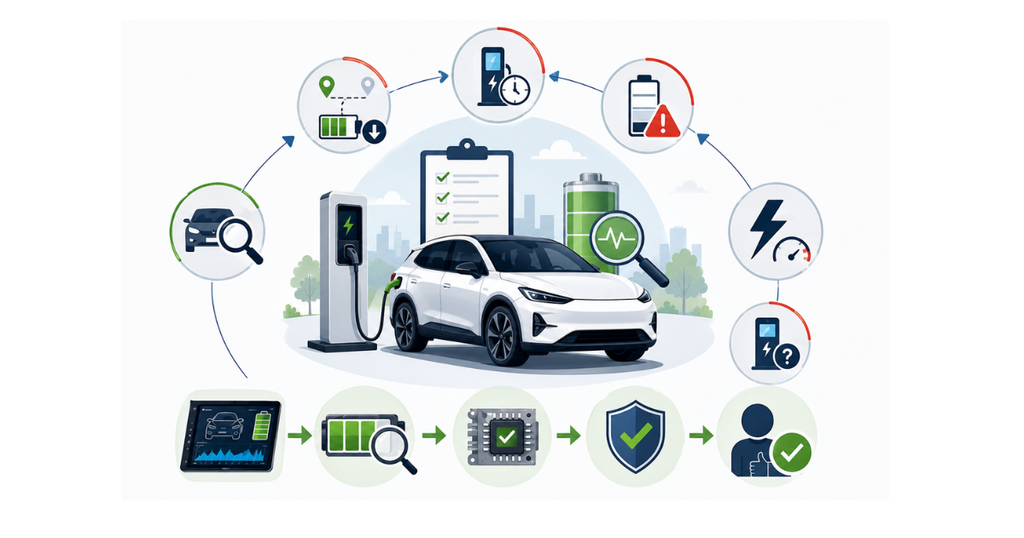
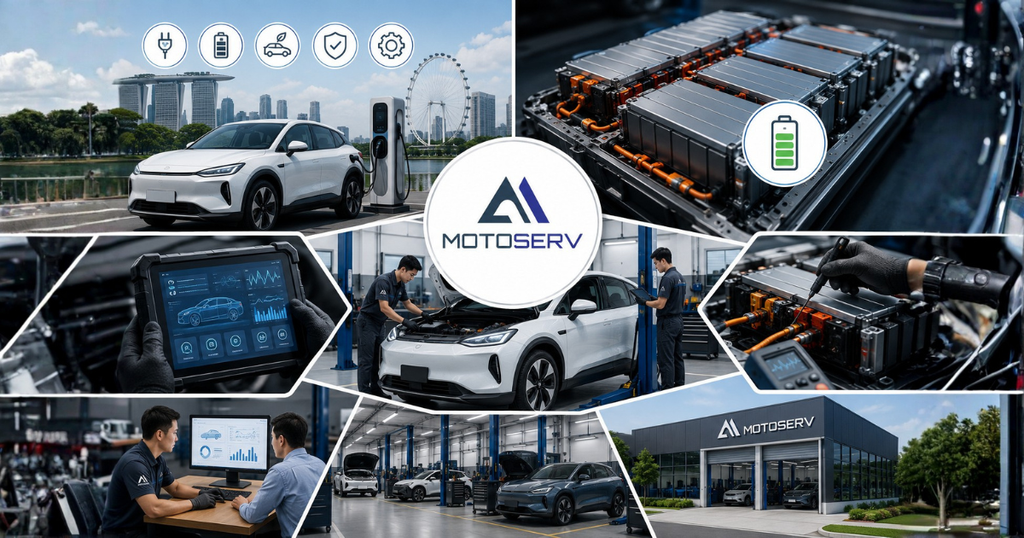
When an EV needs more than routine charging care, it is important to choose a workshop with the right EV knowledge, diagnostic equipment, and trained technicians. Motoserv provides Hybrid & EV servicing, diagnostics and repair across its Singapore workshop network, with technicians who have completed Hybrid/EV Service & Repair training with IMI (UK). Its EV battery assessment can also include a State of Health (SOH) analysis, battery health report, and professional diagnostic testing to give you a clearer view of the battery’s condition.
For owners who need an EV battery check or vehicle service, Motoserv has multiple locations across Singapore, and appointments are recommended to reduce waiting time, although walk-ins are accepted subject to workshop availability. You can contact the team at +65 6264 3832 or info@motoserv.sg to discuss your vehicle and arrange a suitable visit.
Keep Your EV Battery Healthy for the Long Term
Looking after an EV battery does not have to be complicated. The right charging routine, sensible driving, protection from excessive heat, and proper storage can all help reduce unnecessary battery wear over time. But when you notice changes in range, charging or performance, it is better to understand what is happening rather than rely on assumptions.
If you want a clearer picture of your EV battery’s condition, Motoserv can help with professional EV battery health checks, diagnostics and servicing in Singapore. A battery assessment can provide useful information about its current condition and help you decide what needs attention next.
Want to know how your EV battery is performing? Contact Motoserv to arrange a professional battery health check.