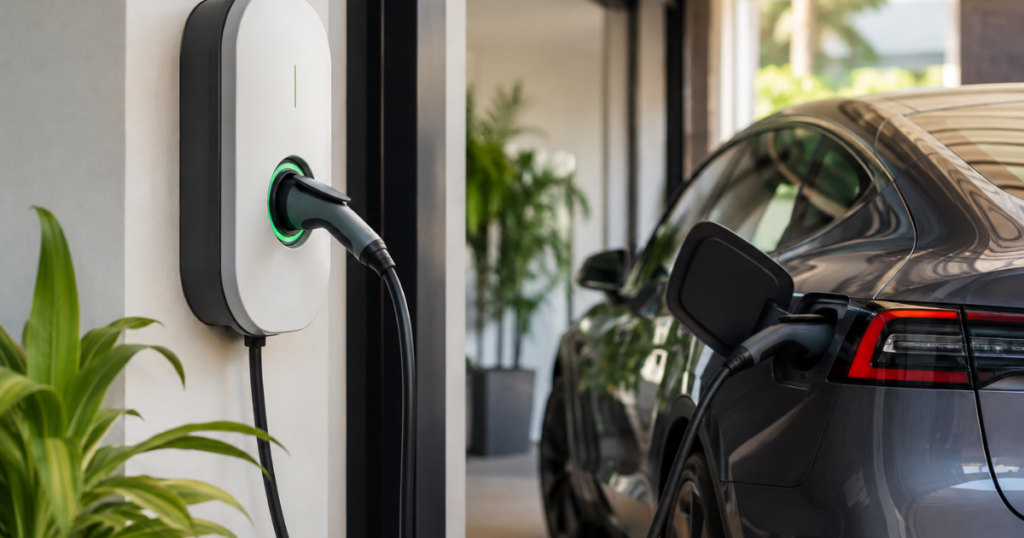
Singapore’s EV charging rules have moved into a new stage with SS 722, which took effect on 1 April 2026 and replaced the previous TR 25 framework as the national standard for EV charging systems. The change brings updated requirements for the design, installation, maintenance and operation of charging systems, while also covering newer technologies such as wireless charging and mobile charging.
For a homeowner, however, the most useful question is not simply what SS 722 means. It is whether an existing home charger needs to be checked, what records should be kept, and what to do if the charger is no longer working as it should.
What Has Changed from TR 25 to SS 722?
SS 722 builds on the earlier TR 25 requirements rather than starting from scratch. It expands the standard to cover areas such as wireless and low-powered charging, DC charging, battery swapping and mobile charging systems. It also introduces updated requirements covering areas such as charging-system communications, temperature control and cable insulation.
If you already have a charger that was type-approved under the earlier TR 25 requirements, you do not need to have it re-certified to SS 722 simply because the new standard has taken effect. LTA has provided a two-and-a-half-year transition period before SS 722 compliance becomes mandatory for new chargers.
Does My Home EV Charger Need an Inspection?
Yes, EV chargers in use in Singapore are subject to periodic inspection and maintenance. The exact requirement depends on where the charger is installed. This is important because a private charger at a landed home does not necessarily follow the same inspection schedule as one installed in a shared car park.
The responsibility normally sits with the charger owner or Registered Responsible Person (RRP). They must make sure the required inspections are completed by the appropriate qualified personnel and that the relevant records are kept.
How Often Should an EV Charger Be Inspected?
The inspection schedule is based on the access classification of the charging location:
| Charger Location | Inspection by Equipment Specialist | Inspection by LEW |
| Restricted Access | Every 24 months | — |
| Non-Restricted Access | Every 6 months | Every 12 months |
A restricted-access location generally includes a parking space within or connected to a landed dwelling-house, while non-restricted access covers other locations. If you are unsure how your charger is classified, it is better to confirm the classification rather than assume that the landed-home schedule applies.
EV Charger Compliance Checklist for Homeowners
| Check | What to Confirm |
| Registration | Make sure the charger has been registered with LTA and the required registration information is available. |
| Approved Installation | Fixed chargers should be installed and certified by the required qualified personnel. |
| Inspection | Follow the inspection schedule that applies to the charger’s location. |
| Documentation | Keep the Certificate of Fitness and later Certificates of Continued Fitness. |
| Maintenance | Deal with faults, damage or unusual charging behaviour rather than continuing to use a charger that may need attention. |
Keeping these details in order makes it easier to show that the charger has been properly managed. LTA states that Certificates of Fitness and subsequent Certificates of Continued Fitness must be retained for at least two years and provided to LTA if requested.
What Happens If Your EV Charger Is Not Properly Maintained?
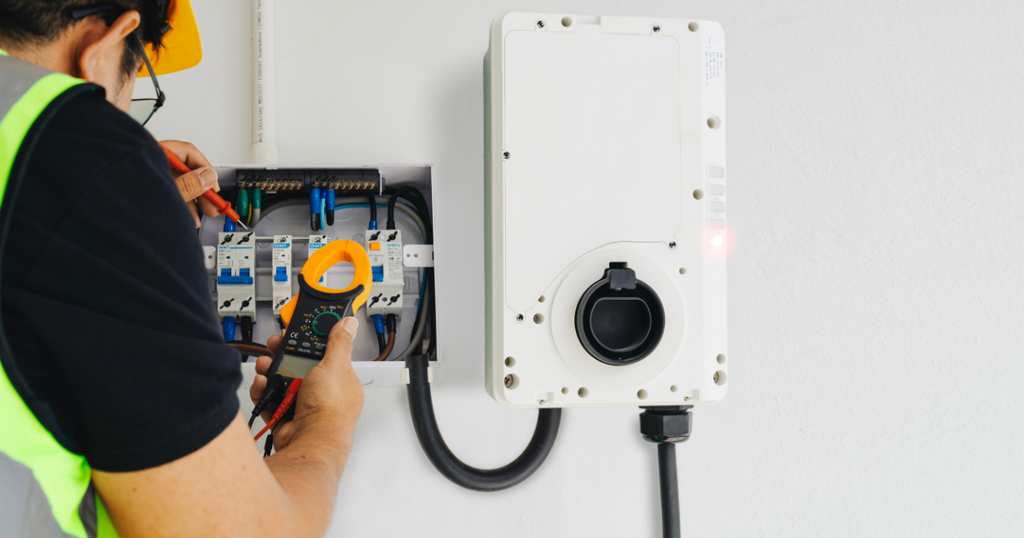
A charger that is left without the required inspection or maintenance can become a safety and compliance concern. Problems may also go unnoticed when changes in charging behaviour, damaged components or other faults are ignored. If the charger shows signs of a fault, it is better to have it checked by qualified personnel instead of trying to repair electrical parts yourself. LTA requires periodic inspection and maintenance to be carried out by qualified personnel.
When Should You Get Your EV Charger Checked?
You do not always have to wait for the next scheduled inspection if something seems wrong. A professional check is worth considering when the charger starts behaving differently from normal, charging becomes unreliable, or you notice physical or electrical problems.
| Sign to Watch For | Possible Concern |
| Charging keeps stopping | The charging system may need to be checked. |
| Charging takes unusually long | There may be an issue affecting normal charging performance. |
| Cable or connector damage | Physical damage should be assessed before continued use. |
| Unusual operation | Unexpected sounds, display problems or other abnormal behaviour should not be ignored. |
The aim is simple: identify a problem early rather than waiting for it to become a bigger issue.
Professional EV Service and Maintenance in Singapore
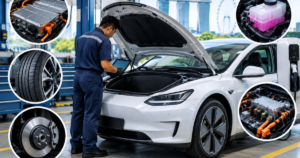
An EV needs more than a working charger. Its battery, charging-related components and other vehicle systems also need suitable maintenance as the vehicle gets older. Professional EV servicing can help identify developing problems and keep the vehicle in good working condition. For owners looking for further support, our Electric Vehicle and Van Service & Maintenance service is a natural next step for EV-related maintenance.
What Should You Do If You Are Unsure About Your Charger?
If you are not sure whether your charger is registered, when it was last inspected, or which inspection schedule applies, start by checking the charger’s records rather than guessing. Look for the installation and certification documents, confirm the inspection history, and arrange an assessment with the appropriate qualified professional if anything is missing or unclear.
This is especially useful for homeowners who have taken over an existing property and may not have the complete history of the charger.
Frequently Asked Questions About SS 722
SS 722 is Singapore’s updated national standard for EV charging systems and replaces TR 25 from 1 April 2026. An existing charger that was already type-approved under TR 25 does not automatically need re-certification because of the change, while the new standard applies to new chargers after the transition arrangements. Inspection is still required during the charger’s use, with the frequency depending on whether the installation is in a restricted- or non-restricted-access location. The required inspection must be carried out by the appropriate qualified person, such as an Equipment Specialist or Licensed Electrical Worker (LEW), according to the applicable requirement.
Keeping Your EV Charger Ready for Everyday Use
SS 722 may sound like a technical change, but for most homeowners the practical steps are straightforward: know whether your charger is properly registered, understand its inspection schedule, keep the relevant certificates, and act when something does not look or work as expected. Keeping these basics in order can make EV charging safer and give you a clearer record of how the system has been maintained.