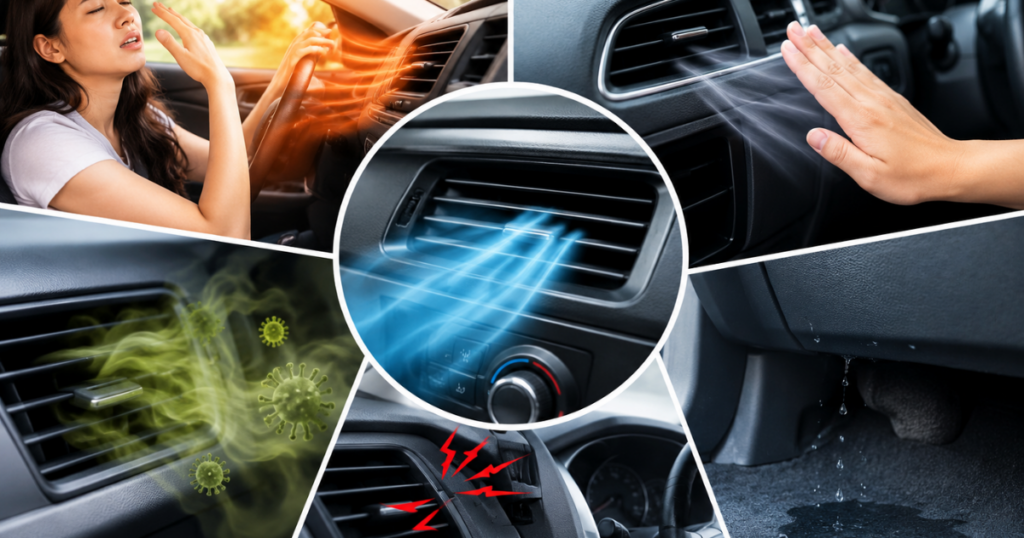
Singapore’s hot and humid climate means your car’s air-conditioning system works hard throughout the year, making it important to pay attention to early signs of trouble. Small aircon problems can affect cooling performance and comfort and may become more difficult to resolve if ignored. Common warning signs include warm or hot air, weak airflow, unpleasant or musty smells, unusual noises, and water leaking inside the cabin. These symptoms can indicate different problems within the air-conditioning system, so recognising them early can help you understand when your car needs professional attention and prevent a minor issue from developing into a bigger problem.
Table of Contents
Warm or Hot Air from the Vents
Warm or hot air coming from the vents is one of the clearest signs that your car’s air-conditioning system may not be working properly. A common cause is low refrigerant caused by a leak, but the problem can also come from a failing compressor, a restricted or faulty expansion valve, or an electrical fault affecting the system. Simply topping up the refrigerant may provide temporary cooling, but it will not fix the underlying problem if there is a leak or another component fault. Continuing to run the system without identifying the cause can also place additional strain on the aircon components. If the aircon is blowing warm air, especially when the problem continues or appears repeatedly, the system should be properly inspected to identify the actual fault rather than relying only on a refrigerant top-up. A professional inspection through MotoServ’s Car Aircon Service Package can help determine the cause and the appropriate repair.
Weak Airflow from the Vents
Weak airflow is different from cold air: the air coming from the vents may still feel cold, but there is not enough air reaching the cabin. This can happen because of a clogged cabin air filter, a dirty evaporator restricting airflow, a problem with the blower motor, a faulty blower motor resistor, or ice forming on the evaporator. Reduced airflow should not be ignored because the underlying problem can affect the aircon’s overall performance and make it harder to maintain comfortable cabin temperatures. If the airflow has become noticeably weaker, is inconsistent, or continues to reduce even when the aircon is running normally, the system should be inspected to identify the cause before the problem becomes more difficult to resolve.
Musty or Unpleasant Aircon Smells
A musty, sour, or unpleasant smell from the aircon can develop when moisture remains around the evaporator, creating a suitable environment for dirt, mould, bacteria, and other contaminants to build up inside the system. Because the evaporator handles moisture as part of the cooling process, accumulated dirt and moisture can contribute to unpleasant odours being carried into the cabin through the vents. Using an air freshener or another product to mask the smell may make it less noticeable for a short time, but it does not remove the contamination causing the odour. If the smell continues or returns after basic cleaning, the evaporator and related aircon components should be inspected, and professional evaporator cleaning or servicing may be required to address the source of the problem.
Strange Noises When the Aircon Is Turned On
New or unusual noises when you switch on the car aircon should not be treated as normal, especially if the sound becomes louder or continues during operation. A high-pitched squealing noise can point to a belt or pulley-related issue, while rattling or clunking sounds may be associated with the compressor clutch, mounting, or compressor components. A grinding or growling noise can indicate a more serious problem involving the compressor or its bearings. Because these sounds can indicate mechanical wear or a component beginning to fail, ignoring them may allow the problem to become more serious. If the noise is loud, persistent, or accompanied by a change in cooling performance, it is best to switch off the aircon and have the system inspected before continuing to use it.
Water Leaking Inside the Cabin
Water dripping underneath a car after using the aircon can be a normal result of condensation, but water appearing inside the cabin is not. During normal operation, moisture collected around the evaporator is carried away through the aircon’s condensate drain and released outside the vehicle. If this drainage path becomes blocked or develops a problem, water can instead collect inside the cabin and appear around the footwell, carpets, or floor mats. Wet carpets or mats are clear signs that the issue should be checked rather than ignored. Prolonged moisture can leave the interior damp and may eventually affect interior materials or nearby electrical components. If you notice repeated water leakage inside the cabin, especially after using the aircon, a professional inspection is recommended to identify and correct the source before further damage occurs.
What These Warning Signs Can Tell You
A single warning sign does not always point to one specific failed component because different aircon problems can produce similar symptoms. For example, reduced cooling, weak airflow, or unusual operation may have more than one possible cause, which is why proper diagnosis is important. A technician can begin with a visual inspection and then check the air temperature and airflow from the vents, followed by refrigerant and overall system checks. Electrical components can also be tested, while the drainage system and evaporator may need inspection when airflow, smell, or water leakage is involved. This step-by-step approach helps identify the actual source of the problem instead of only treating the visible symptom, allowing the correct repair to be carried out.
Why Early Aircon Servicing Can Prevent Bigger Repairs
Small aircon faults are often easier to address when they are identified early, while leaving a developing problem unattended can allow other parts of the system to be affected. Not every issue requires a component replacement; depending on the condition of the system, the right solution may be simple cleaning, routine servicing, a specific repair, or replacement of a damaged component. Cleaning mainly removes accumulated dirt and contaminants, servicing checks and maintains the system, repairs address a specific fault, and replacement is considered when a component can no longer work reliably. Identifying the problem at an early stage can help determine the right solution sooner, avoid unnecessary work, and keep repair costs more manageable.
When Should You Get Your Car Aircon Checked?
You should have your car aircon checked when you notice warm air, a significant reduction in airflow, persistent unpleasant smells, new or unusual noises, or water appearing inside the cabin. Intermittent problems that keep returning are also worth investigating, even if the system seems to work normally again afterward. These signs can indicate an underlying issue that may become more difficult to resolve if it is left unattended. Getting the system checked while the problem is still developing gives a technician an opportunity to identify the cause and recommend the appropriate solution before the aircon stops working completely, helping you avoid unnecessary disruption and potentially more extensive repairs.
Professional Car Aircon Service in Singapore
When your car aircon is not performing as it should, professional servicing is about more than simply adding refrigerant or treating the most noticeable symptom. MotoServ focuses on checking the air-conditioning system to understand what is actually causing the problem and what type of service or repair is appropriate. This approach helps avoid unnecessary part replacement and ensures that the underlying issue is properly addressed. Depending on the condition of the system, professional servicing may involve checking the relevant aircon components, system performance, and areas that could be affecting cooling, airflow, or overall operation. MotoServ’s Car Aircon Service Package provides a dedicated option for drivers who want their vehicle’s air-conditioning system professionally assessed and serviced.
FAQs
Why is my car aircon blowing warm air?
Warm air can be caused by low refrigerant, a refrigerant leak, compressor problems, an expansion valve fault, or an electrical issue. A proper inspection is needed to identify the actual cause.
Why is my car aircon airflow weak?
Weak airflow may result from a clogged cabin filter, dirty evaporator, blower motor problems, a faulty resistor, or evaporator icing. Professional inspection can help locate the source.
Why does my car aircon smell bad?
Bad smells can develop when moisture, dirt, mould, or bacteria build up around the evaporator. Cleaning the affected components can help remove the source rather than simply masking the smell.
Why is water leaking inside my car when the aircon is running?
Water inside the cabin can indicate a blocked or faulty condensate drain, preventing normal drainage from the aircon system. The drainage system should be inspected and corrected.
Why does my car aircon make noise when I turn it on?
Unusual noises may be related to the belt, pulley, compressor clutch, mounting, compressor, or bearings. The system should be checked if the noise is new or persistent.
Should I keep using my car aircon if it is making a grinding noise?
It is better to switch off the aircon and have it inspected, as grinding or growling noises can indicate a mechanical problem that may worsen with continued operation.
How often should I service my car aircon?
There is no single interval for every vehicle, but regular inspection is recommended, especially when cooling performance or system operation changes.
Conclusion
Your car aircon plays an important role in keeping your drive comfortable, especially in Singapore’s hot and humid climate. Changes in cooling performance, airflow, smell, noise, or water drainage should not be ignored, as they can indicate an underlying issue that needs attention. Getting the system checked early can help identify the actual cause and prevent a developing problem from becoming more difficult to resolve. If you notice any changes in your car aircon, contact MotoServ for professional inspection and servicing to keep your air-conditioning system working reliably.