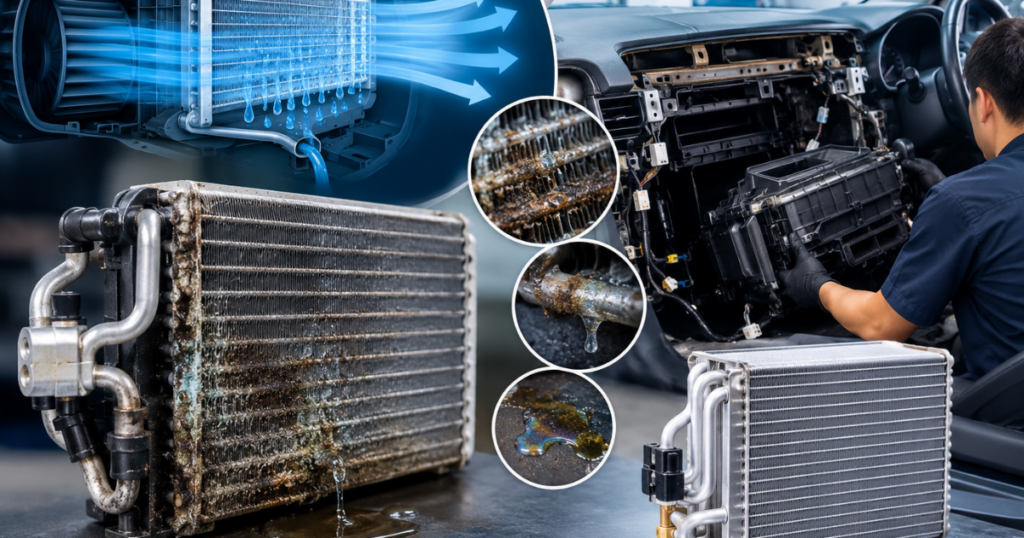
A cooling coil, also known as an evaporator, is a key component of your car’s air conditioning system that removes heat and moisture from the cabin air to produce cool, comfortable airflow. Over time, moisture, dust and debris around the evaporator can contribute to corrosion and eventually cause small leaks, allowing refrigerant to escape and gradually reducing cooling performance. Because the cooling coil is located deep inside the HVAC housing behind the dashboard, replacing a leaking evaporator is considerably more involved than a routine air conditioning service and may require substantial interior disassembly before the faulty component can be accessed. Understanding the signs of a leaking cooling coil, how the problem is diagnosed, and what replacement involves can help you make an informed decision before the repair begins.
Table of Contents
- What Does a Cooling Coil Do?
- Signs of a Leaking Cooling Coil
- How Is a Leaking Cooling Coil Diagnosed?
- How Is a Cooling Coil Replaced?
- How Long Does Cooling Coil Replacement Take?
- How Much Does Cooling Coil Replacement Cost?
- What Should Be Checked After Replacement?
- How Can You Prevent Cooling Coil Problems?
- Professional Cooling Coil Replacement in Singapore
- FAQs
- Conclusion
What Does a Cooling Coil Do?
A cooling coil, also known as an evaporator, is a key component of a car’s air conditioning system that helps turn warm cabin air into cool, comfortable air. As low-pressure refrigerant flows through the coil, it absorbs heat from the air passing over its cold aluminium fins. At the same time, moisture in the cabin air condenses on the cold surface of the coil, much like water forming on a cold drink. This moisture is collected and drained away through the air conditioning drain, while the cooled and dehumidified air is returned to the cabin through the vents. Because the cooling coil is responsible for both cooling and removing humidity from the cabin air, its condition has a direct effect on overall air conditioning performance. Regular inspection and proper air conditioning maintenance can help identify cooling or refrigerant-related problems before they become more serious. For routine air conditioning care, you can also explore our Car Aircon Service Package.
Signs of a Leaking Cooling Coi
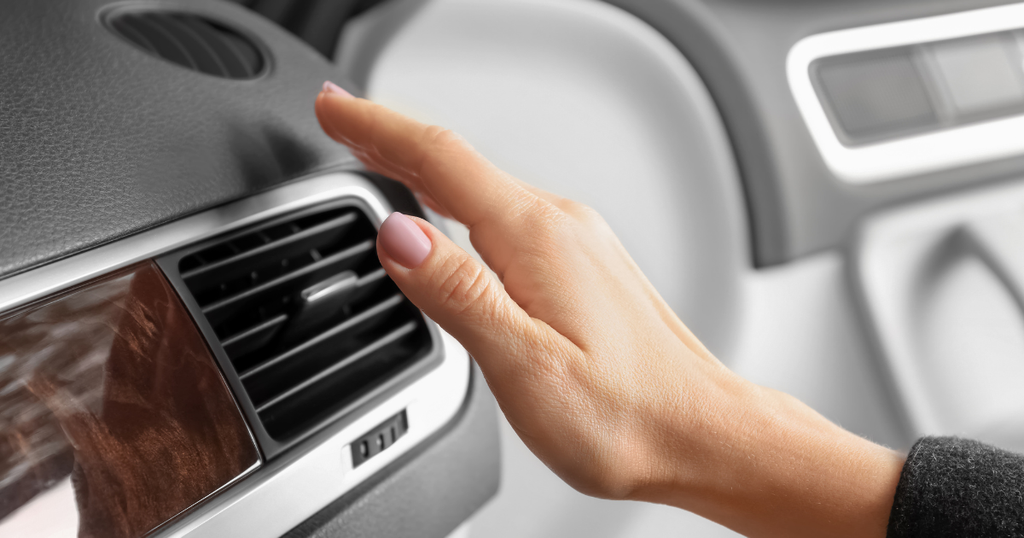
A leaking cooling coil can be difficult to identify because the evaporator is hidden inside the HVAC system, but several changes in your car’s air conditioning can point to a possible leak. One of the most common signs is weak or inconsistent cooling, where the air becomes less cold over time as refrigerant gradually escapes from the system. You may also notice an unusual or sour smell from the vents, particularly when the aircon is first switched on. A faint hissing sound from behind the dashboard or centre console can also indicate refrigerant escaping from a small leak. In some cases, refrigerant loss may leave an oily film or residue, including on the inside of the windscreen, because refrigerant can carry compressor oil through the system. However, these symptoms do not always confirm that the cooling coil itself is leaking, as other air conditioning faults can produce similar signs. A proper inspection and leak diagnosis should therefore be carried out before deciding that the evaporator needs to be replaced.
How Is a Leaking Cooling Coil Diagnosed?
Diagnosing a leaking cooling coil starts with confirming that the evaporator is actually the source of the refrigerant loss. A technician may use electronic leak detection to identify refrigerant inside the cabin, particularly around the air-conditioning vents, while UV dye inspection can help trace refrigerant and oil movement through the system. Additional AC system testing can be used to assess the system’s condition and support the diagnosis. Confirming the leak before removing the dashboard is important because cooling coil replacement is a major repair.
How Is a Cooling Coil Replaced?
Replacing a leaking cooling coil begins with safely recovering the refrigerant and preparing the vehicle before the air-conditioning system and dashboard are accessed. Because the evaporator is housed deep inside the HVAC unit, the dashboard and necessary interior components are carefully removed to reach the HVAC housing, which is then opened to remove the faulty coil. The new cooling coil is installed with the required seals and components, after which the HVAC unit, wiring and dashboard are carefully reassembled. Once the system is closed, it is vacuumed, checked for leaks and recharged with the correct refrigerant. Finally, the air conditioning is tested for cooling performance, airflow and proper operation to ensure the replacement has been completed correctly.
How Long Does Cooling Coil Replacement Take?
Cooling coil replacement can take several hours because the evaporator is located deep inside the HVAC housing, often requiring the dashboard and other interior components to be removed before the coil can be accessed. The repair also involves carefully removing and reinstalling the HVAC unit, reconnecting wiring and completing vacuum, leak and refrigerant checks before the vehicle is ready. The exact time varies depending on the vehicle’s design, the accessibility of the HVAC system and the amount of disassembly required. For this reason, a proper inspection is usually needed before a technician can provide an accurate time estimate.
How Much Does Cooling Coil Replacement Cost?
The cost of cooling coil replacement varies from one vehicle to another because the repair involves both parts and labour. The vehicle’s make and model, the price of the replacement cooling coil, the amount of dashboard and HVAC disassembly required, and the refrigerant used can all affect the final cost. Additional items such as seals, O-rings or other components may also be needed during the repair if they are found to be worn or damaged. Since the exact cost depends on the vehicle and the condition of the air conditioning system, a professional inspection is the best way to determine an accurate replacement estimate.
What Should Be Checked After Replacement?
After replacing the cooling coil, several checks should be completed to make sure the air conditioning system is working correctly and no new issues have been introduced. A technician should confirm that the system is properly vacuumed and charged, check for refrigerant leaks, and verify that the air from the vents is cooling consistently with good airflow. The condensate drain should also be checked to ensure moisture is draining outside the vehicle rather than into the cabin. Finally, the dashboard, climate controls and other electrical functions should be tested, while a road test can help identify unusual noises or rattles after reassembly. These final checks help confirm that the cooling coil replacement has been completed properly and the system is ready for normal use.
How Can You Prevent Cooling Coil Problems?
While a cooling coil can eventually develop problems through normal use, regular air conditioning maintenance can help reduce the risk and catch issues early. Pay attention to changes such as weaker cooling, unusual smells or other signs of refrigerant loss, rather than repeatedly topping up the system without finding the cause. Keeping the HVAC system clean can also help reduce the build-up of dust and debris around the evaporator, where moisture is naturally present during operation. If cooling performance starts to change, having the system professionally inspected and the source of any refrigerant loss properly diagnosed can help prevent a small issue from becoming a more extensive repair.
Professional Cooling Coil Replacement in Singapore
When a cooling coil leak is confirmed, professional replacement is the safest way to restore reliable air conditioning without overlooking related system issues. A qualified technician can accurately diagnose the source of the leak, replace the faulty evaporator, and carry out the necessary AC system testing to confirm that the repair is working correctly. Proper refrigerant recovery and recharging are also important to protect the system and ensure it operates as intended. After the replacement, a final performance inspection helps verify cooling performance and identify any remaining concerns before the vehicle is returned to the road. For drivers experiencing weak cooling, unusual odours, or suspected evaporator leaks, MotoServ’s Car Aircon Service Package provides a professional starting point for inspection and air-conditioning care, while the Contact Us page makes it easy to arrange further assistance.
FAQs
What is a cooling coil in a car?
The cooling coil, or evaporator, is the AC component that absorbs heat and moisture from the cabin air to produce cool air through the vents.
What are the signs of a leaking cooling coil?
Common signs include weak or inconsistent cooling, unusual smells, a hissing sound from the vents, or an oily film on the inside of the windshield.
Can a leaking cooling coil be repaired?
In many cases, replacing the leaking evaporator is the more reliable solution, particularly when the coil has developed internal corrosion or pinhole leaks.
Why does cooling coil replacement require dashboard removal?
The evaporator is located inside the HVAC housing behind the dashboard, so substantial interior disassembly is often required to access and replace it.
How long does cooling coil replacement take?
The repair time varies by vehicle because access to the HVAC housing and the amount of dashboard disassembly required differ between models.
How much does cooling coil replacement cost?
The cost depends on the vehicle model, replacement parts, labour, and the complexity of accessing the evaporator, so a professional inspection is needed for an accurate estimate.
Conclusion
A leaking cooling coil can gradually affect your car’s air conditioning performance, but identifying the actual source of the problem is the first step toward the right repair. When the evaporator is confirmed to be leaking, professional replacement, proper installation and thorough system testing help restore reliable cooling and reduce the risk of further AC problems. If you suspect a cooling coil leak or your car’s air conditioning is no longer performing as it should, contact MotoServ for professional inspection and cooling coil replacement in Singapore