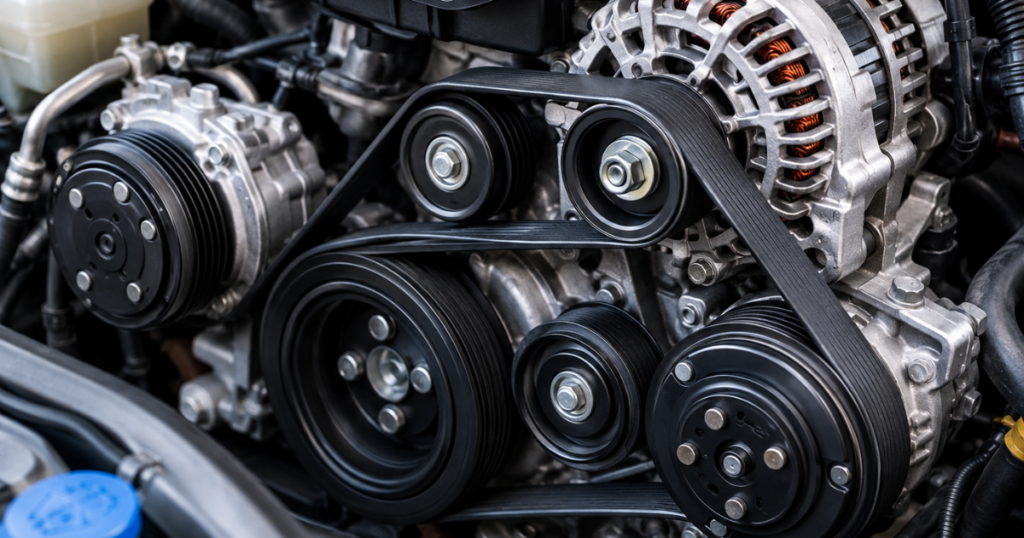
A serpentine belt, also known as a drive belt, is a continuous rubber belt that transfers power from the engine’s crankshaft to several essential accessories, allowing them to operate while the engine is running. Depending on the vehicle’s design, these accessories can include the alternator, air-conditioning compressor, power steering system, and in some vehicles, the water pump. Because a single belt can drive multiple components, its condition is important to the overall operation of the vehicle: a damaged, worn, or broken belt can affect several systems at the same time rather than causing an isolated problem. This is why serpentine belt inspection should be considered part of routine car maintenance, particularly as different vehicle and powertrain designs may use different belt arrangements.
When Should You Replace a Serpentine Belt?
There is no single mileage that applies to every serpentine belt, so the best time to replace one is based on the vehicle manufacturer’s recommended maintenance schedule, the belt’s age and mileage, and its actual condition. Higher mileage and an older belt can increase the chance of wear, but mileage alone should not be the deciding factor because heat, humidity, frequent stop-and-go driving, heavy accessory use, and oil or coolant contamination can shorten belt life. During regular car service and maintenance, a professional inspection can identify early signs of wear and check the belt’s condition together with the tensioner and pulleys, helping you replace the belt before a worn component turns into an unexpected roadside breakdown.
Signs Your Serpentine Belt Needs Attention
A serpentine belt can show small warning signs before it fails completely. Knowing what to look for can help you arrange an inspection early and avoid problems with the systems that depend on the belt.
Common Warning Signs
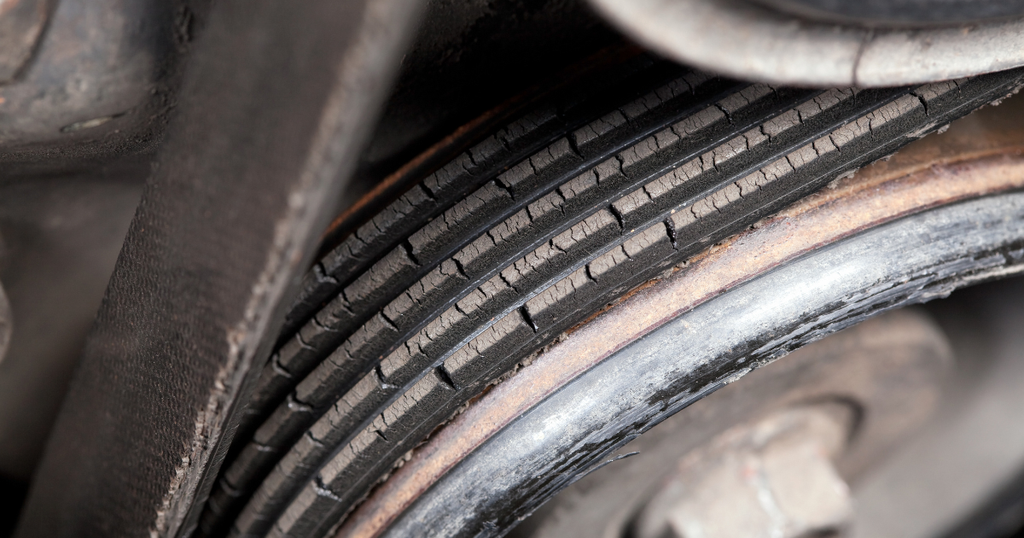
Squealing or chirping noises may mean the belt is slipping or not moving smoothly, while cracks, fraying, glazing, missing ribs, or chunks of rubber can indicate that the belt is becoming worn. You may also notice the belt sitting unevenly on the pulleys or moving more than it should, which can point to a belt, tensioner, pulley, or alignment problem. A battery warning light can appear if the alternator is no longer being driven properly, and problems with belt-driven accessories such as the air-conditioning system may also be a warning. If you notice any of these signs, especially more than one at the same time, it is best to have the belt and its related components checked during a professional car service and maintenance inspection.
Why Do Serpentine Belts Wear Out Faster?
Serpentine belts can wear faster when exposed to high engine-bay heat, humidity and regular stop-start driving, all of which place ongoing stress on the rubber. Oil, coolant or other fluid contamination can further weaken the belt, while worn pulleys or tensioners can create uneven tension or alignment. Together, these factors can cause the belt to crack, slip or deteriorate earlier than expected, making regular inspection important.
What Happens If the Drive Belt Snaps While Driving?
If the drive belt snaps while you are driving, several engine accessories may stop working at once. The alternator will stop charging the battery, the car aircon service system may stop operating, and steering assistance can be affected on vehicles that rely on the belt. On applicable engines, the water pump may also stop circulating coolant, which can cause the engine to overheat. Continuing to drive after a belt failure can therefore turn a relatively straightforward belt replacement into a much more expensive repair.
The Belt Is Not the Only Component to Check
Replacing the drive belt without checking the components around it can leave the original problem unresolved. The automatic tensioner, idler pulleys, pulley bearings and alignment all affect how smoothly and evenly the belt runs. A worn or misaligned component can cause uneven tension, slipping or premature belt wear, meaning a new belt may fail sooner than expected.
What Does a Professional Serpentine Belt Inspection Include?
A professional serpentine belt inspection looks beyond the belt itself to determine whether it is operating correctly and whether another component could be causing premature wear. The aim is to identify early signs of damage or an underlying problem before it leads to belt failure.
The inspection typically includes checking the belt’s condition, routing and alignment, along with the tensioner and pulleys for proper operation, bearing noise or excessive movement. The technician also looks for oil, coolant or other contamination and checks for any underlying cause of unusual belt wear.
Can You Replace a Serpentine Belt Yourself?
A serpentine belt can be replaced at home if you have the correct basic tools, sufficient access to the engine bay, and the right belt for your vehicle, including the correct length and rib count. Before removing the old belt, follow the manufacturer’s routing diagram, release the tensioner carefully, and make sure the new belt is correctly seated and aligned on every pulley. However, if access is difficult, the tensioner is hard to operate, or you are unsure about the belt routing or alignment, professional replacement is the safer option.
Serpentine Belt Replacement Cost in Singapore
The cost of serpentine belt replacement in Singapore depends on factors such as your vehicle’s make and model, how accessible the belt is, and the labour involved. If the inspection also finds a worn tensioner or idler pulley, replacing these components will add to the overall cost. For this reason, choosing the cheapest belt-only replacement may not always be the best solution, as leaving a worn supporting component unchecked can lead to premature belt wear and another repair later.
How to Prevent Premature Drive Belt Failure
Preventing premature drive belt failure starts with following the vehicle manufacturer’s maintenance schedule and having the belt checked during routine servicing. Unusual squealing or chirping should be investigated early, while the tensioner, idler pulleys and other related components should also be inspected for wear or misalignment. Any oil, coolant or other fluid leaks should be addressed promptly to prevent contamination from weakening the belt and shortening its service life.
When Should You Stop Driving and Get the Belt Checked?
If you suspect the drive belt is no longer operating safely, it is better to stop driving and have it inspected promptly. Early inspection can help identify a developing belt or component problem before it leads to a complete failure or further vehicle damage.
| Warning Sign | What It Means |
| Severely damaged or frayed belt | Cracks, fraying or missing sections of the belt can indicate that it is close to failure and needs prompt inspection. |
| Repeated squealing or chirping | Persistent noise can indicate belt slipping or reduced grip on the pulleys. |
| Belt visibly moving out of alignment | A belt that is not running correctly on the pulley tracks may point to a worn or misaligned tensioner or pulley. |
| Battery warning light | This may indicate that the alternator is no longer being driven correctly and the battery may not be charging properly. |
| Loss of belt-driven accessories | Sudden loss of systems such as air conditioning or power-assisted steering can indicate a drive belt problem. |
| Overheating symptoms | On applicable engines, a failed belt can stop the water pump from circulating coolant, potentially causing the engine to overheat. |

Serpentine Belt Replacement in Singapore: Preventive Maintenance Matters
A serpentine belt may be a relatively small component, but its failure can affect several important vehicle systems at the same time. Regular inspection helps identify belt wear, pulley or tensioner problems, contamination and alignment issues before they develop into an unexpected breakdown. Rather than waiting for the belt to snap, timely inspection and replacement can help keep your vehicle’s essential systems operating reliably.
If your belt is showing signs of wear, making unusual noises or approaching its recommended service interval, Contact MotoServ to have the belt and its related components inspected. A professional check can help identify the cause of wear, recommend the appropriate repair or replacement, and address the problem before it becomes a roadside emergency.