Owning a car in Singapore is a significant investment, and keeping it in excellent condition requires more than simply fixing problems when they appear. Regular servicing is the key to maintaining reliability, performance, and driving confidence throughout your vehicle’s lifespan.
Whether you drive daily through Singapore’s busy city roads, use your vehicle for family trips, or own a Hybrid, Electric Vehicle (EV), Japanese, or Continental car, every vehicle benefits from a structured maintenance schedule. Routine servicing allows trained technicians to inspect important components, identify normal wear early, and keep your vehicle operating as the manufacturer intended.
This guide has been created to answer the questions Singapore drivers ask most often. You’ll learn what car servicing includes, how often your vehicle should be serviced, the different service types, average servicing costs, warning signs that shouldn’t be ignored, and practical maintenance advice from experienced technicians. Rather than overwhelming you with technical language, we’ve kept everything simple, practical, and focused on helping you make informed decisions about your vehicle.
Table of Contents
What Is Car Servicing?
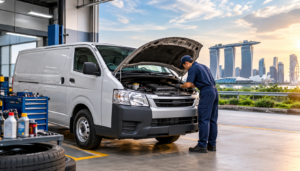
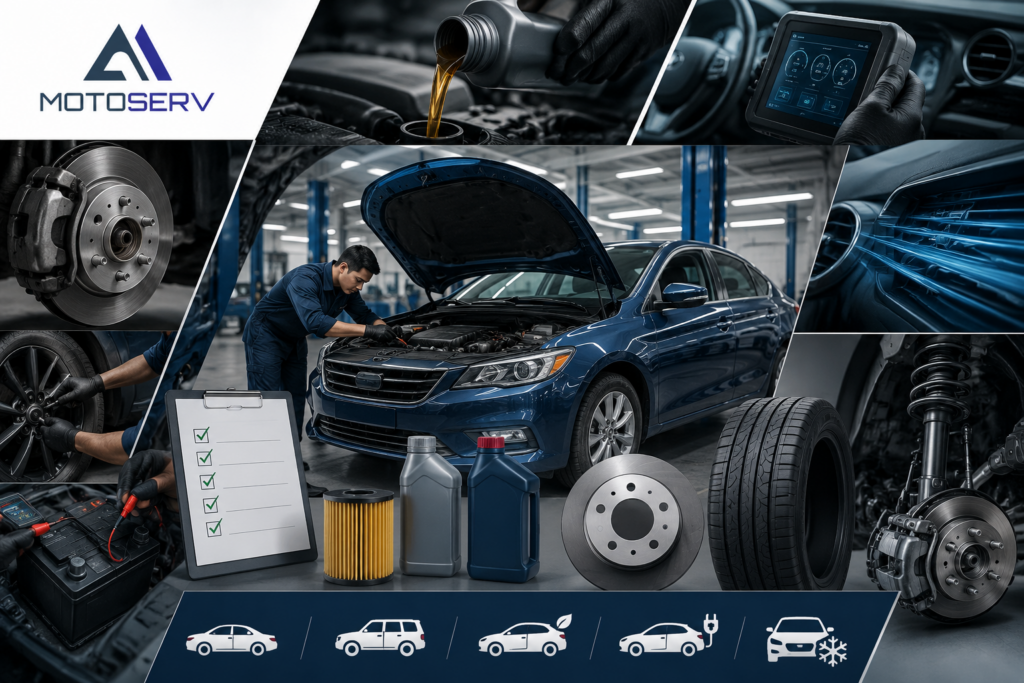
Car servicing is a planned maintenance process that keeps your vehicle running safely, smoothly, and efficiently. Unlike repairs, which fix existing problems, servicing focuses on inspecting, maintaining, and replacing components before they develop into larger mechanical issues.
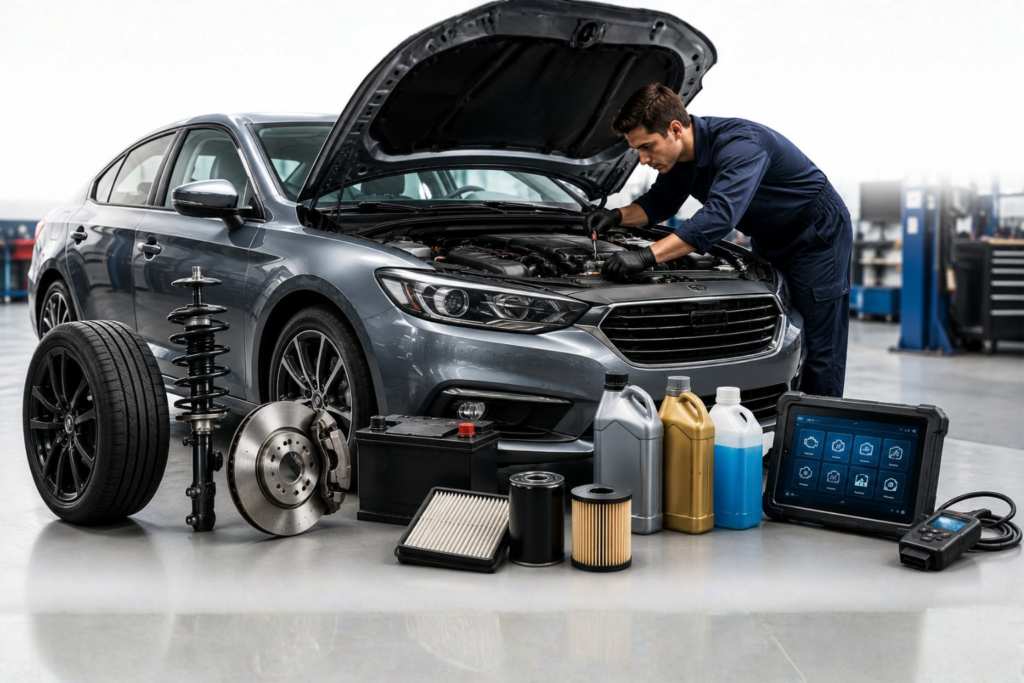
A professional service normally includes replacing essential fluids, inspecting major mechanical systems, checking brakes, suspension, steering, tyres, battery condition, air-conditioning performance, filters, and electronic systems. Modern workshops also perform computer diagnostics to identify hidden faults before they become noticeable during everyday driving.
Following a regular servicing schedule not only helps maintain vehicle reliability but also gives technicians the opportunity to monitor the overall condition of your car and recommend maintenance at the right time.
Why Regular Car Servicing Matters in Singapore
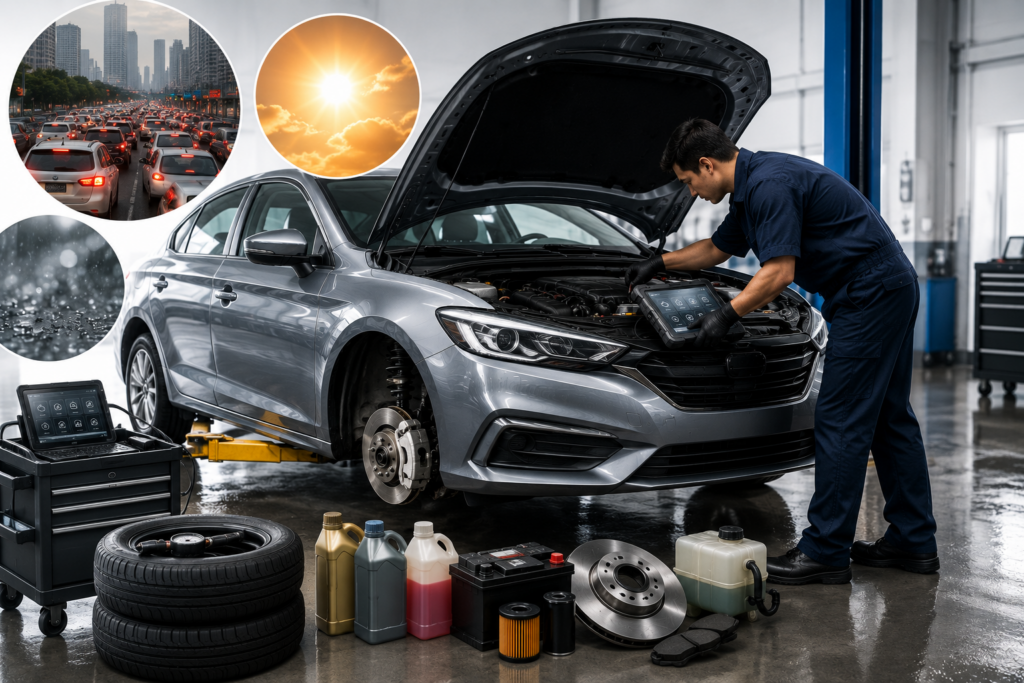
Singapore’s driving environment is very different from countries with long highway journeys. Daily commuting often involves heavy traffic, frequent traffic lights, short-distance driving, and constant stop-and-go movement. These conditions increase wear on important systems such as the brakes, suspension, transmission, tyres, and engine.
The country’s hot and humid climate also affects engine oil, cooling systems, batteries, rubber hoses, and air-conditioning performance. Even vehicles with relatively low mileage continue to age over time, making routine inspections just as important as distance travelled.
Professional servicing helps identify developing issues before they become expensive repairs. Instead of waiting for warning lights or unexpected breakdowns, technicians can detect early signs of wear during scheduled inspections, allowing problems to be addressed before they affect the vehicle’s reliability.
For most drivers, routine maintenance is simply the most cost-effective way to protect their investment while enjoying safer and more dependable everyday driving.
How Often Should You Service Your Car?
The correct servicing interval depends on your vehicle manufacturer, driving habits, and the conditions in which your car operates. For most vehicles in Singapore, the safest approach is to follow whichever comes first—the recommended mileage or the recommended time interval.
| Vehicle Type | Recommended Service Interval* |
|---|---|
| Petrol Cars | Every 10,000 km or 6 months |
| Diesel Cars | Every 8,000–10,000 km or 6 months |
| Hybrid Cars | Every 10,000 km or 6 months |
| Electric Vehicles | Manufacturer schedule with battery system inspections |
| Continental Cars | Follow manufacturer-specific service intervals |
*Actual intervals may vary depending on the manufacturer and driving conditions.
If your vehicle regularly experiences heavy traffic, frequent short trips, or extended idling, your workshop may recommend slightly earlier inspections to maintain long-term reliability.
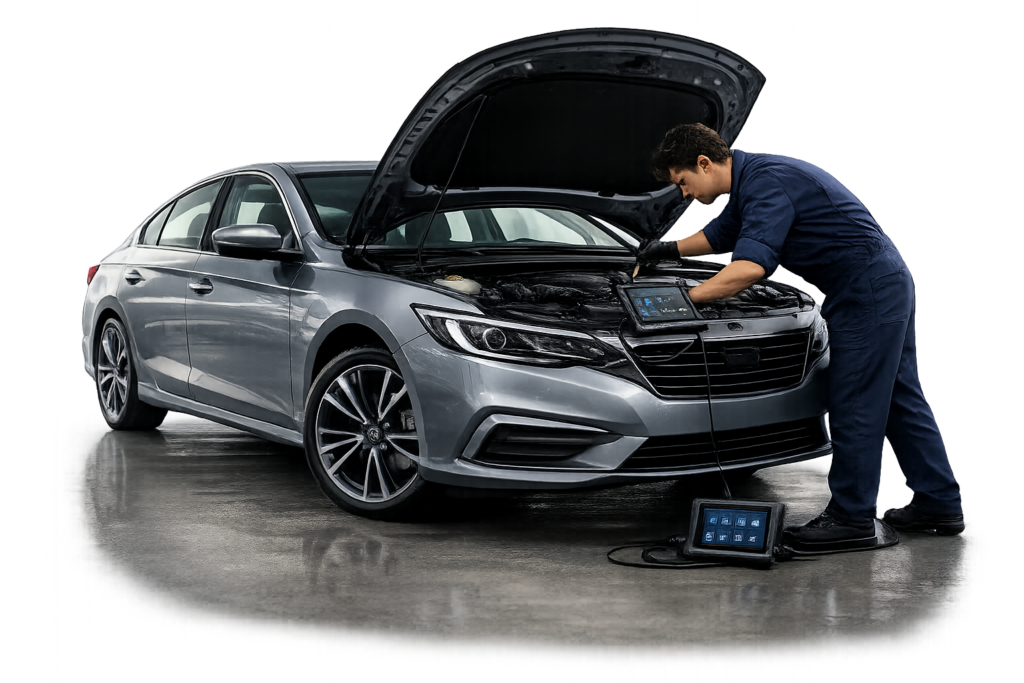
Types of Car Servicing
Not every service appointment is the same. Different maintenance programmes are designed to suit different stages of your vehicle’s ownership.
Minor Service
A routine maintenance service that includes engine oil replacement, oil filter replacement, fluid level checks, tyre inspection, battery testing, brake inspection, and a general vehicle health check.
Major Service
A more comprehensive inspection that includes everything from a minor service, along with manufacturer-recommended replacements such as spark plugs, filters, coolant, transmission fluid, brake fluid, and additional system inspections.
Preventive Maintenance
Maintenance carried out before problems occur. Components showing normal wear are replaced early to reduce the risk of unexpected failures.
Corrective Maintenance
Repairs performed after technicians identify an existing fault during inspection or diagnostic testing.
Scheduled Maintenance
A structured maintenance programme based on the vehicle manufacturer’s recommendations, ensuring every important service item is completed at the appropriate mileage or time interval.
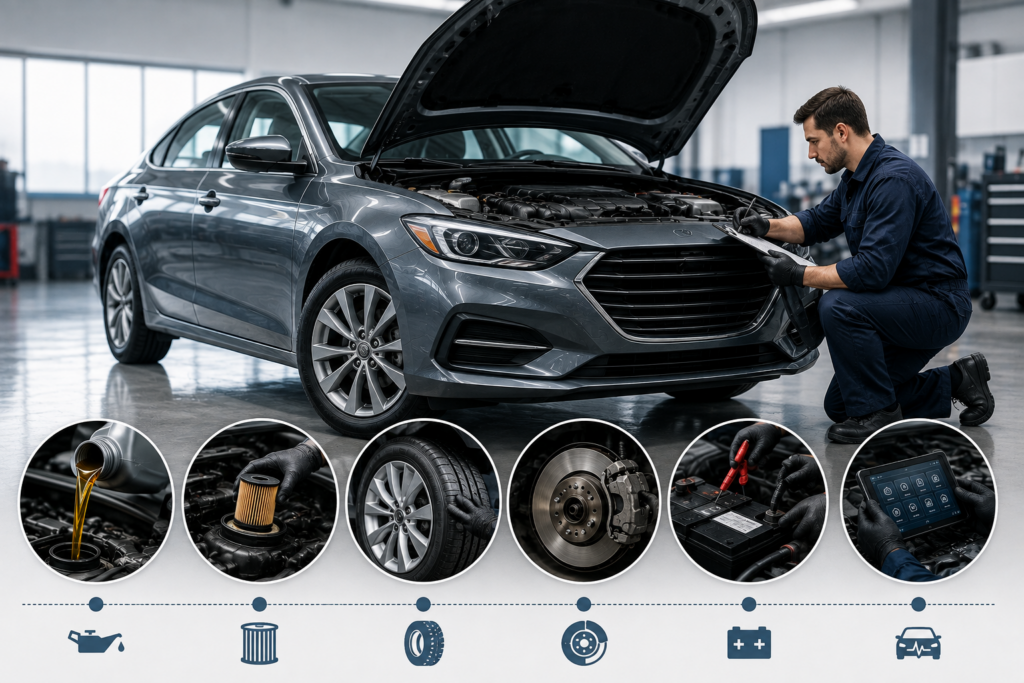
Complete Car Servicing Checklist
Rather than simply replacing engine oil, a professional workshop performs a complete inspection covering the vehicle’s major systems.
Under the Bonnet
- Engine oil and oil filter
- Coolant condition
- Brake fluid
- Transmission fluid
- Power steering fluid (where applicable)
- Windshield washer fluid
- Battery health
- Charging system
- Drive belts
- Engine hoses
- Fluid leaks
Engine Performance
- Air filter
- Cabin air filter
- Fuel filter
- Spark plugs
- Ignition system
- Engine idle quality
- Computer diagnostic scan
Braking System
- Brake pads
- Brake discs
- Brake lines
- Brake fluid condition
- Parking brake operation
Suspension & Steering
- Shock absorbers
- Suspension bushes
- Steering rack
- Ball joints
- Steering response
Wheels & Tyres
- Tyre condition
- Tyre pressure
- Wheel balancing
- Wheel alignment
- Tyre rotation
Air Conditioning
- Cooling performance
- Compressor operation
- Refrigerant level
- Cabin airflow
- Air-conditioning system inspection
Electrical Systems
- Headlights
- Brake lights
- Indicators
- Wipers
- Horn
- Vehicle sensors
- OBD diagnostic scan
A structured inspection allows technicians to identify small concerns before they develop into larger mechanical problems, helping reduce unexpected downtime and keeping your vehicle ready for everyday driving.
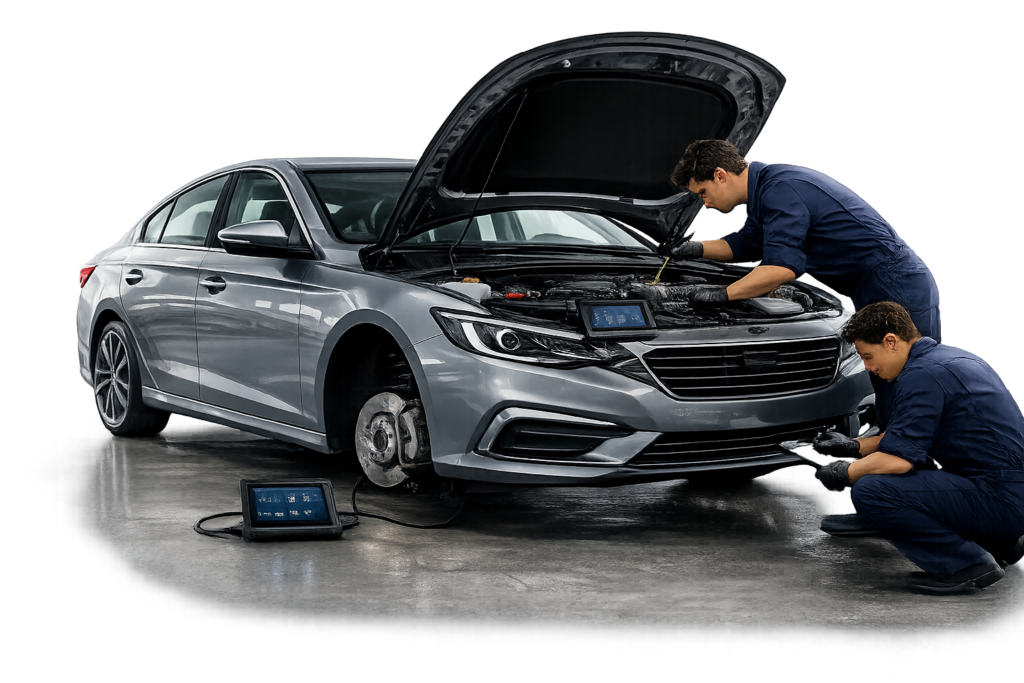
Car Servicing Costs in Singapore (2026)
Servicing costs vary depending on the vehicle type, manufacturer requirements, replacement parts, and the amount of work involved.
| Service Type | Estimated Cost (SGD) |
|---|---|
| Minor Service | $150–$280 |
| Major Service | $350–$700+ |
| Hybrid Service | $220–$450 |
| EV Service | $180–$400 |
| Continental Service | $350–$900+ |
Several factors influence the final cost, including genuine or OEM parts, fluid specifications, diagnostic requirements, vehicle age, mileage, and whether additional repairs are identified during inspection. Choosing a workshop that provides transparent quotations before work begins helps you understand exactly what is included in your service package.
Signs Your Car Needs Immediate Servicing
Your vehicle often provides early warning signs when maintenance is overdue. Ignoring these symptoms can lead to more serious mechanical problems.
Common warning signs include:
- Dashboard warning lights
- Unusual engine or suspension noises
- Engine vibration while driving
- Reduced fuel efficiency
- Difficulty starting the engine
- Reduced braking performance
- Steering pulling to one side
- Air-conditioning no longer cooling effectively
- Fluid leaks beneath the vehicle
- Smoke from the exhaust
If any of these symptoms appear, arranging a professional inspection as soon as possible can help prevent additional damage.

What Happens If You Skip Car Servicing?
Missing scheduled maintenance doesn’t always cause immediate problems, but the effects gradually become more noticeable over time.
Engine oil loses its protective qualities, filters become clogged, fluids deteriorate, and mechanical components continue to wear. Small maintenance items that could have been addressed during routine servicing may eventually develop into expensive repairs affecting multiple systems.
A neglected service history may also reduce resale value, increase operating costs, and shorten the lifespan of important components.
Common Car Servicing Mistakes Drivers Make
Many mechanical issues can be avoided simply by following a consistent maintenance routine.
Common mistakes include:
- Delaying oil changes
- Ignoring dashboard warning lights
- Skipping scheduled maintenance
- Choosing poor-quality replacement parts
- Forgetting air-conditioning servicing
- Driving with incorrectly inflated tyres
Avoiding these habits helps maintain better reliability and reduces the likelihood of unexpected workshop visits.
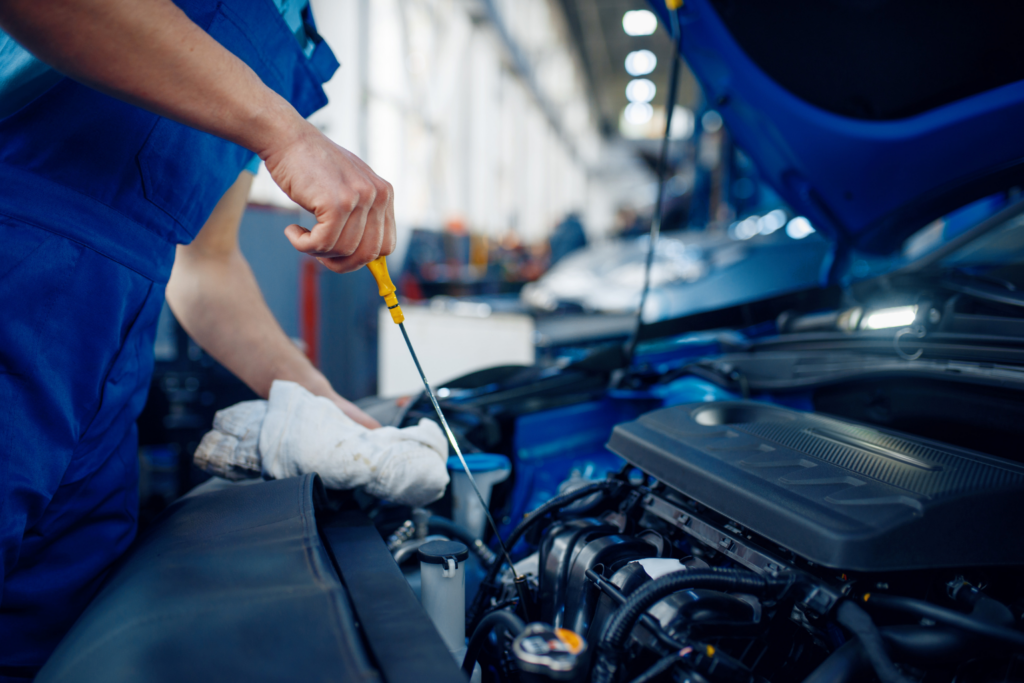
Professional Maintenance Tips
Experienced technicians recommend a few simple habits that make a noticeable difference over the long term.
- Follow your manufacturer’s servicing schedule.
- Keep records of every service performed.
- Check tyre pressure regularly.
- Listen for unusual sounds or vibrations.
- Never ignore warning lights.
- Use quality lubricants and replacement parts.
- Test the battery before it begins showing signs of weakness.
- Schedule a vehicle inspection before long-distance travel.
Small preventative actions today often prevent larger repair bills tomorrow.
Choosing the Right Workshop in Singapore
Not every workshop provides the same level of expertise. Choosing the right service provider can make a significant difference to your vehicle’s long-term reliability.
When comparing workshops, look for:
- Qualified and experienced technicians
- Modern diagnostic equipment
- Transparent pricing
- Genuine or OEM replacement parts
- Positive customer reviews
- Experience with your vehicle brand
- Convenient workshop locations
- Clear service reports and recommendations
A professional workshop should explain what has been inspected, what requires immediate attention, and what can be monitored during future services.
Why Many Drivers Choose Motoserv
With multiple workshop locations across Singapore, Motoserv provides convenient access to professional vehicle maintenance for drivers throughout the island.
Our experienced technicians service Petrol, Diesel, Hybrid, Electric, Japanese, and Continental vehicles using modern diagnostic equipment and manufacturer-recommended servicing procedures. Every inspection is carried out with a preventive maintenance approach, helping identify developing issues before they become costly repairs.
By combining technical expertise with transparent recommendations and customer-focused service, Motoserv aims to give every driver confidence that their vehicle is receiving the care it deserves.

Frequently Asked Questions
How often should I service my car in Singapore?
Most vehicles should be serviced every 10,000 km or every six months, whichever comes first. Always follow your manufacturer’s recommendations.
How much does car servicing cost?
Minor services typically start from around SGD 150, while major services vary depending on the vehicle and maintenance requirements.
What is included in a full car service?
A full service usually includes fluid inspections, oil and filter replacement, brake checks, suspension inspection, tyre checks, battery testing, air-conditioning inspection, and a computer diagnostic scan.
How long does a car service take?
A routine service generally takes between one and three hours, while major servicing may require additional time depending on the work involved.
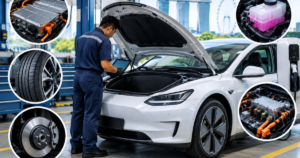
Do Hybrid and Electric Vehicles require servicing?
Yes. Although maintenance requirements differ from conventional vehicles, regular inspections remain essential to monitor battery systems, cooling systems, braking components, tyres, and electronic controls.
Keeping Your Vehicle Ready for Every Journey
Routine servicing is one of the simplest ways to protect your vehicle, improve reliability, and reduce unexpected repair costs. Following a structured maintenance schedule allows small issues to be identified before they become larger mechanical problems while helping your vehicle perform consistently throughout the year.
Whether you drive a family sedan, a Continental vehicle, a Hybrid, or an Electric Vehicle, investing in regular professional servicing ensures your vehicle remains dependable, comfortable, and ready for Singapore’s demanding driving conditions. When you’re unsure about your next service or simply want peace of mind, booking a professional inspection is always the smarter choice than waiting for a problem to appear.