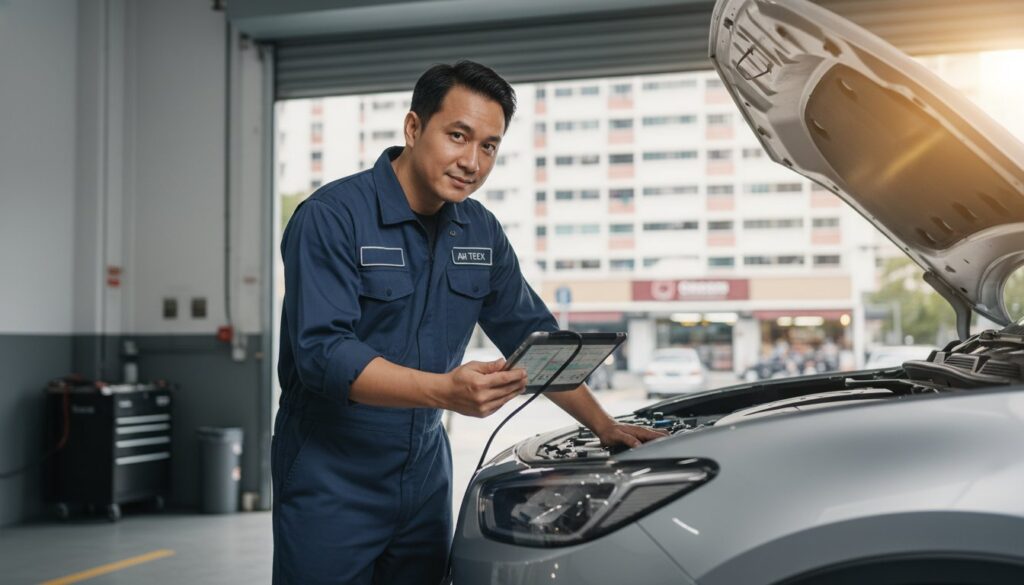
That sinking feeling when a warning light flashes on your dashboard is often followed by a second wave of anxiety: finding a trustworthy car mechanic. For many Singaporean drivers, the fear of confusing jargon, surprise costs, or being sold unnecessary repairs can make a trip to the workshop a stressful ordeal. You hand over your keys wondering if the diagnosis will be accurate and if the final bill will be fair.
It doesn’t have to be this way. Gaining a clear understanding of what a professional mechanic does is the first step toward feeling confident and in control of your vehicle’s care. A reliable expert does more than just fix problems; they act as your partner in ensuring your car’s safety, preserving its performance, and protecting its long-term value on Singapore’s roads.
In this guide, we will demystify their crucial role. We’ll explain the services they provide, offer practical advice on how to choose a transparent and honest workshop, and empower you with the knowledge to build a trusted relationship for years to come. Get ready to feel secure and informed about your vehicle’s care.
The Core Responsibilities of a Professional Car Mechanic
A professional car mechanic is far more than someone who just fixes what is broken; they are your vehicle’s primary health expert. Their work is a blend of advanced technical skill and clear communication, directly impacting your safety on the road, your car’s performance, and its long-term lifespan. Understanding the full scope of what an auto mechanic does helps you appreciate the immense value they provide. From routine checks to complex diagnostics, their expertise ensures your vehicle remains reliable and efficient.
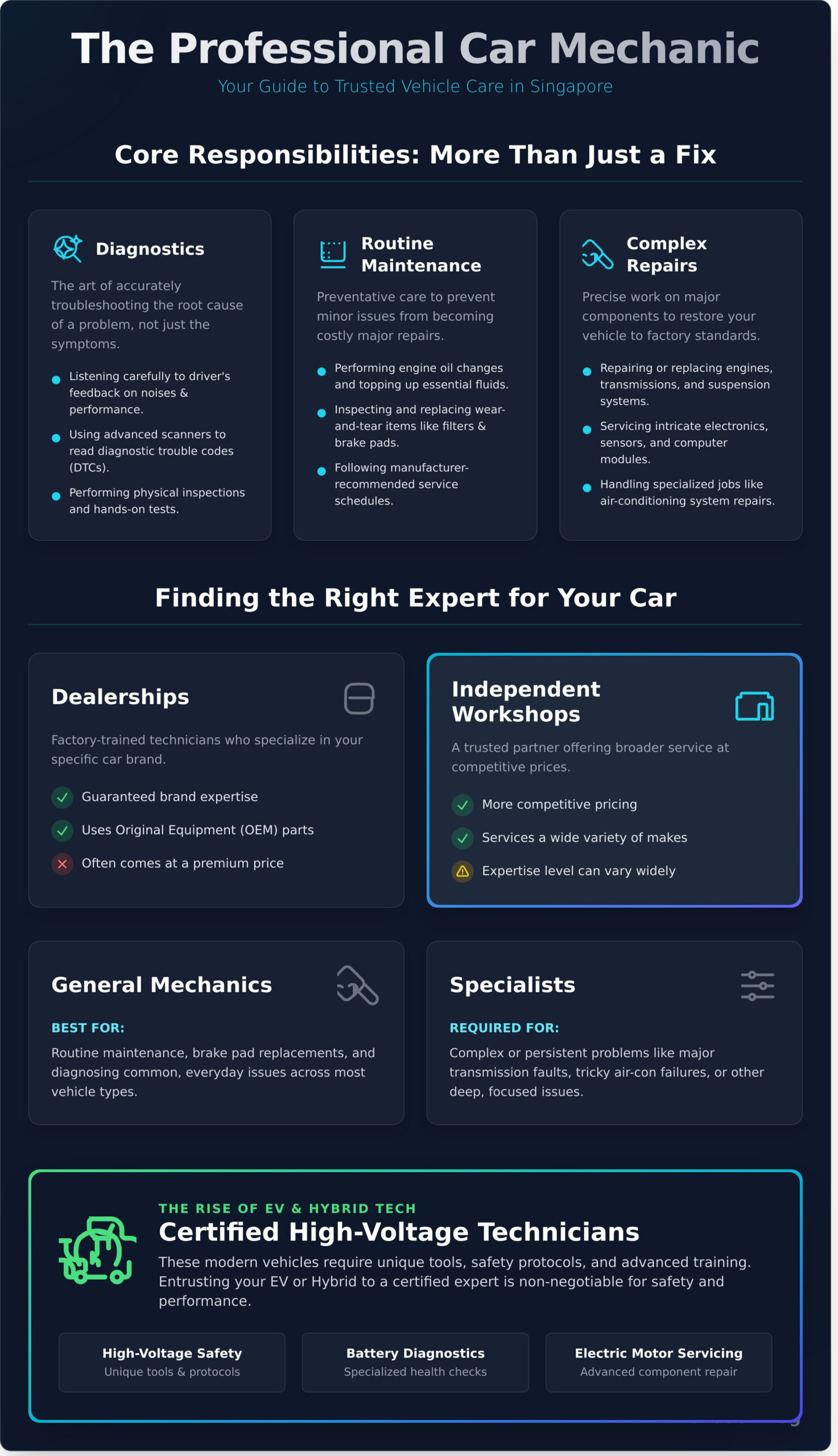
Diagnostics: The Art of Troubleshooting
Before any wrench is turned, an expert mechanic must first be a skilled detective. This crucial first step involves a methodical process to accurately identify the root cause of a problem, not just treat the symptoms. This ensures repairs are effective and prevents recurring issues.
- Listening Carefully: The process begins by understanding your description of the issue—unusual noises, warning lights, or changes in performance.
- Advanced Scanning: Using specialised computer scanners, they read diagnostic trouble codes (DTCs) from your vehicle’s onboard computer system.
- Physical Inspection: They conduct hands-on tests and visual inspections of engine components, wiring, and other systems to confirm the source of the fault.
Routine Maintenance and Servicing
Preventative care is the cornerstone of a long and healthy vehicle life. A reliable car mechanic performs essential scheduled maintenance to prevent minor issues from escalating into costly, major repairs. This proactive approach saves you money and gives you peace of mind.
- Essential Services: Performing vital tasks like engine oil changes, brake fluid replacement, and topping up all necessary fluids.
- Wear-and-Tear Checks: Inspecting and replacing items designed to wear out, such as air filters, spark plugs, and brake pads.
- Scheduled Health Checks: Following manufacturer-recommended service schedules to ensure all systems are functioning optimally.
Complex Repairs and Component Replacements
This is where a mechanic’s deep technical knowledge and skill are most evident. When a major component fails, precise and expert work is required to restore your vehicle to its original factory standards. These complex tasks demand specialised tools and strict adherence to technical procedures to guarantee safety and performance.
- Major Systems: Repairing or replacing critical components like engines, transmissions, and steering or suspension systems.
- Intricate Electronics: Working on complex modern vehicle electrical systems, sensors, and computer modules.
- Specialised Jobs: Handling intricate air-conditioning system repairs to keep you comfortable in Singapore’s climate.
Types of Mechanics: Finding the Right Expert for Your Car
When you need a professional car mechanic, it’s crucial to understand that not all workshops are created equal. The automotive world is highly specialized, and choosing the right expert for your vehicle’s specific needs can save you significant time, money, and stress. Your car’s make, age, and underlying technology are key factors in determining the best type of mechanic for the job.
Dealership Mechanics vs. Independent Workshops
The first choice many car owners face is between an authorised dealership and an independent workshop. Dealerships employ factory-trained technicians who specialize in your specific car brand and use Original Equipment Manufacturer (OEM) parts. This guarantees expertise but often comes at a premium price.
Independent workshops typically offer more competitive pricing and can service a wider variety of makes and models. A trusted independent workshop can be a fantastic partner for your vehicle’s health. Regardless of your choice, it is important that the workshop operates with transparency, a principle protected under Singapore’s Consumer Protection (Fair Trading) Act. At Motoserv, we bridge this gap by providing expert, IMI-certified servicing across a broad range of brands, ensuring quality without the dealership price tag.
General Mechanics vs. Specialists
Within independent workshops, there are generalists and specialists. A general mechanic is your go-to expert for routine maintenance like oil changes, brake pad replacements, and diagnosing common issues. They are skilled in handling a wide array of everyday repairs for most vehicles.
However, for complex or persistent problems, a specialist is required. These technicians focus on a single, intricate area of a vehicle. If you’re facing a major transmission fault or a tricky air-conditioning failure, seeking out a dedicated specialist will ensure the problem is diagnosed accurately and resolved efficiently by an expert with deep, focused knowledge.
The Rise of Hybrid & EV Certified Technicians
The growing popularity of hybrid and electric vehicles (EVs) in Singapore has created a need for a new type of specialist: the certified EV technician. These vehicles operate with high-voltage systems that require unique tools, safety protocols, and advanced training. An untrained mechanic can risk severe injury and cause irreparable damage to the vehicle.
Certified technicians are trained to perform crucial tasks such as battery health diagnostics, electric motor servicing, and high-voltage component repair. Entrusting your modern vehicle to a qualified expert is non-negotiable for safety and performance. Motoserv has certified technicians for your hybrid or EV, equipped with the latest diagnostic tools to keep your vehicle running safely and efficiently.
How to Choose a Reliable Car Mechanic in Singapore
Selecting a workshop in Singapore is about more than just fixing a problem; it’s about entrusting your vehicle’s safety and performance to a professional. The right car mechanic provides not only expert service but also invaluable peace of mind, leading to long-term savings and a safer drive. To make an informed decision, it helps to understand the complex duties of a car mechanic and look for objective signs of quality. This checklist will guide you through the key factors to consider.
Check for Certifications and Accreditations
Official credentials are a clear indicator of a workshop’s commitment to quality. In Singapore, look for accreditations like CASETRUST, which ensures fair and transparent business practices. Furthermore, certifications from internationally recognised bodies such as the Institute of the Motor Industry (IMI UK) confirm that mechanics are trained to high global standards. Don’t hesitate to ask the workshop about their team’s qualifications; it shows they invest in continuous training and professional development.
Prioritise Transparent Pricing and Communication
A trustworthy workshop operates with complete transparency. Your mechanic should explain the required repairs in clear, simple terms and provide a detailed, itemised quote before any work begins. There should be no surprise charges. A key sign of a professional operation is that they will always seek your approval before proceeding with any additional repairs discovered during service. Avoid workshops that are vague about costs, as clarity is essential for building trust.
Verify Experience with Your Car’s Make
Cars from different regions often require specialised knowledge. A workshop that frequently services your vehicle’s make—whether Japanese, Korean, or Continental—will have the specific expertise and diagnostic tools needed for accurate servicing. Before committing, ask if they regularly work on your car brand (e.g., Toyota, BMW, Hyundai). This specialised experience ensures more efficient troubleshooting and precise repairs, ultimately saving you time and money.
Read Online Reviews and Ask for Recommendations
A workshop’s reputation is one of its most valuable assets. Check independent sources like Google Reviews and online automotive forums for honest customer feedback. Look for consistent comments about reliability, quality workmanship, and fair pricing. Word-of-mouth is also powerful, so ask friends or family in Singapore for their trusted recommendations. A strong, positive reputation is often the most reliable indicator of a quality car mechanic you can depend on for years to come.
The Repair Process: What to Expect at a Professional Workshop
Visiting a workshop can be stressful, especially when you’re unsure what’s wrong with your vehicle. However, knowing what to expect from the repair process can significantly reduce anxiety and empower you to ask the right questions. A trusted and professional workshop follows a structured, transparent procedure designed to keep you informed and in control from drop-off to pick-up. This is what a quality service experience should look like.
Step 1: The Initial Consultation and Vehicle Check-in
Your visit begins with a detailed consultation. A professional service advisor or car mechanic will listen carefully to your description of the problem, asking clarifying questions to understand the symptoms fully. They will then perform a thorough walk-around inspection of your vehicle with you, noting any visible issues. All your concerns and vehicle details are meticulously documented to ensure nothing is overlooked.
Step 2: Diagnosis and Receiving a Quote
Once your car is checked in, the diagnostic process begins. Experienced technicians use specialised equipment to accurately identify the root cause of the fault. Before any work starts, you will receive a call or message explaining their findings in clear, simple terms. This is followed by a detailed quote that breaks down the cost of necessary parts and labour. Crucially, repairs will only commence after you have given your explicit authorisation.
Step 3: The Repair and Post-Service Checks
With your approval, the technicians will perform the necessary repairs using high-quality or genuine parts that meet manufacturer standards. A key step that sets professional workshops apart is the post-service check. After the repair is complete, your vehicle will undergo a road test or a final system check to verify that the initial problem has been fully resolved and your car is running smoothly and safely.
Step 4: Collection, Explanation, and Warranty
When you arrive to collect your vehicle, the job isn’t finished until everything has been explained to you. The service advisor will walk you through the work that was performed, often showing you the old parts that were replaced for full transparency. You will receive a clear, itemised invoice and comprehensive information on the warranty covering the new parts and labour. This commitment to clarity ensures you leave with complete peace of mind. Experience a transparent repair process at Motoserv.
Your Partner in Car Care: Finding a Trusted Mechanic in Singapore
Navigating the world of auto repair is much simpler when you know what to look for. From understanding the core responsibilities of a technician to identifying the right specialist for your vehicle, being an informed driver is your best defence against unexpected issues. Ultimately, choosing a workshop in Singapore comes down to finding a partner who values transparency, skill, and your peace of mind.
For an experience that combines expertise with guaranteed quality, look no further than Motoserv. Our professional car mechanic team is not only IMI (UK) accredited but also includes certified technicians for the latest hybrid and EV models. As a CASETRUST-accredited company, we are committed to honest recommendations and superior service across our convenient island-wide network of workshops.
Ready to give your car the professional attention it deserves? Find a reliable, CASETRUST-accredited mechanic at a Motoserv workshop near you. Entrust your vehicle to our experts and enjoy a safer, smoother journey on every drive.
Frequently Asked Questions About Choosing a Car Mechanic
What is the difference between a car mechanic and a car technician?
While often used interchangeably, a car technician typically has specialised training in modern vehicle diagnostics, electronics, and computer systems. A mechanic traditionally focuses on the physical, mechanical components of a car. At a professional workshop, you can expect our experts to be proficient in both areas, ensuring a comprehensive and accurate diagnosis for any issue, whether it is mechanical or electronic. This ensures your vehicle receives the expert care it needs.
How much is the average labour cost for a car mechanic in Singapore?
In Singapore, the average labour cost for a car mechanic typically ranges from S$60 to S$120 per hour. This rate can vary based on the workshop’s location, the complexity of the job, and the make of your vehicle. A trustworthy workshop will always provide a transparent, itemised quote before any work begins. This commitment to clear pricing ensures you understand all costs involved, giving you complete peace of mind.
Should I use original, OEM, or aftermarket parts for repairs?
The choice depends on your needs and budget. Original parts are supplied by your car’s manufacturer and guarantee a perfect fit. OEM (Original Equipment Manufacturer) parts are made by the same company but cost less. Aftermarket parts offer more variety and savings, but quality can differ. A reliable mechanic will explain the pros and cons of each, recommending the best option for your specific repair while prioritising your vehicle’s safety and performance.
What are the most important questions to ask a new car mechanic?
To ensure you’re choosing a reliable professional, ask key questions upfront. Enquire about their warranty on parts and labour, and always request a detailed, written quote before authorising repairs. It’s also wise to ask about their certifications, such as CASETRUST accreditation, and if they have specific experience with your car’s make and model. Asking these questions helps you find a trustworthy car mechanic who values transparency and quality service.
Is it better to stick with one mechanic or try different workshops?
Building a long-term relationship with a single, trusted workshop is highly beneficial. A consistent mechanic becomes familiar with your vehicle’s history, allowing for more accurate diagnostics and proactive maintenance advice. This familiarity fosters trust and ensures a higher standard of care, ultimately extending the lifespan of your vehicle and providing you with greater peace of mind. Sticking with one expert team often proves more efficient and cost-effective over time.
What does it mean if a workshop is CASETRUST accredited?
CASETRUST is a Singaporean accreditation that signifies a business’s commitment to fair and transparent practices. For a car workshop, this accreditation is your assurance of clear fee policies, well-defined service standards, and proper dispute resolution processes. Choosing a CASETRUST-accredited workshop means you are entrusting your car to a business that has been independently assessed for reliability and customer-centric service, offering you an extra layer of consumer protection.
How do I know if a car mechanic is being honest with me?
An honest car mechanic prioritises clear communication. They will explain the necessary repairs in simple terms, provide a detailed invoice that matches the initial quote, and be willing to show you the old parts that were replaced. A trustworthy professional will differentiate between urgent safety repairs and issues that can be monitored. This transparent approach, focused on your needs rather than upselling, is the hallmark of a reliable and ethical mechanic.