If your car feels weak, smells odd, or drinks more fuel than usual, your catalytic converter may be clogged. Located in your car’s exhaust system, a catalytic converter cleans harmful gases before they leave the tailpipe. It’s a part many drivers forget, which can lead to poor performance, failed inspections, and costly repairs.
In this guide, you’ll learn how to spot the signs of a clogged catalytic converter, what causes it, and what you can do before it leads to costly repairs.
For accurate diagnosis and safe repairs, please visit one of Motoserv’s branches in Singapore. Reach out via WhatsApp for any enquiries!
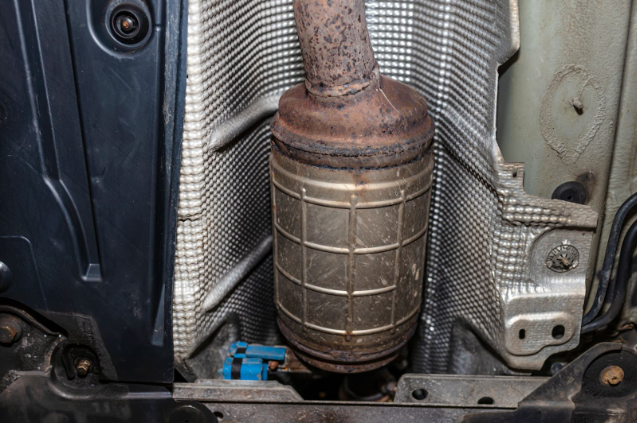
A catalytic converter is part of your car’s exhaust system, and can be found between the engine and the muffler. Its job is to convert harmful gases (carbon monoxide, hydrocarbons, and nitrogen oxides) into less harmful emissions before they exit the tailpipe.
Inside the converter is a ceramic honeycomb coated with precious metals such as platinum, palladium, and rhodium. When hot exhaust passes through, these metals trigger chemical reactions that clean the gases.
Over time, the converter can clog. Carbon, oil residue, or unburned fuel can coat the honeycomb surface and restrict exhaust flow. Once that happens, pressure builds up, and your engine starts to lose power.

A clogged catalytic converter shows itself in many ways. If you notice one or more of these signs, don’t ignore them.
If your car feels slow when you press the pedal, the exhaust flow may be restricted. The engine struggles to push gases out, making acceleration weak and uneven.
A blocked converter forces the engine to burn more fuel to maintain power. You’ll find yourself refuelling more often with little improvement in performance.
When the converter stops working properly, oxygen sensors detect the imbalance. Error codes such as P0420 or P0430 often mean the converter isn’t cleaning exhaust gases as it should.
If you smell something like rotten eggs near the exhaust, unprocessed gases are escaping. This usually means the converter can no longer break down sulphur compounds.
When the converter’s inner honeycomb breaks apart, you’ll hear a rattling sound. It’s most noticeable when starting the engine or accelerating.
A blocked converter traps hot gases. You may notice excessive heat under the car or see the metal around the converter discoloured from overheating.
High levels of carbon monoxide or hydrocarbons during an inspection often point to a failing or clogged catalytic converter.
A clogged catalytic converter rarely happens overnight. It builds up from problems in the engine or fuel system that go unchecked. Here are the common causes:
Each of these issues leads to a slow loss of efficiency. The more residue that collects, the harder it becomes for exhaust gases to pass through.
If you suspect your catalytic converter is clogged, there are a few ways to confirm it before replacing parts.
Confirming the cause first saves time and money. Replacing the converter without fixing the real problem often leads to another failure.
Once you’ve confirmed that your catalytic converter is clogged, the next step is deciding whether to clean, repair, or replace it. The right approach depends on how severe the blockage is.
Start with CataClean and add it directly to your fuel tank. It helps remove light carbon deposits as you drive. For best results, use it with about a quarter tank of fuel and take your car for a steady run at highway speed.
The sustained heat allows the cleaner to flow through the exhaust system and clear mild blockages. If performance improves, the clog was minor. If not, the blockage may be too thick for cleaning alone.
Cleaning won’t help if the underlying issue remains. Replace worn spark plugs or faulty oxygen sensors, and repair oil or coolant leaks. If you skip this step, even a new converter will clog again within months.
When the converter’s honeycomb structure has melted or collapsed, replacement is the only lasting fix. Choose an OEM or approved aftermarket converter for your car model. It ensures proper fit and emission control.
Costs vary depending on the make and engine size, so it’s best to get a workshop quote before proceeding.
Once your catalytic converter is clean or replaced, a few small habits can keep it that way. Prevention always costs less than repair.
A healthy catalytic converter keeps your engine efficient and the air cleaner. If you suspect yours is blocked, get it checked by a trusted mechanic. A small step today can save you from a costly repair tomorrow.
For accurate diagnosis and safe repairs, please visit one of Motoserv’s branches in Singapore. Reach out via WhatsApp for any enquiries!
WhatsApp us