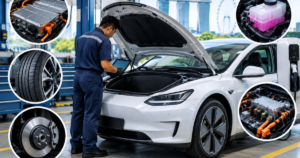
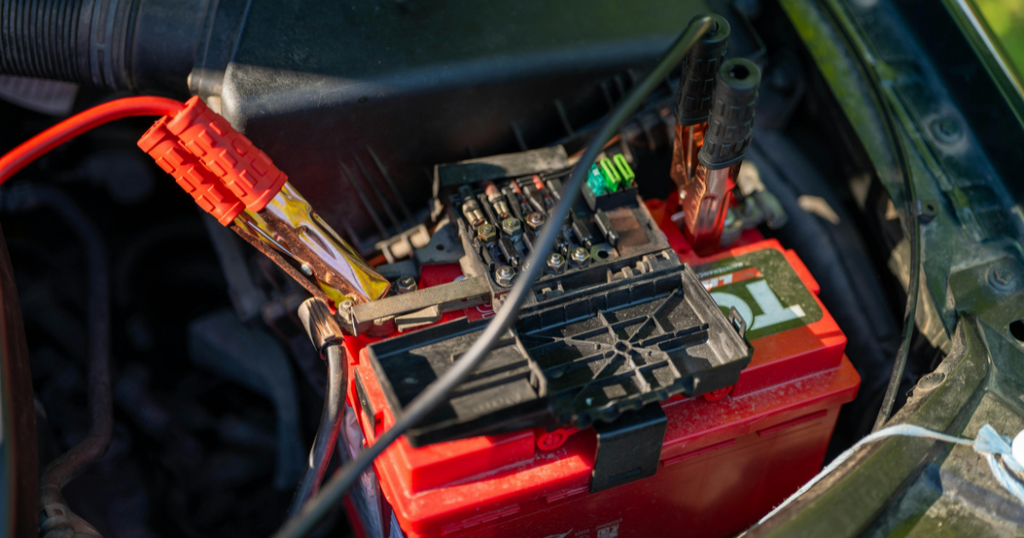
A hybrid car battery is a high-voltage battery pack that stores electrical energy and supplies it to the electric motor as part of the vehicle’s hybrid powertrain. It works alongside the petrol engine, providing electric assistance during situations such as starting, accelerating, or low-speed driving, while also receiving energy through regenerative braking and, when needed, engine-assisted charging. This allows the petrol engine and electric motor to work together more efficiently, helping the vehicle use less fuel and recover energy that would otherwise be lost during braking. Unlike the smaller 12V battery, which powers conventional electrical equipment and helps start and operate the vehicle’s low-voltage systems, the hybrid battery is designed to provide the high-voltage energy needed to drive the electric motor.
Table of Contents
What Is Inside a Hybrid Battery Pack?
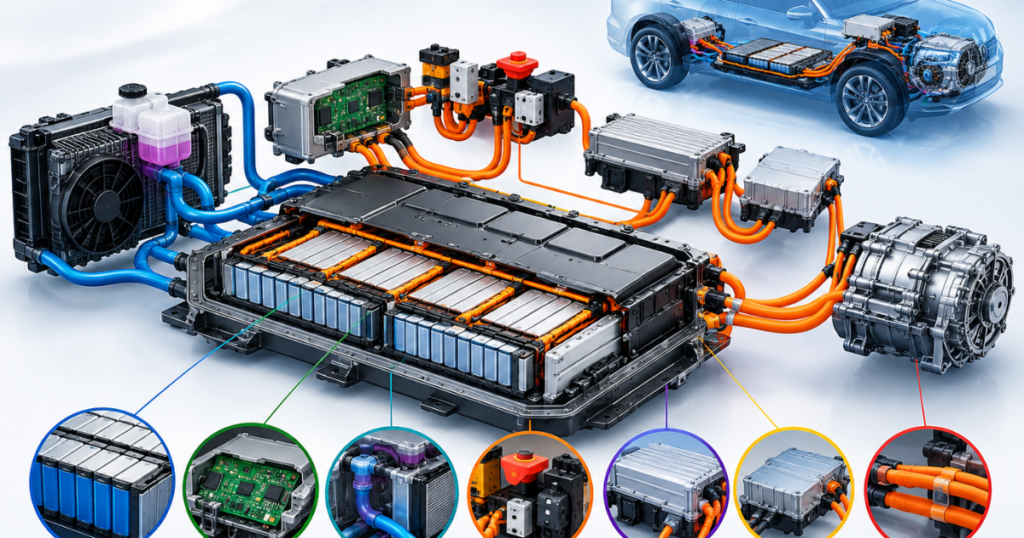
A hybrid battery pack contains several important components that work together to store, manage, cool, and safely deliver high-voltage electrical energy. At its core are battery cells and modules, which store the energy used by the electric motor. The Battery Management System (BMS) monitors factors such as voltage, current, temperature, and state of charge to keep the battery operating within safe limits. A cooling and thermal management system helps control the heat produced during charging and operation, while safety components such as fuses, relays, disconnects, and isolation monitoring help protect the battery and vehicle from electrical faults. The battery also connects to nearby power electronics, including the inverter, which converts the battery’s DC power into the form required by the electric motor, and the DC-DC converter, which reduces high-voltage power for the vehicle’s 12V electrical systems. High-voltage cables and connections then safely carry electrical power between the battery, inverter, motor, and other parts of the hybrid system. Understanding how these components work together makes it easier to see how the battery supports the vehicle’s overall hybrid powertrain
How Does a Hybrid Battery Work?
A hybrid battery works continuously with the petrol engine and electric motor, with the vehicle automatically deciding when to use, recharge, or conserve electrical energy. When the vehicle starts, the battery and its control system check the battery’s condition and charge level so the hybrid system can operate safely. During acceleration, the battery supplies electrical power to the electric motor, helping the petrol engine provide the extra power needed to move the vehicle efficiently. During normal driving, the hybrid system constantly manages the flow of energy between the battery, electric motor, and petrol engine according to driving conditions and battery charge. When the vehicle slows down or brakes, regenerative braking allows the electric motor to work as a generator, recovering some of the vehicle’s kinetic energy and sending it back to the battery. If the battery charge becomes low, the petrol engine can provide additional energy to recharge it and maintain the battery within its operating range. When the vehicle stops or is switched off, the hybrid system reduces or stops power delivery and places the battery system into a controlled standby or shutdown state, ready for the next drive.
Types of Hybrid Car Batteries
Hybrid vehicles have used different battery technologies over the years, with lead-acid, nickel-metal hydride (NiMH), and lithium-ion (Li-ion) being the main types discussed in the existing guide. Lead-acid batteries are relatively inexpensive but are heavier and less efficient, making them less suitable for modern hybrid applications. NiMH batteries have been widely used in hybrid vehicles because they offer good durability and efficiency and have a long history of automotive use, although they are heavier than lithium-ion alternatives. Lithium-ion batteries provide higher energy density in a lighter package, making them well suited to newer hybrid designs, but they are generally more expensive. In simple terms, the main differences come down to cost, weight, energy efficiency, durability, and thermal-management requirements, with each battery type offering a different balance of advantages and limitations depending on the vehicle’s design.
Signs of a Weak or Failing Hybrid Battery
A weakening hybrid battery can affect how the vehicle performs, although the symptoms can vary depending on the vehicle and the underlying problem. One of the clearest warning signs is a hybrid or battery warning light appearing on the dashboard. You may also notice reduced fuel economy if the petrol engine has to work harder because the battery is providing less electric assistance. In some cases, the vehicle may feel less responsive during acceleration or provide less electric support than usual. Other signs can include the engine running more frequently than expected, unusual changes in how the hybrid system switches between petrol and electric power, or other unexpected battery behaviour. These symptoms do not always confirm a battery failure, as other hybrid-system faults can produce similar signs, so proper diagnosis is important before deciding on a repair or replacement. If you notice persistent warning signs or changes in hybrid performance, Hybrid Car Battery Service can help with professional inspection and assessment of the battery system.
Can a Hybrid Battery Be Repaired or Replaced?
A hybrid battery does not always need to be replaced as soon as a problem appears. Depending on the vehicle and the condition of the battery pack, some faults may be repairable, while a battery that has suffered significant deterioration or has multiple internal problems may require replacement. This is why proper diagnosis should come before deciding on a replacement, as warning lights or reduced hybrid performance do not necessarily mean that the entire battery pack has failed. The decision can depend on factors such as the battery’s overall condition, the type and extent of the fault, the vehicle’s age and usage, and the expected cost and reliability of the available repair or replacement option. A professional assessment can help determine whether repairing the existing battery is appropriate or whether replacement is the more suitable solution.
How to Maintain a Hybrid Battery
Looking after a hybrid battery starts with keeping its cooling and ventilation area clear so that heat can be managed effectively during everyday driving. This is particularly important in Singapore’s hot climate and frequent stop-and-go traffic, which can place additional demands on the vehicle’s thermal-management system. Follow the manufacturer’s recommended maintenance schedule and pay attention to warning lights or noticeable changes in hybrid performance rather than ignoring them until the problem becomes more serious. Regular checks can help identify potential issues early and ensure that the battery, cooling system, and other hybrid components continue to work as intended. If you want to keep the entire hybrid system in good condition, Hybrid Car Service provides a suitable point for professional inspection and maintenance.
Hybrid Battery vs EV Battery
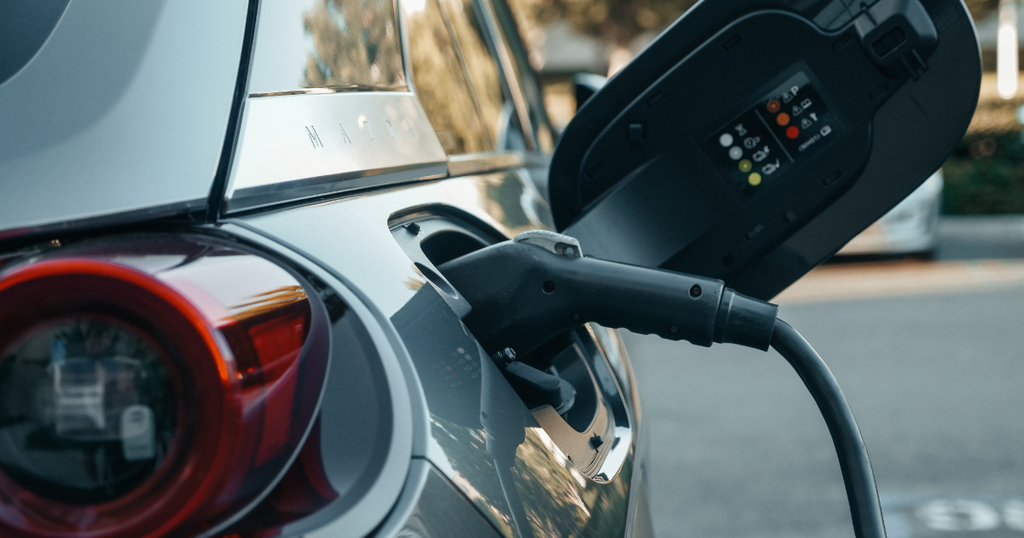
Although both hybrid and electric vehicles use high-voltage batteries, their batteries serve different purposes within the vehicle. A hybrid battery works together with a petrol engine and electric motor, providing electrical assistance when needed while the petrol engine remains an important source of propulsion and can also help maintain the battery’s charge. In a fully electric vehicle (EV), the battery is the primary source of energy for the electric motor because there is no petrol engine to provide propulsion. This difference means hybrid batteries are generally designed around supporting the engine and recovering energy during driving, while EV batteries are designed to store much more of the energy needed for the vehicle’s overall range. As a result, their battery capacity, operating requirements, power management, and overall system design are not the same, even though both rely on similar high-voltage battery technology.
FAQs
How long does a hybrid battery last?
A hybrid battery is designed to last for many years, but its lifespan varies depending on the vehicle, age, usage, temperature, driving conditions, and battery condition.
Can a failed hybrid battery be repaired?
In some cases, a hybrid battery fault may be repairable, while significant deterioration or internal problems may require replacement. Proper diagnosis should come first.
What happens when a hybrid battery starts failing?
You may notice warning lights, reduced fuel economy, less electric assistance, or unusual changes in how the hybrid system operates.
When should the battery be inspected?
If a warning light appears or you notice changes in fuel economy, acceleration, or hybrid-system behaviour, professional inspection can help identify the cause before deciding on repair or replacement.
Final Takeaway
A hybrid battery is an important part of the vehicle’s powertrain, working with the petrol engine and electric motor to improve efficiency and recover energy during driving. Understanding how the battery works, recognising early warning signs, and following appropriate maintenance can help owners make informed decisions about their hybrid vehicle. If you have concerns about your hybrid battery or hybrid system, Contact Us to discuss your vehicle with the team.