
Engine Intake & Vacuum Leak Diagnosis in Singapore
Rough idling, a hissing noise from the engine bay, or a check-engine light with a lean fault code? Have the engine’s air intake system inspected at selected Motoserv outlets. Please check with us first.
In short
An intake or vacuum leak is an unintended opening that lets extra, unmeasured air into the engine. It can contribute to rough idling, hesitation and lean fault codes such as P0171 or P0174, though other faults cause similar signs. Motoserv, a Singapore car service network, offers smoke leak testing at selected outlets and explains its findings before repairs.
Rough idling, high fuel consumption or a warning light? Symptoms that may justify an inspection
This service is for drivers who notice one or more of the signs below and want to know whether air could be getting into the engine where it shouldn’t. If you have searched for “rough idling car Singapore”, “car high fuel consumption Singapore” or “check-engine light diagnosis Singapore”, this is the kind of check we mean.
Rough or uneven idling
The engine shakes, hunts or feels unsteady when you are stopped, or the revs bounce around.
Engine hesitation or poor acceleration
The car feels slow to respond, or flat, when you press the accelerator.
Hissing or whistling from the engine bay
A thin hiss or whistle that you may notice more at idle.
Check-engine light or lean codes
Codes such as P0171 or P0174 mean the engine computer sees a lean mixture. They are a clue, not a verdict.
High idle speed or stalling
Revs that sit higher than usual, or an engine that dies when you stop or pull away.
High fuel consumption
You are refuelling more often than usual without any change in how or where you drive.
These symptoms do not confirm a vacuum leak by themselves. Worn spark plugs, dirty or faulty sensors, fuel delivery faults and other problems can cause the same signs. That is why the first job is diagnosis, not replacing parts on a guess.
Want the plain-language background first? Read our car owner’s guide to intake and vacuum leaks.
How our intake leak diagnosis works
Motoserv lists an Engine and Vacuum Leak Test among its services. The exact steps depend on your car and what each step shows, but a typical diagnosis follows this order.
Listen and record
We ask when the symptoms happen (cold start, idle, acceleration), which warning lights appeared and what work was done recently.
Scan for fault codes and data
A scan tool reads stored fault codes and engine data. A code such as P0171 or P0174 points the technician towards a lean condition. It does not name the faulty part.
Inspect the intake system
Hoses, intake ducting, PCV hoses and their connections, and the seals around the throttle body and intake manifold are checked for cracks, splits, loose clamps or disconnected joints. The exact parts vary by vehicle.
Run targeted tests where appropriate
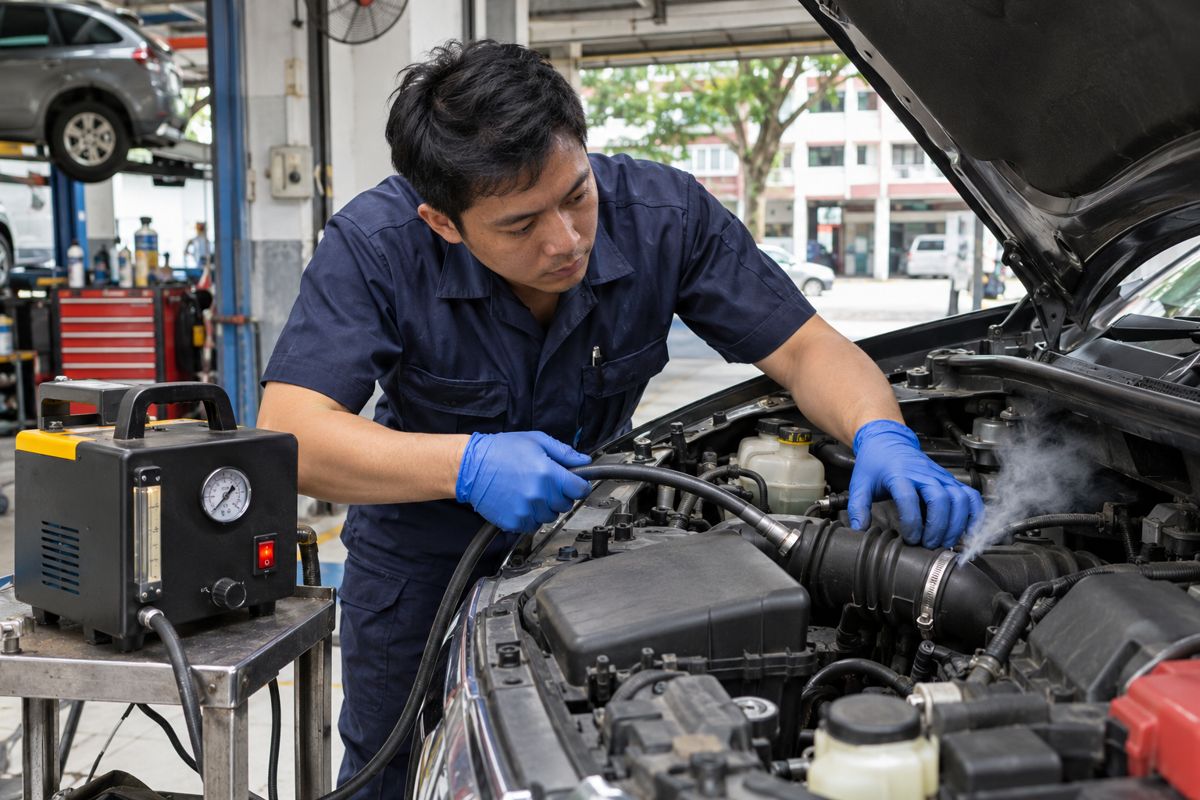
Depending on the car and what the earlier steps show, the technician may carry out further tests to narrow down where air could be entering. Motoserv offers a smoke leak test at selected outlets: with the engine off, visible low-pressure smoke is introduced into the sealed intake system, and the technician watches for where it escapes.

Illustration: a technician checks an intake hose joint during a low-pressure smoke test. Explain the findings and agree next steps
The technician identifies the suspected leak location and explains what was found. Any repair recommendation and its price are discussed with you before repair work proceeds.
What we can’t promise: repairing a leak may not clear every warning light or change your fuel consumption, because other faults can contribute to the same symptoms. Your technician will explain what the inspection did and did not find.
Intake leak repair in Singapore: what happens after diagnosis
If a leak is found, the repair depends on where it is. Typical examples include refitting a loose connection, replacing a cracked hose or renewing a worn seal or gasket. Some parts are easy to reach and others take more work, so the recommendation and price are specific to your car. Nothing proceeds until you have agreed to it.
When should I bring my car in for inspection?
Book an inspection soon after you notice persistent symptoms, such as ongoing rough idling, hesitation, a hissing noise or a check-engine light that stays on. Earlier checks tend to be simpler than waiting until the car runs worse.
Don’t wait if: the engine is stalling, running very roughly, losing significant power, or the check-engine light is flashing. Stop in a safe place and arrange assistance rather than driving on, then contact us.
Book an intake & vacuum leak diagnosis
Basic smoke leak test: S$50–S$80 (excluding GST), the same at every outlet that offers it. This diagnosis is offered at selected Motoserv outlets, so please check with us first. WhatsApp or call us with your symptoms, car model and area, and we will tell you which outlet can help before you book.
Prefer to call or email? +65 6264 3832 · info@motoserv.sg
Frequently asked questions
What is an intake or vacuum leak?
It is an unintended opening in the engine’s air intake system, such as a cracked hose, a loose clamp or a worn gasket. Air enters through it without being measured by the engine’s sensors, which can disturb the air-fuel mixture the engine computer is trying to control.
Can a vacuum leak cause a check-engine light?
Yes, it can. If the engine computer sees a lean mixture that it cannot correct, it may store a fault code and switch the light on. Many other faults also turn the light on, so reading the code is the start of diagnosis, not the end of it.
Does P0171 always mean there is a vacuum leak?
No. P0171 means the engine is running lean on bank 1; P0174 is the same condition on bank 2. A vacuum leak is one common cause, but a dirty or faulty airflow sensor, fuel delivery problems and other faults can set the same code. A proper diagnosis should come before parts are replaced.
Can I continue driving?
If the car is otherwise running normally and the warning light is steady, a short drive to a workshop may be reasonable, but arrange an inspection soon. If the engine stalls, runs very roughly, loses significant power or the check-engine light is flashing, stop in a safe place and arrange assistance instead of driving on.
How much does diagnosis cost?
A basic smoke leak test costs S$50–S$80 before GST, and the price is the same at every outlet that offers it. Any repair is separate: your technician explains what was found, and the repair recommendation and price are discussed with you before work proceeds. WhatsApp us if you would like to check the price for your car.
Which Motoserv outlet can check my car?
This diagnosis is offered at selected Motoserv outlets, not every outlet, so please check with us first. WhatsApp us your area and car model and we will tell you the location that can carry out the check. You can also call +65 6264 3832 or contact us.
Can a vacuum leak cause rough idling or high fuel consumption?
It can contribute to both. Unmeasured air can upset the air-fuel mixture, which may show up as an uneven idle or, in some cases, higher fuel use. However, rough idling and high fuel consumption also have many other causes, from worn spark plugs and dirty sensors to tyre pressure and driving conditions, so a diagnosis is needed rather than assuming a leak.
Related reading and services
About Motoserv
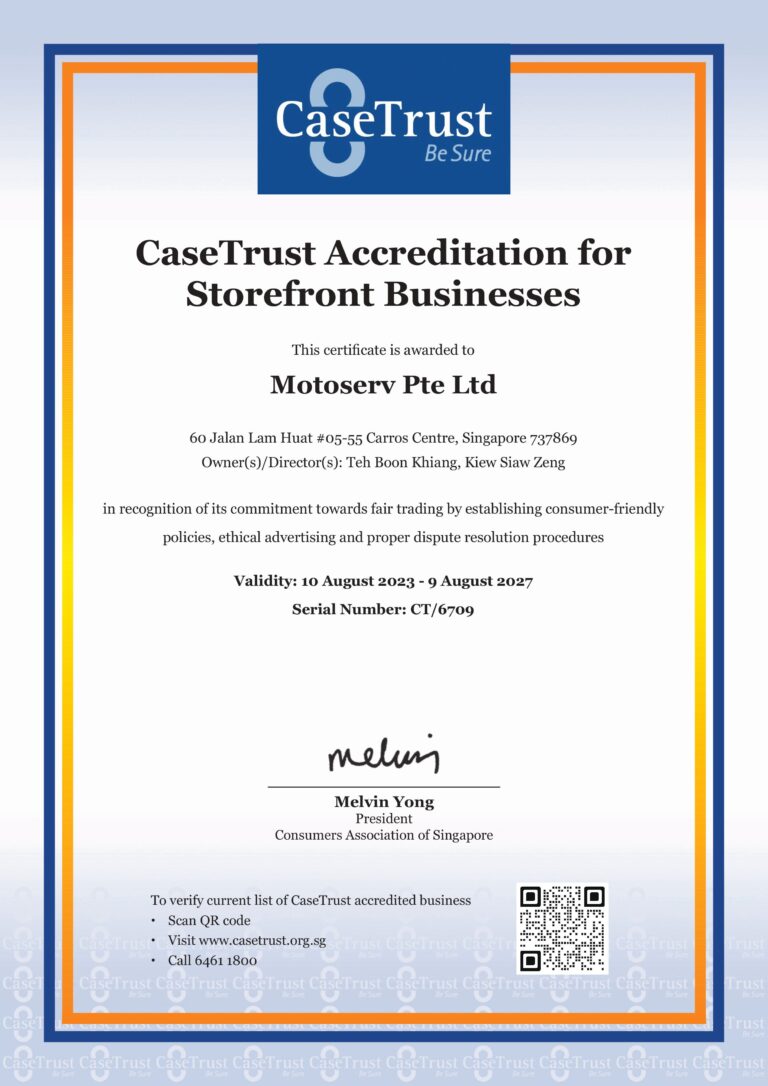
Motoserv is a Singapore neighbourhood car service network and an MK Group brand, providing car servicing, diagnostics and repair for petrol, hybrid and EV vehicles. Motoserv is CaseTrust accredited. This page is general information; what applies to your car depends on its make, model and condition. Fully electric cars have no combustion engine intake, so this page applies to cars with a combustion engine, including hybrids. More about Motoserv.