That sinking feeling when a warning light flashes on your dashboard is often followed by a second worry: finding a reliable auto repair shop in Singapore that won’t overcharge you or recommend services you don’t need. The stress of deciphering technical jargon and the fear of entrusting your vehicle to the wrong hands can make car maintenance a daunting task for any owner.
We believe every driver deserves peace of mind. That’s why we’ve created this complete guide to empower you. Here, you will learn how to identify a trustworthy workshop, understand the essential services your car needs, and recognise the red flags that could lead to unnecessary costs. Our goal is to provide you with the expert knowledge to make informed decisions with confidence.
By the end of this article, you’ll be equipped to choose a professional and honest auto repair partner, ensuring your car receives the quality care it deserves and is fixed correctly the first time. Let’s navigate the road to reliable car care together.
What Services to Expect from a Professional Auto Repair Shop
When a warning light flashes on your dashboard, your first thought is likely finding a reliable place for a fix. However, a truly professional auto repair shop in Singapore offers much more than just reactive repairs. The best workshops provide a comprehensive suite of services designed for both immediate problem-solving and long-term preventative care. Understanding these services helps you make informed decisions to extend the lifespan of your vehicle and ensure your safety on the road. Services typically fall into two main categories: routine maintenance and specialized repairs.
Routine Maintenance and Servicing
Preventative care is the cornerstone of responsible car ownership. Following your manufacturer’s recommended service schedule not only preserves your car’s resale value but also helps our experienced mechanics identify potential issues before they become major, costly problems. Regular maintenance is your best defence against unexpected breakdowns.
- Engine Health: Regular oil changes and top-ups of essential fluids (coolant, brake, transmission fluid) keep your engine running smoothly and prevent overheating.
- Safety Systems: Comprehensive brake inspections, along with tyre rotation and wheel alignment, ensure your car stops effectively and handles predictably.
- Breakdown Prevention: Proactive battery health checks and the replacement of air and fuel filters are simple steps to ensure your car starts reliably every time.
Diagnostic and Specialized Repair Services
When a specific problem arises, such as a persistent warning light or an unusual noise, you need expert diagnostic services. A professional auto repair shop uses advanced computer diagnostics to accurately read the error codes from your vehicle’s onboard computer, pinpointing the exact source of the issue. This diagnostic-first approach saves you time and money by ensuring only the necessary repairs are performed. While some workshops specialise, many larger centres handle a wide range of issues, similar to the various types of auto repair shops that exist to serve different vehicle needs.
- Advanced Diagnostics: Using specialized equipment to interpret fault codes from the Engine Control Unit (ECU) for precise troubleshooting.
- Major Component Repair: Expert servicing for critical systems, including complex engine and transmission repairs that require certified, IMI-accredited mechanics.
- Comfort and Electrical Systems: Specialized services for your air-conditioning system, crucial in Singapore’s climate, as well as troubleshooting for suspension, steering, and intricate electrical faults.
Types of Auto Repair Shops in Singapore: Which is Right for You?
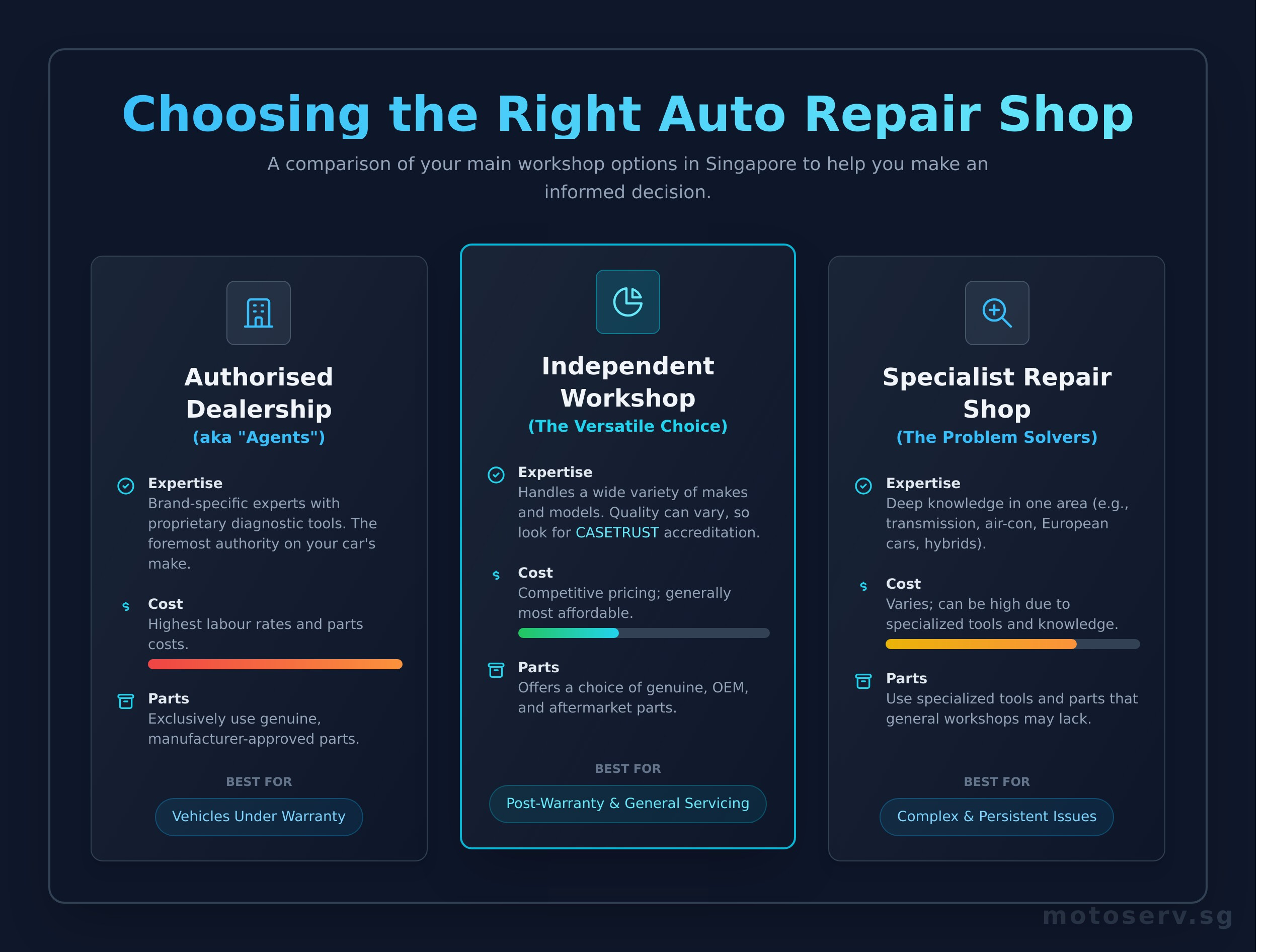
When a warning light appears on your dashboard, choosing the right auto repair shop is your next critical step. Not all workshops in Singapore are created equal; each offers a unique balance of specialisation, cost, and convenience. Your car’s make, age, and warranty status are key factors in determining the best fit for your needs. Understanding these differences empowers you to make an informed decision, ensuring your vehicle receives the expert care it deserves.
Authorised Dealership Workshops
Often referred to as “agents,” these workshops are affiliated with a specific car manufacturer like Toyota, Mercedes-Benz, or BMW. They are the foremost experts on the brands they represent, using genuine parts and proprietary diagnostic equipment designed exclusively for your vehicle. If your car is still under warranty, repairs for covered issues must typically be handled here to maintain warranty validity. The trade-off for this specialised service is often higher labour rates and parts costs, with servicing bills sometimes reaching several hundred SGD more than other options.
Independent Workshops
Independent workshops are versatile service centres that handle a wide variety of car makes and models. Their main advantage is competitive pricing, offering a more affordable alternative for post-warranty servicing and repairs. Many drivers in Singapore build long-term, trusted relationships with mechanics at these establishments. However, quality and expertise can vary significantly. Because standards differ, it is vital to check for credentials like CASETRUST accreditation. Resources that provide guidance on how to choose a reliable auto repair shop can be invaluable for vetting potential workshops and ensuring you receive professional service.
Specialist Repair Shops
For complex or specific problems, a specialist is your best choice. These workshops concentrate their expertise in one particular area. Some focus on intricate systems like transmissions, air-conditioning, or engine diagnostics, while others specialise in certain types of vehicles, such as European cars or hybrid models. They possess deep knowledge and sophisticated tools that a general workshop may lack, making them the ideal solution for persistent issues that are difficult to diagnose and resolve correctly.
A Checklist for Choosing a Reliable Auto Repair Shop
A lit-up dashboard warning light is a call to action, but where you take that action matters immensely. Choosing a reliable workshop isn’t about finding the cheapest quote; it’s about entrusting your vehicle’s safety and lifespan to qualified professionals. A systematic approach ensures you select an auto repair shop that values quality and transparency. Use this checklist to make an informed decision and find a partner you can trust for the long run.
Certifications and Accreditations
When evaluating a workshop, look for tangible proof of their commitment to quality. In Singapore, a CASETRUST accreditation is a strong indicator of fair trading practices and customer-friendly policies. Furthermore, inquire if their mechanics hold professional certifications, such as those from the Institute of the Motor Industry (IMI). These credentials show that the technicians are trained to current industry standards. Reputable workshops often align with industry bodies like the Singapore Motor Workshop Association, which has promoted excellence and accountability in the local automotive industry since 1972.
Transparency and Communication
A trustworthy workshop operates with complete transparency. You should never feel left in the dark about the work being done on your car. Before any repairs begin, you should receive a clear, written estimate detailing the costs. The mechanic should be able to explain the problem and the proposed solution in simple terms you can understand. Key signs of a transparent workshop include:
- Providing an itemised bill that separates parts and labour costs.
- Willingness to show you the old or damaged parts that were replaced.
- Seeking your approval before performing any additional work not on the initial estimate.
Reviews, Reputation, and Warranty
In today’s digital age, a workshop’s reputation is easy to verify. Check online reviews on platforms like Google to see what other customers are saying. Don’t underestimate the value of word-of-mouth; ask friends, family, or colleagues for their recommendations. Finally, always ask about the warranty offered on both parts and labour. A confident auto repair shop will stand behind its workmanship, giving you peace of mind that the repair is built to last. A solid warranty is a direct reflection of the quality you can expect.
Understanding the Car Repair Process: From Drop-off to Pick-up
Navigating a car repair can be a source of anxiety for many Singaporean drivers. However, understanding the process from start to finish empowers you to be an active participant in your car’s care. Knowing what to expect at each stage prevents misunderstandings and ensures you receive fair, quality service. A transparent repair journey is the hallmark of a trustworthy auto repair shop, giving you complete peace of mind.
The Initial Diagnosis and Estimate
Clear communication is the first step towards a successful repair. When you arrive, be prepared to describe the issue in detail. A professional service advisor will listen carefully to diagnose the problem accurately. Before any work begins, always:
- Describe the symptoms clearly, including when they occur and any unusual sounds or smells.
- Ask about any diagnostic fees upfront to avoid surprises. In Singapore, this can range from S$50 to S$150 depending on the complexity.
- Request a detailed, written estimate that itemises parts and labour costs.
- Never authorise any work without a clear, agreed-upon quote.
Authorising the Repair
Once you receive the estimate, take a moment to review it. This is your opportunity to ask questions and ensure you are comfortable with the proposed solution. A reliable auto repair shop will patiently explain each line item. Discuss the types of parts to be used—whether genuine, OEM (Original Equipment Manufacturer), or quality aftermarket parts—to fit your budget and needs. Give your explicit approval for the work to begin, and request a call if any unexpected issues or additional costs arise during the repair.
Final Inspection and Payment
When you are notified that your car is ready, the process isn’t over. A final review ensures the work was completed to your satisfaction. Before making payment, take these steps:
- Carefully compare the final invoice against the initial written estimate.
- Ask to see the old or replaced parts; this is a common practice that demonstrates transparency.
- Receive a clear, non-technical explanation of the work performed by the mechanic.
- Keep all paperwork, including the final invoice and any warranty information provided for the new parts or labour.
After the Repair: What to Look For
After leaving the workshop, pay close attention to your vehicle’s performance. Take it for a short test drive in familiar conditions to confirm the original issue is resolved. Listen for any strange noises and check that no warning lights reappear on your dashboard. If the problem persists or a new one appears, contact the workshop immediately. A reputable service provider will stand by their work. Experience a transparent repair process at Motoserv.
Common Red Flags and Mistakes to Avoid
Once a dashboard warning light alerts you to a problem, choosing the right workshop is your most important next step. Being a savvy and informed customer can save you significant time, money, and stress. Protecting your vehicle starts with knowing how to identify a trustworthy service provider and avoiding common pitfalls that lead to poor service or inflated bills.
Warning Signs of a Bad Workshop
A professional auto repair shop prioritises transparency and customer confidence. Keep an eye out for these red flags that suggest you should look elsewhere:
- Vague Estimates: A refusal to provide a detailed, written quote before work begins is a major warning sign. You should always know what you are paying for, including parts and labour costs.
- High-Pressure Tactics: Be wary of mechanics who pressure you into approving immediate, expensive repairs without a clear explanation. A reliable technician will explain the issue, outline your options, and give you space to decide.
- A Disorganised Environment: While workshops are busy places, extreme mess and disorganisation can reflect a lack of professionalism and attention to detail that may carry over to your vehicle’s repair.
- Consistently Poor Reviews: Look for patterns in online reviews. A few negative comments are normal, but a history of unresolved complaints about the same issues (e.g., overcharging, incomplete work) is a clear indicator of systemic problems.
This principle of a professional environment reflecting quality service applies across many industries. For example, companies specializing in high-end property maintenance, such as Bajan Outdoor Living, understand that a pristine finish on a surface like a pool deck or garage floor is a direct indicator of their meticulous standards.
Costly Mistakes Car Owners Make
Even with the best intentions, car owners can make simple mistakes that result in a negative experience. Avoid these common errors to ensure your car receives the quality care it deserves:
- Choosing Solely on Price: The lowest quote is not always the best value. Unusually low prices can mean substandard parts, inexperienced labour, or hidden fees that appear on the final bill.
- Ignoring Certifications and Warranties: Look for workshops with credentials like CASETRUST accreditation, which signifies a commitment to fair trade and transparency. Always ask about warranties on parts and labour for your peace of mind.
- Failing to Get a Second Opinion: For major, costly repairs (e.g., an engine or transmission overhaul), seeking a second opinion from another reputable auto repair shop is a prudent step to confirm the diagnosis and cost.
- Authorising Work Verbally: Always approve work and associated costs in writing, even via a simple text or email. This creates a clear record and prevents misunderstandings or disputes later.
By staying vigilant for these red flags and avoiding common mistakes, you can entrust your vehicle to a workshop that values quality and integrity. For professional diagnostics and transparent service you can rely on, visit the certified experts at Motoserv Singapore.
Your Partner for Reliable Car Care in Singapore
Navigating car maintenance in Singapore doesn’t have to be a challenge. The key is to prioritise workshops that offer transparency, possess proven expertise, and value customer trust. By understanding the repair process and knowing which red flags to avoid, you empower yourself to make the best decision for your vehicle’s health and your peace of mind.
Ultimately, choosing the right auto repair shop means finding a dependable partner committed to quality and safety. At Motoserv, we are dedicated to being that partner for you. Our team of IMI UK Accredited mechanics provides expert service for Japanese, Continental, Hybrid, and EV models across our multiple convenient locations in Singapore.
Experience the assurance that comes with award-winning service. Entrust your car to our CASETRUST-accredited professionals. Find your nearest Motoserv workshop. Drive with confidence, knowing your vehicle is in the most capable hands.
Frequently Asked Questions
What is the difference between an auto repair shop and a car servicing workshop?
A car servicing workshop primarily focuses on preventive maintenance to keep your vehicle running smoothly. This includes routine tasks like oil changes, fluid top-ups, and filter replacements. In contrast, an auto repair shop diagnoses and fixes specific problems after they occur, such as a faulty transmission, brake system failures, or engine issues that trigger a dashboard warning light. Many professional workshops in Singapore offer both services to provide comprehensive vehicle care.
Should I use genuine, OEM, or aftermarket parts for my car repair?
Genuine parts come directly from your car’s manufacturer, guaranteeing a perfect fit and quality. OEM (Original Equipment Manufacturer) parts are made by the same company but sold without the carmaker’s branding, offering similar quality at a lower cost. Aftermarket parts are from third-party producers and vary widely in quality. For critical components like brakes and engine parts, we recommend genuine or high-quality OEM parts to ensure safety and reliability for your vehicle.
How do I know if the price I’m being quoted is fair?
A fair quote should be transparent and itemised, clearly separating the costs for labour and parts. To feel confident, you can request quotes from a few reputable workshops. Be cautious of quotes that seem unusually low, as they may involve substandard parts or hidden charges. Choosing a CASETRUST-accredited workshop ensures a commitment to transparent pricing and fair business practices, giving you peace of mind that you are receiving honest value for the service.
Is it better to stick with my authorised dealer after the warranty expires?
While authorised dealers offer reliable service, they are not your only option. Reputable independent workshops can provide an equally high standard of care, often at a more competitive price point. Look for workshops with experienced, IMI (UK) certified mechanics who use genuine or high-quality OEM parts. A professional independent workshop with brand-specific expertise can be an excellent and cost-effective choice for post-warranty maintenance and repairs, helping to preserve your car’s value.
What questions should I ask before leaving my car at a repair shop?
To ensure a smooth and transparent process, we recommend asking a few key questions. Always ask for a detailed written estimate before any work begins. Enquire about the warranty offered on both parts and labour. It is also wise to confirm the estimated completion time and ask the workshop to contact you for approval before performing any additional work that is not on the original quote. This helps prevent misunderstandings and unexpected costs.
Can a workshop refuse to give me back my car if I dispute the bill?
Yes, under Singapore law, a workshop can legally hold your vehicle until the bill for authorised and completed work is paid. This is known as a mechanic’s lien. It highlights the importance of getting a clear, written quotation and agreeing on the scope of work before repairs begin. If a dispute arises over the final bill, it is best to communicate directly with the workshop management or seek mediation through an organisation like CASE.
How can I find a reliable workshop that specialises in my car’s brand?
Start by searching for workshops with strong online reviews and industry accreditations, such as CASETRUST, which signifies a commitment to quality and fairness. Check their website or call to ask if they have specialised diagnostic equipment and experienced mechanics for your specific car make, be it a European or Japanese model. A reliable auto repair shop will be transparent about their expertise and will confidently answer your questions, ensuring your vehicle receives professional care.