
That sudden, unwelcome glow on your dashboard—the check engine light—can trigger a wave of anxiety for any Singaporean driver. Is it a minor sensor issue, or a sign of a major, expensive repair? This uncertainty, coupled with confusing technical jargon, often makes the situation more stressful. A professional check engine light diagnosis is the only way to find the real cause, but it’s crucial to understand what that process involves so you can make confident, informed decisions for your vehicle.
This guide is designed to give you peace of mind. We will demystify the process, explaining the most common reasons your light is on and what the error codes actually mean in simple terms. You will also learn how our expert, IMI (UK) certified mechanics perform an accurate and transparent diagnosis to pinpoint the exact problem. Our goal is to replace worry with clarity, empowering you with the knowledge to get your car fixed correctly and get you back on the road safely.
Check Engine Light On? First Steps for Every Singaporean Driver
That sudden, glowing orange light on your dashboard can cause immediate stress for any driver. However, there is no need to panic. Think of it as a message from your vehicle’s On-Board Diagnostics (OBD-II) system—a sophisticated network that constantly checks the health of your engine, transmission, and emissions components. To better understand the technology behind this warning, a good resource is this article explaining What is a Check Engine Light? While it’s tempting to ignore, doing so can turn a minor issue into a major, costly repair. A prompt check engine light diagnosis is essential for your car’s health and safety on Singapore’s roads.
Steady Light vs. Flashing Light: Know the Difference
The way the light behaves tells you about the severity of the problem. A steady light indicates that the system has detected a fault, but it is not an immediate emergency. It is generally safe to continue driving, but you should schedule an appointment with a professional workshop soon to prevent the issue from worsening. A flashing light, however, signals a serious problem that requires immediate attention, such as an engine misfire. This can quickly damage expensive components like the catalytic converter. If your light is flashing, reduce your speed, avoid heavy acceleration, and find a safe place to stop your car as soon as possible.
Immediate Checks You Can Do Yourself
Before calling your mechanic, there are a couple of simple checks you can perform. First, check your fuel cap. A loose or improperly sealed cap is a very common reason for the check engine light to illuminate. Tighten it until you hear it click, and then continue driving. It may take a few trips for the light to turn off if this was the issue. Next, pay attention to your car’s performance. Noting any specific symptoms can help our mechanics perform a more accurate check engine light diagnosis. Look for:
- Strange noises or vibrations from the engine
- A noticeable drop in power or poor acceleration
- Visible smoke coming from the exhaust
- A significant decrease in fuel efficiency
These observations are valuable clues that help our team identify the root cause of the problem quickly and effectively.
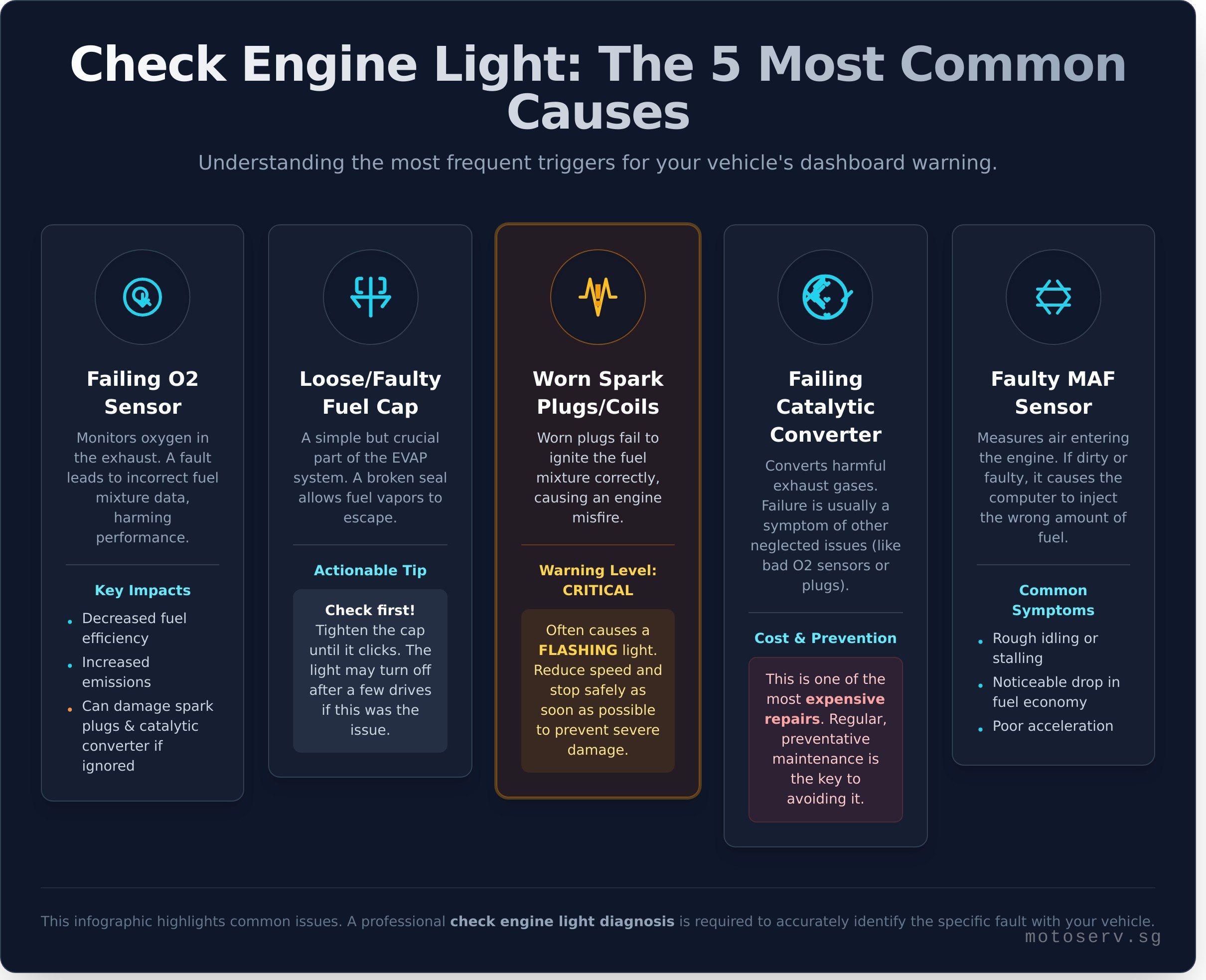
The 5 Most Common Causes of a Check Engine Light
While the amber glow of the Check engine light can signal hundreds of potential issues, a handful of common problems are responsible for the majority of cases. Understanding these frequent culprits can help reduce your anxiety and provide clarity on what might be happening under the bonnet. These issues range from simple fixes you can check yourself to more complex problems requiring an expert. However, only a professional check engine light diagnosis can determine the precise cause.
1. Failing Oxygen (O2) Sensor
Your vehicle’s oxygen sensor monitors the amount of unburnt oxygen in the exhaust system. This data helps the engine’s computer adjust the fuel mixture for optimal performance. When it fails, the computer receives incorrect data, leading to decreased fuel efficiency and increased emissions. If left unresolved, a faulty O2 sensor can eventually damage expensive components like your spark plugs and catalytic converter.
2. Loose or Faulty Fuel Cap
This is often the simplest and most affordable problem to resolve. The fuel cap is a crucial part of your car’s evaporative emission control (EVAP) system, creating a vacuum seal. If the cap is loose, cracked, or missing, fuel vapours can escape. This break in the system’s pressure triggers an emissions error and illuminates the check engine light.
3. Worn Spark Plugs or Ignition Coils
Spark plugs are responsible for igniting the air-fuel mixture in your engine’s cylinders. Over time, they can wear out, or the ignition coils that provide their electrical charge can fail. This can lead to an engine misfire, which you might feel as a stuttering or hesitation during acceleration. A misfire is a serious issue and is often the reason for a flashing check engine light, which requires immediate attention.
4. Failing Catalytic Converter
The catalytic converter is a vital part of your exhaust system that converts harmful pollutants like carbon monoxide into less harmful gases. Failure is rarely spontaneous; it’s typically a consequence of neglecting other maintenance, such as replacing bad spark plugs or a faulty O2 sensor. This is one of the more expensive potential repairs, making preventative maintenance a key to avoiding it.
5. Faulty Mass Airflow (MAF) Sensor
The MAF sensor measures the amount of air entering the engine, allowing the onboard computer to inject the correct amount of fuel. If it’s dirty or failing, it can cause a range of performance issues, including rough idling, stalling, and a noticeable drop in fuel economy. Cleaning or replacing it is essential for engine health.
While these five issues are common, they are far from the only possibilities. To ensure your vehicle’s safety and reliability, entrust your car to our experienced mechanics. We use advanced diagnostic tools to provide an accurate check engine light diagnosis, pinpointing the exact fault and recommending the most effective, transparent solution.
The Professional Check Engine Light Diagnosis Process at Motoserv
A glowing check engine light can be stressful, but getting to the root of the problem shouldn’t be. At Motoserv, we go beyond simply reading a code. We perform a comprehensive check engine light diagnosis designed to accurately identify the root cause of the fault, not just the symptom. This methodical approach ensures we recommend the right repair the first time, saving you time, money, and preventing the light from returning. As a CASETRUST accredited workshop, we are committed to a transparent and reliable process that gives you complete peace of mind.
Step 1: Initial Consultation & Visual Inspection
Our process begins by listening to you. We take note of any symptoms you’ve noticed, such as strange noises, reduced power, or poor fuel economy. Following this, our experienced mechanics conduct a thorough visual inspection of the engine bay, looking for obvious issues that could trigger the light. This includes checking for:
- Loose or disconnected hoses and vacuum lines
- Frayed wiring or damaged electrical connectors
- Cracked or worn belts
- Visible fluid leaks
Step 2: Connecting the Advanced OBD-II Scanner
Next, we connect our professional-grade On-Board Diagnostics (OBD-II) scanner to your vehicle’s port. This tool communicates with your car’s computer to retrieve the specific Diagnostic Trouble Code (DTC) that was triggered. This code, part of a highly regulated system governed by strict engine diagnostic system requirements, points our technicians to the system reporting a fault, such as “P0420 – Catalyst System Efficiency Below Threshold.”
Step 3: Verifying the Fault & Further Testing
A DTC is a starting point, not a final answer. Many workshops might replace a part based on a code alone, but this can lead to unnecessary costs. Our expert technicians use the code to guide further testing with specialised equipment. Whether it’s testing a sensor’s voltage, checking fuel pressure, or performing a smoke test for leaks, we verify the exact point of failure. This critical step confirms the fault and ensures we only replace the parts that are genuinely needed.
Step 4: Providing a Clear Report and Transparent Quote
Once our complete check engine light diagnosis is finished, we explain the findings to you in simple, easy-to-understand terms. You will receive a detailed report and a transparent, itemised quote for the necessary repairs. We believe in honest recommendations, and no work will ever begin without your full understanding and approval. Don’t guess what’s wrong with your car. Book a professional diagnosis today.
DIY Code Readers vs. Professional Diagnostics: What’s the Difference?
With affordable handheld code readers widely available, it can be tempting to diagnose a check engine light yourself. While these tools can retrieve a Diagnostic Trouble Code (DTC), the code itself is merely a symptom, not a complete diagnosis. It is the starting point of an investigation, and misinterpreting it can lead to unnecessary and costly repairs.
Limitations of Basic Scanners
A basic scanner provides a generic definition for a trouble code, but it lacks the depth and context needed for an accurate fix. This often leads to a frustrating cycle of guesswork and repeat repairs. Key limitations include:
- Generic vs. Specific Codes: The scanner might show a generic code like P0420 (Catalyst System Efficiency Below Threshold), but it can’t tell you the manufacturer-specific reason, which could differ significantly between a Toyota and a BMW.
- No Live Data: These devices cannot stream live data from your car’s sensors. Our technicians use this data to see how components are performing in real-time, which is crucial for identifying the root cause.
- Misleading Faults: A code for a faulty oxygen sensor (a S$200+ part) could actually be triggered by a simple vacuum leak or a failing fuel injector. Replacing the sensor would be a waste of money, as the light will simply return.
- Clearing the Code Isn’t a Fix: Simply clearing the code without addressing the underlying problem ensures the check engine light will reappear, leaving the core issue unresolved and potentially causing more damage.
The Value of an Experienced Mechanic
Entrusting your vehicle to a professional for a check engine light diagnosis goes far beyond just reading a code. Our IMI-certified technicians bring a level of expertise and technology that a simple handheld tool cannot replicate, ensuring a correct and lasting solution.
- Holistic System Knowledge: Our experts understand the complex interplay between your car’s engine, transmission, and exhaust systems. They know how a fault in one area can trigger a warning in another.
- Interpreting Live Data: We analyse real-time performance data—like fuel trim, sensor voltages, and engine load—to see the full picture and pinpoint the exact source of the problem.
- Professional-Grade Equipment: We use advanced diagnostic tools that provide manufacturer-specific data and perform tests that basic scanners can’t, ensuring pinpoint accuracy.
- Guaranteed Peace of Mind: We stand by our work. Our diagnosis and subsequent repairs are guaranteed, giving you the confidence that the issue is resolved correctly the first time.
While a DIY scanner can satisfy your curiosity, a professional check engine light diagnosis from a trusted workshop saves you time and money by identifying the precise fault from the start. Before you order a part you might not need, let our expert team at Motoserv provide a reliable and accurate solution.
Your Clear Path to Peace of Mind on Singapore Roads
That amber glow on your dashboard is more than just a light; it’s your car’s way of asking for attention. While the cause can be as simple as a loose fuel cap, ignoring the warning can lead to more serious and costly engine problems. Understanding the difference between a basic DIY code reader and a professional check engine light diagnosis is the key to an accurate, reliable solution that saves you time and money in the long run.
Instead of guessing, let our experts provide the clarity you need. At Motoserv, our IMI (UK) Certified Technicians use advanced equipment to pinpoint the exact issue with precision. As a CASETRUST Accredited workshop, we guarantee transparent pricing and honest recommendations you can depend on. With multiple convenient locations across Singapore, expert help is always nearby.
Don’t let a warning light cause you unnecessary stress. Schedule your expert check engine light diagnosis at a Motoserv near you. Entrust your car to us and drive with complete confidence.
Frequently Asked Questions About the Check Engine Light
How much does a check engine light diagnosis cost in Singapore?
In Singapore, the cost for a professional check engine light diagnosis typically ranges from S$60 to S$150. This initial fee covers the use of specialised OBD-II scanning equipment to retrieve the fault codes and a preliminary assessment by an experienced mechanic. At Motoserv, we believe in transparent pricing. We will provide a clear explanation of the issue and a detailed quote for any necessary repairs before proceeding, ensuring you have complete peace of mind.
Can I pass my vehicle inspection with the check engine light on?
No, a vehicle with an illuminated check engine light will not pass the mandatory vehicle inspection in Singapore. The light indicates an active fault within the engine or emissions system, which is an automatic failure criteria at authorised inspection centres like VICOM or STA. To ensure your vehicle is roadworthy and passes its inspection, it is essential to have the underlying issue diagnosed and professionally repaired before your appointment date.
Will the check engine light turn off by itself?
Sometimes, the check engine light may turn off on its own if the issue was temporary, such as a loose petrol cap that has since been tightened. However, the fault code is still stored in your car’s computer. Ignoring the light is a risk, as it could reappear or be masking a more serious problem. For your safety and to prevent potential long-term damage, we always recommend a professional diagnostic check to be certain.
Does a check engine light always mean an expensive repair?
Not at all. While a check engine light can indicate a serious issue, it often points to a minor and affordable fix. Common causes can be as simple as a faulty oxygen sensor, a worn-out spark plug, or a loose petrol cap—all of which are relatively inexpensive to resolve. Our expert mechanics provide honest recommendations, ensuring you only pay for the necessary repairs to get your vehicle running safely and efficiently again.
What types of vehicles can Motoserv diagnose?
Our IMI-certified mechanics are highly experienced and equipped to diagnose and repair a wide range of vehicles. We regularly service most makes and models found on Singapore’s roads, including popular Japanese and Korean brands like Toyota, Honda, Hyundai, and Kia, as well as Continental cars such as Mercedes-Benz, BMW, and Audi. You can entrust your car with us, confident that we have the expertise to handle its specific needs with precision and care.
How long does a check engine light diagnosis take?
An initial check engine light diagnosis, which involves scanning the vehicle’s computer for fault codes, is a quick process that usually takes between 30 to 60 minutes. This provides the direction for further investigation. Pinpointing the exact cause of the fault may require additional testing by our professional technicians. We always strive to work efficiently to identify the problem and will keep you informed of the timeline for any required repairs.