That dreaded orange glow on your dashboard—the ‘Check Engine’ light. For many drivers in Singapore, it’s a universal symbol of anxiety, sparking worries about complex problems and potentially expensive repairs. The uncertainty can be stressful, but the solution is often straightforward: a professional car diagnostic test. This simple procedure is the key to understanding exactly what your car needs, preventing a minor issue from becoming a major headache.
But what does this test actually involve, and why is it so crucial for your vehicle’s long-term health and your wallet? We understand the concerns—from confusing technical jargon to finding a reliable workshop you can trust. This guide is designed to provide you with clear, honest answers and give you the confidence you need when dealing with car repairs.
Here, you will learn what a comprehensive diagnostic check includes, how it helps our expert mechanics pinpoint issues with precision, and ultimately, how it saves you significant time and money. Let’s demystify the process and put you back in control of your vehicle’s maintenance.
What is a Car Diagnostic Test and How Does It Work?
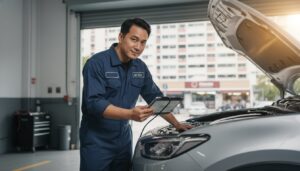
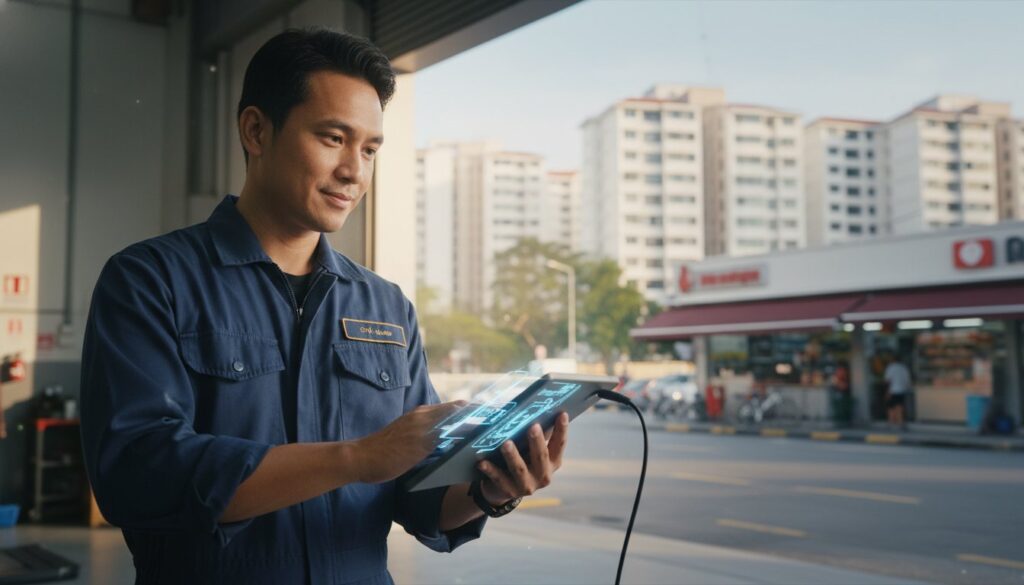
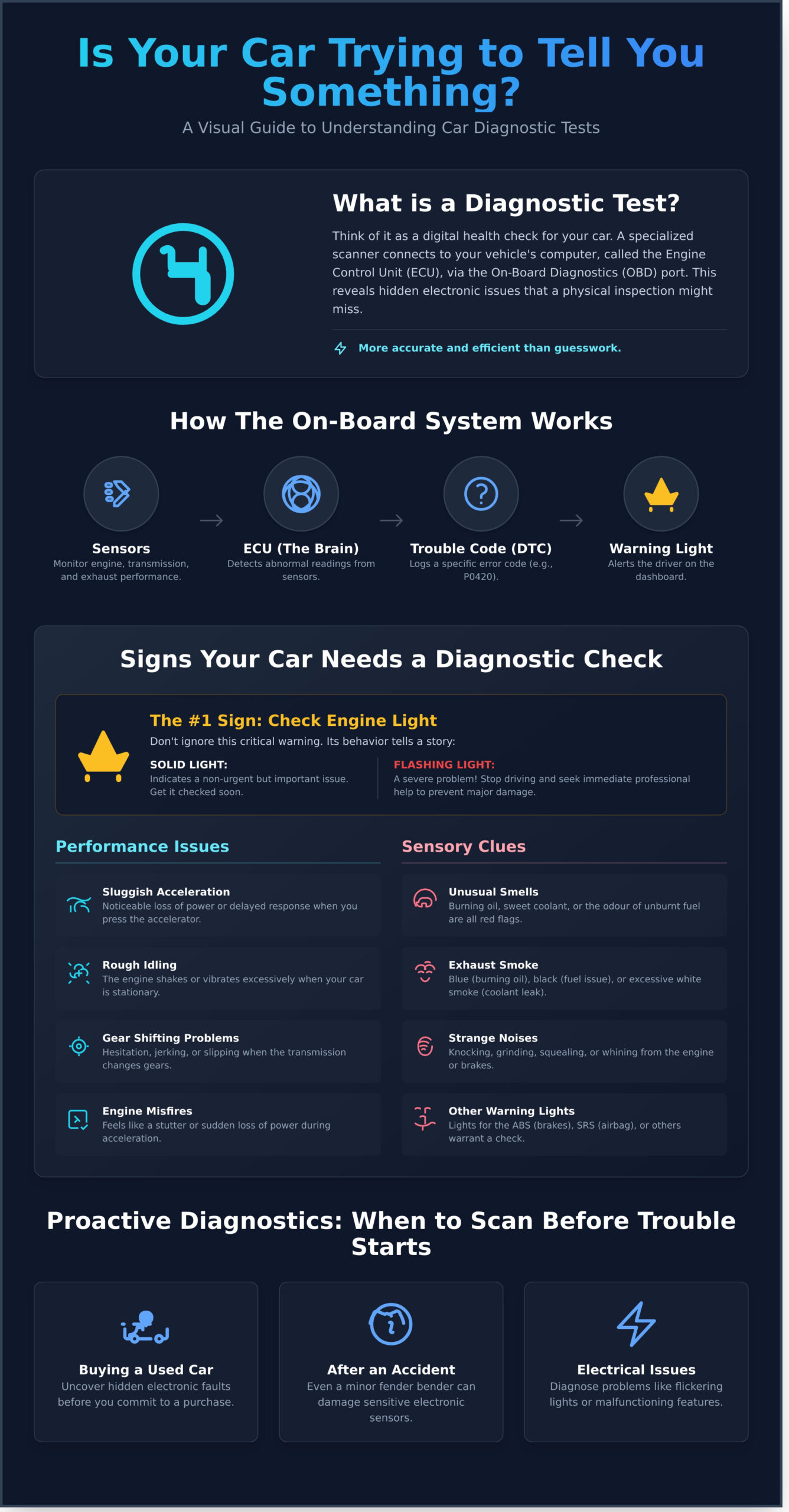
Think of a car diagnostic test as a comprehensive health check for your vehicle’s complex computer systems. It goes far beyond a simple visual inspection, providing our expert mechanics with a detailed digital report of your car’s condition. Modern vehicles sold in Singapore are equipped with a standardized port, usually located under the dashboard. This port is the gateway to the car’s internal computer network, built on a system known as On-board diagnostics (OBD). Our professional technicians use a specialized scanning tool to connect to this port and communicate directly with your car’s main computer.
This digital-first approach allows for a more accurate and efficient repair process than guesswork alone. It is fundamentally different from a physical inspection, as it reveals underlying electronic issues that may not have visible symptoms yet.
The Role of the Engine Control Unit (ECU)
The ECU is essentially the ‘brain’ of your car. This powerful computer constantly monitors the performance of critical components like the engine, transmission, and exhaust system through a network of sensors. If a sensor reports a reading that is outside of its normal operating range—for example, an issue with your oxygen sensor—the ECU immediately logs a specific trouble code and may illuminate a warning light on your dashboard, such as the “Check Engine” light.
Understanding Diagnostic Trouble Codes (DTCs)
The scanner reads these Diagnostic Trouble Codes (DTCs) from the ECU. Each DTC is a unique alphanumeric code that points to a specific problem area. For instance, a code like ‘P0420’ often suggests an issue with the catalytic converter’s efficiency. It’s crucial to understand that a DTC is a starting point, not a final diagnosis. It tells our IMI-certified mechanics where to begin their expert investigation to pinpoint the exact cause of the fault, ensuring quality and transparency in our recommendations.
Key Signs Your Car Needs a Diagnostic Check (Even Without a Warning Light)
The most unmistakable sign your vehicle needs attention is an illuminated ‘Check Engine’ light. A flashing light indicates a severe problem that requires immediate professional service. However, your car often communicates distress through subtle changes long before a warning light appears. As J.D. Power explains, a diagnostic test taps into your car’s computer systems to identify specific issues. Paying attention to performance and sensory clues is key to catching problems early and preventing costly repairs.
If you notice a sudden and unexplained drop in your vehicle’s fuel efficiency, it’s a clear indicator that something is amiss with the engine or exhaust system. Similarly, if your car has trouble starting, stalls intermittently, or cuts out while driving, a professional car diagnostic test is essential to pinpoint the root cause safely and accurately.
Performance Issues to Watch For
Your car’s performance is a direct reflection of its health. Any deviation from its normal behaviour can signal an underlying issue that requires a diagnostic scan. Keep an eye out for these common symptoms:
- Sluggish Acceleration: A noticeable loss of power or a delayed response when you press the accelerator.
- Rough Idling: The engine shakes or vibrates excessively when your car is stationary.
- Gear Shifting Problems: You may experience hesitation, jerking, or slipping when the automatic transmission changes gears.
- Engine Misfires: This can feel like a stutter, hesitation, or sudden loss of power during acceleration.
Sensory Clues from Your Vehicle
Beyond how your car feels, what you see, smell, and hear can provide critical warnings. These sensory clues should never be ignored, as they often point to specific system failures:
- Unusual Smells: The scent of burning oil, a sweet smell from leaking coolant, or the odour of unburnt fuel are all red flags.
- Exhaust Smoke: Noticeable blue smoke (burning oil), black smoke (running rich), or excessive white smoke (coolant leak) indicates a problem.
- Strange Noises: Sounds like knocking, grinding, squealing, or whining when you start the engine, accelerate, or brake.
- Other Warning Lights: Any dashboard light, such as for the ABS (brakes) or SRS (airbag), warrants a professional check.
When to Get a Proactive Diagnostic Test
A car diagnostic test isn’t just for when things go wrong. It’s also a powerful tool for proactive maintenance and informed decision-making. We recommend a scan in these situations:
- Before buying a used car as part of a comprehensive pre-purchase inspection.
- After any accident, even a minor fender bender, to check for hidden electronic or sensor damage.
- If you experience any electrical issues, such as flickering lights or malfunctioning features.
Experiencing these signs? Don’t wait for a small issue to become a major problem. Get a professional diagnosis at Motoserv. Our expert mechanics can provide the clarity and peace of mind you need.
The Diagnostic Process: What to Expect at Our Workshop
At Motoserv, we believe in a transparent process that gives you complete peace of mind. When you entrust your vehicle to us for a car diagnostic test, you are not just getting a code reading; you are receiving a comprehensive assessment from our IMI-certified experts. Our methodical approach combines advanced diagnostic technology with hands-on experience to accurately identify the root cause of any issue, ensuring you understand every step we take.
Step 1: Consultation and Information Gathering
Our process begins with a conversation. Our professional service advisor will listen carefully to the issues you’ve noticed—whether it’s an unusual sound, a drop in performance, or a dashboard warning light. We’ll ask specific questions about when the problem occurs and any recent events, as this personal context is crucial for an efficient and accurate diagnosis.
Step 2: Connecting the Scanner and Retrieving Data
Next, our technician connects a professional-grade diagnostic scanner to your vehicle’s On-Board Diagnostics (OBD-II) port. This tool communicates directly with your car’s computer system to retrieve any current, pending, or historical Diagnostic Trouble Codes (DTCs). Beyond just codes, we also analyse live data streams from various sensors to get a real-time picture of your vehicle’s health.
Step 3: Expert Analysis and Verification
A trouble code only points our technicians in the right direction—it doesn’t tell the whole story. This is where our expertise makes the difference. Our experienced mechanics use the data as a starting point, applying their deep knowledge to interpret the findings. They may conduct further physical inspections or tests to verify the root cause, ensuring we fix the actual problem, not just a symptom of it.
Step 4: Clear Reporting and Recommendations
Transparency is our commitment to you. Once the comprehensive car diagnostic test is complete, we provide you with a straightforward report that is easy to understand. We will walk you through:
- The specific issue or issues we have identified.
- Our professional recommendation for the necessary repairs.
- A detailed, transparent quote in SGD with no hidden costs.
We ensure you have all the information needed to make an informed decision. No work will ever be performed on your vehicle without your full understanding and explicit approval.
What a Diagnostic Test Can (and Cannot) Reveal
To get the most value from a car diagnostic test, it is important to have the right expectations. Think of it not as a magic wand that instantly reveals a single faulty part, but as an incredibly powerful and precise guide. The test scans your vehicle’s onboard computers and generates “trouble codes” that point our expert technicians toward the affected system. This allows for a swift and accurate investigation into the root cause of the problem, ensuring we fix the right issue the first time.
Systems Commonly Checked
A comprehensive scan provides a detailed health check on your car’s most critical electronic systems. Our professional equipment can retrieve vital data and detect potential faults in areas such as:
- Engine and Drivetrain: This includes engine performance issues, fuel injector timing, ignition coil function, and emissions control.
- Transmission: The test checks the automatic transmission’s operation, solenoid function, and shift points to ensure smooth gear changes.
- Exhaust System: It monitors components like oxygen (O2) sensors and the catalytic converter to ensure your car is running efficiently and meeting emission standards.
- Braking and Safety Systems: The scan checks for faults in the Anti-lock Brake System (ABS) and the Supplemental Restraint System (SRS), which includes your airbags.
Limitations: Why a Code Isn’t the Full Story
While trouble codes are specific, they often point to a symptom rather than a definitive cause. For example, a code for a faulty oxygen sensor might not mean the sensor itself has failed; it could be triggered by a vacuum leak or a fuel delivery problem. This is where professional expertise becomes essential.
Furthermore, a diagnostic scan is limited to electronic systems. It cannot detect purely mechanical issues like worn brake pads, suspension noise, or uneven tyre wear. This is why the experience of an IMI-certified technician is invaluable. They interpret the data, perform necessary physical inspections, and use their knowledge to pinpoint the exact fault, saving you time and money on unnecessary repairs.
Ultimately, a modern car diagnostic test is a partnership between advanced technology and the irreplaceable knowledge of a skilled professional. When you entrust your vehicle to Motoserv, you get the best of both worlds: precise data analysis and an honest, expert diagnosis. For a reliable assessment of your vehicle’s health, schedule an appointment with our team today.
Why Choose a Professional Workshop Over a DIY Scanner
In an age of accessible technology, it can be tempting to purchase an affordable DIY OBD-II scanner to diagnose a check engine light yourself. While these tools can provide a starting point, they offer a very limited and often misleading picture of your vehicle’s health. A professional car diagnostic test is not about simply reading a code; it’s about expert interpretation, which saves you from the costly and frustrating cycle of trial-and-error parts replacement.
Relying on an expert ensures the root cause of the problem is identified correctly the first time. At Motoserv, our workshops are fully equipped to diagnose all makes and models, from popular Japanese and Continental cars to the complex systems found in modern Electric Vehicles (EVs).
The Limits of Basic Scanners
Consumer-grade scanners typically only access generic powertrain codes (P-codes). They lack the software to read manufacturer-specific codes for critical systems like the ABS, airbags, transmission, and climate control. Furthermore, they cannot access the live data streams that our technicians use to analyse sensor performance in real-time. Simply clearing a code without a proper fix can mask a serious underlying issue, potentially leading to more severe damage and compromising your safety on the road.
The Motoserv Advantage: Technology and Expertise
Choosing Motoserv means placing your vehicle in the hands of seasoned professionals who combine advanced technology with deep expertise. We don’t just read codes; we perform a comprehensive car diagnostic test to understand the complete story of your vehicle’s performance. Our approach is built on a foundation of trust and quality.
- Advanced Diagnostic Equipment: We invest in dealership-level scanners that provide full access to manufacturer-specific data for accurate fault finding.
- Certified Technicians: Our mechanics are IMI UK certified and undergo continuous training to stay ahead of evolving vehicle technology, including complex hybrid and EV systems.
- Proven Experience: With extensive experience across all vehicle types, we can efficiently pinpoint issues that basic scanners would miss entirely.
- CASETRUST Accreditation: As a CASETRUST-accredited workshop, we guarantee transparent processes and fair, honest service you can rely on.
Entrust your car to our certified experts for an accurate diagnosis.
Entrust Your Vehicle to the Experts for Complete Peace of Mind
As we’ve explored, your vehicle’s warning lights are just the beginning. A professional car diagnostic test is the most reliable way to understand the complex systems in your vehicle, identifying hidden issues and preventing costly future repairs. It provides a level of accuracy and insight that simple DIY scanners cannot match, ensuring you address the root cause of any problem, not just the symptoms.
When it comes to your vehicle’s safety and performance, don’t leave it to guesswork. At Motoserv, our IMI (UK) Certified Technicians are specialists in Japanese, Continental, Hybrid, and EV models. As a CASETRUST Accredited Workshop, we guarantee transparent, expert service and quality you can count on. With multiple convenient locations across Singapore, professional help is always nearby.
Ready to gain complete clarity on your car’s condition? Book Your Professional Car Diagnostic Test at a Motoserv Near You and drive with confidence, knowing your car is in expert hands.
Frequently Asked Questions About Car Diagnostic Tests
How long does a car diagnostic test usually take?
A standard diagnostic scan is a quick process, typically taking between 15 to 30 minutes for our certified mechanics to connect the equipment and retrieve the error codes. However, interpreting these codes and performing a preliminary check can extend this to about an hour. If a complex issue is detected, our technicians may recommend further investigation to ensure we provide a precise and reliable diagnosis, and they will always consult you before proceeding.
Will a diagnostic test tell me exactly which part has failed?
A diagnostic scan identifies trouble codes that point to a specific system or area of your vehicle that is experiencing a problem, such as the ignition or exhaust system. It is an essential first step, but it doesn’t name the exact failed part. Our experienced mechanics use these codes as a guide to perform further physical inspections and pinpoint the root cause accurately. This professional expertise is key to avoiding unnecessary replacements and ensuring a proper repair.
Is a diagnostic test included in my regular car servicing package at Motoserv?
Our regular servicing packages are designed for proactive, preventative maintenance to keep your car running smoothly and safely. A car diagnostic test is a separate service aimed at troubleshooting a specific problem, usually prompted by a warning light or a noticeable performance issue. While not a standard part of our servicing packages, we can certainly add a diagnostic check during your service appointment upon request for your complete peace of mind.
Can you perform a diagnostic test on any car brand, including hybrids and EVs?
Yes. At Motoserv, we invest in the latest diagnostic technology compatible with a wide array of car makes and models found in Singapore, including European, Japanese, and Korean brands. Our IMI (UK) certified mechanics are also professionally trained to diagnose and service hybrid and electric vehicles (EVs). You can be confident that we have the expert knowledge and equipment to accurately assess the health of your vehicle, regardless of its type.
How much does a car diagnostic test cost in Singapore?
The cost for a professional car diagnostic test in Singapore generally ranges from S$60 to S$120. This fee at Motoserv covers the use of our advanced diagnostic tools and an initial expert assessment by our mechanics to interpret the fault codes. We pride ourselves on transparent pricing; if further hands-on investigation is needed to confirm the issue, we will provide you with a clear quotation before any additional work begins.
Is it safe to continue driving if my check engine light is on?
It is crucial to address a check engine light promptly to ensure your safety and prevent further damage. If the light is solid and steady, it typically indicates a less urgent issue, but you should schedule a diagnostic check as soon as possible. If the light is flashing, it signals a severe problem that could cause serious engine damage. In this situation, you should pull over safely, stop the engine, and contact a professional workshop immediately.