
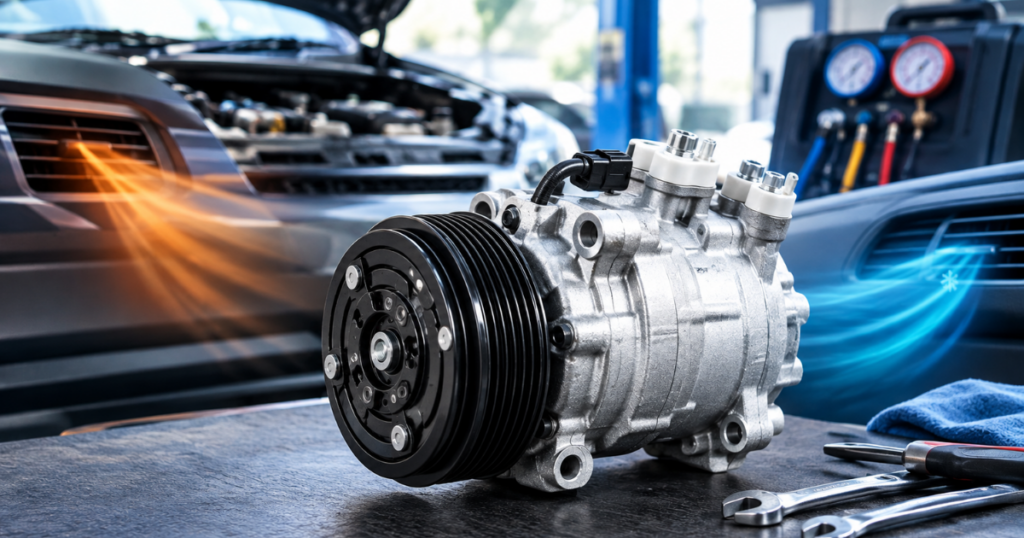
A car aircon compressor that is not working can leave your vehicle blowing warm or weakly cooled air, but the compressor itself may not always be the cause. Electrical faults, low refrigerant, a damaged belt, pressure issues or a faulty clutch can produce similar symptoms.
This guide explains the common signs of a compressor problem, how to check the possible causes, when the compressor actually needs replacement, and what should be done after replacement. The aim is to help identify the right solution before replacing an expensive component unnecessarily.
What Does a Car Aircon Compressor Do?
The compressor circulates refrigerant through the air-conditioning system so heat can be removed from the vehicle cabin. When it operates correctly, refrigerant moves through the system and allows the aircon to produce cool air.
If the compressor stops operating, cooling performance can drop significantly. However, because several components control compressor operation, the exact cause should be checked before assuming that the compressor has failed.
What Are the Signs of a Car Aircon Compressor Problem?
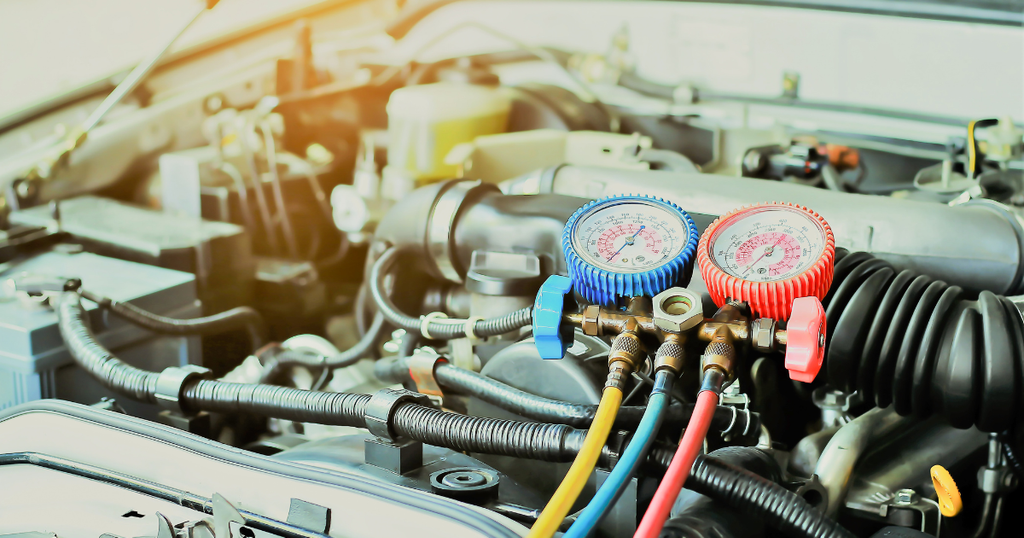
Problem: The most common signs include warm air, a compressor that does not engage, unusual noises or cooling that works only intermittently. These symptoms can happen when the compressor itself has a fault or when another part of the aircon system prevents it from operating.
Solution: Check the symptoms together rather than relying on one sign alone. For example, warm air combined with a compressor that does not engage requires different checks from unusual grinding or rattling noises, which may indicate mechanical damage.
How Can You Diagnose a Car Aircon Compressor That Is Not Working?
Problem: If the compressor does not engage, the fault could come from the clutch, drive belt, fuse, relay, electrical connection, refrigerant pressure or pressure sensor. Replacing the compressor without checking these areas can result in an unnecessary repair.
Solution: Start by checking whether the clutch engages and whether the drive belt is operating correctly. Then check the fuse, relay and electrical connections, followed by refrigerant pressure and the pressure sensor. These checks help determine whether the actual problem is electrical, pressure-related or mechanical.
If the system needs a complete professional inspection, a Car Aircon Service Package can help identify the underlying fault before major components are replaced.
When Is the Car Aircon Compressor Actually Faulty?
Problem: A compressor is more likely to be faulty when it receives the required electrical signal but still does not operate. A failed clutch, seized compressor or serious internal mechanical damage can prevent normal operation even when the supporting components are working correctly.
Solution: Confirm the compressor fault through proper testing before replacement. If internal damage has occurred, the system may also contain contaminated oil or debris, meaning related components may need inspection to prevent the replacement compressor from being affected.
What Happens When the Compressor Needs Replacement?
Problem: Replacing a failed compressor involves more than removing the old unit and installing a new one. Refrigerant, compressor oil, seals and other connected components all need to be considered during the repair.
Solution: The refrigerant should be recovered before removing the compressor, followed by installation of the replacement unit. The technician should check the correct oil specification, O-rings and drive belt, while also inspecting related components such as the drier and expansion valve.
Why Are Vacuum, Leak Testing and Refrigerant Recharge Important?
Problem: After compressor replacement or other major aircon repairs, air and moisture can remain inside the system, while leaks can cause refrigerant to escape. Simply recharging the system without checking these issues may only provide temporary cooling.
Solution: The system should be properly vacuumed to remove unwanted air and moisture, followed by leak testing. Once the system is confirmed to be sealed correctly, it can be recharged with the correct refrigerant type and specified amount.
How Can You Prevent Car Aircon Compressor Problems?
Problem: Small aircon problems such as weak cooling, refrigerant leaks or unusual compressor noises can become more serious when ignored. Continued operation with an underlying fault may put additional stress on the compressor and other components.
Solution: Have changes in cooling performance checked early and maintain the aircon system regularly. Addressing refrigerant leaks and unusual noises promptly can help identify problems before they develop into larger compressor or aircon-system failures.
What Should You Do If Your Car Aircon Compressor Stops Working?
A car aircon compressor not working does not automatically mean that the compressor needs to be replaced. The clutch, belt, electrical system, refrigerant pressure and pressure sensor should first be checked to identify the actual cause.
Once the fault has been confirmed, the correct repair can be carried out, followed by vacuum testing, leak testing and refrigerant recharge where required. The best solution is to diagnose the cause first and replace the compressor only when testing confirms that it has failed.