
Between scheduled visits to the workshop, do you ever feel a sense of uncertainty about your car’s condition? In Singapore’s demanding climate of constant heat and humidity, it’s natural to worry about small issues turning into costly repairs or an unexpected breakdown. This is where a proactive approach to basic car maintenance becomes your most powerful tool for ensuring safety and reliability on the road.
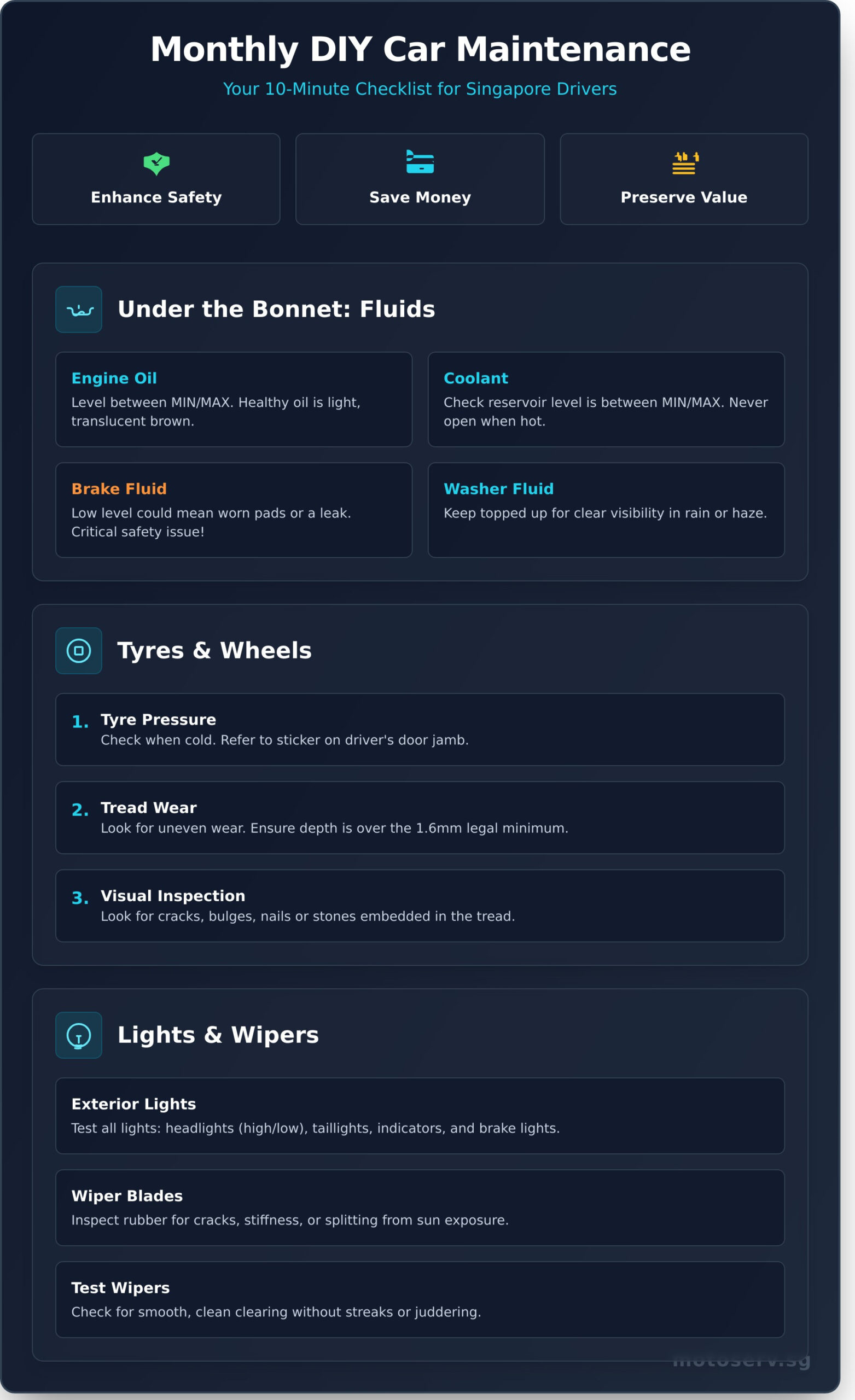
This guide is designed to give you that confidence. We’ve created a simple, professional checklist of essential inspections you can easily perform yourself. By following these steps, you can catch minor problems before they escalate, saving you from expensive workshop bills and giving you valuable peace of mind. You will not only help extend the lifespan and resale value of your vehicle but also learn to recognise the clear signs that indicate it’s time to entrust your car to a certified professional.
Why This Checklist is Crucial for Singapore Drivers
Your car’s owner’s manual provides a solid baseline for care, but it is often a generic guide. Driving in Singapore presents unique challenges that demand a more tailored approach to car maintenance. The combination of our tropical climate and dense urban environment means your vehicle experiences wear and tear differently than in other parts of the world.
The relentless heat and high humidity can accelerate the breakdown of rubber components like belts, hoses, and wiper blades. Your battery and air-conditioning system also work harder, requiring more frequent checks. Furthermore, sudden, heavy downpours make road safety heavily reliant on well-maintained tyres and a clear windscreen.
Compounding this is the nature of city driving. Constant stop-start traffic places significant stress on your brakes, transmission, and engine, often leading to premature wear if not monitored closely. This checklist is designed specifically to address these local conditions, helping you stay ahead of potential issues.
The Benefits of Proactive Maintenance
Regularly checking on your vehicle’s health offers significant advantages that go beyond just keeping it running. By being proactive, you can:
- Enhance Safety: Spot potential hazards like low tyre pressure, worn-out brake pads, or failing wipers before they become critical on the road.
- Save Money: Addressing small issues, such as a minor fluid leak, can prevent them from escalating into major, costly repairs that require extensive workshop time.
- Preserve Resale Value: A vehicle with a consistent and proven maintenance history is far more attractive to potential buyers and can command a higher price.
Maintenance vs. Servicing: What’s the Difference?
It’s important to understand the two key aspects of vehicle care. This checklist focuses on maintenance—the routine, simple checks you can perform yourself to monitor your car’s condition. This includes a range of common vehicle maintenance tasks like checking fluid levels and inspecting tyres.
Servicing, on the other hand, is the in-depth work performed by experienced mechanics at scheduled intervals. This involves specialised tools and expert knowledge to replace parts like engine oil and filters, conduct diagnostic tests, and perform complex repairs. This guide empowers you to bridge the gap, ensuring your car gets the attention it needs between professional servicing appointments.
Your Monthly DIY Car Maintenance Checklist
While our experienced mechanics handle the complex tasks, performing your own monthly visual checks is a simple yet powerful way to ensure your vehicle’s reliability and your safety on the road. This proactive approach to car maintenance takes just 10 minutes and requires no special tools—only your eyes and ears. These checks form the foundation of a reliable vehicle care strategy, complementing the more detailed timelines in a professional Car Care Council service schedule. We recommend creating a simple routine, such as the first Sunday of every month, to make it a consistent habit.
Under the Bonnet: Fluid Levels
Your car’s fluids are its lifeblood, and keeping them at the correct levels is critical for performance and longevity. A quick look under the bonnet can help you spot potential issues before they become serious problems.
- Engine Oil: With the engine cool, pull out the dipstick, wipe it clean, reinsert it fully, and pull it out again. The oil level should be between the ‘Min’ and ‘Max’ marks. Healthy oil is typically a light, translucent brown.
- Coolant: Check the level in the transparent reservoir. It should be between the minimum and maximum lines. Never open the radiator cap when the engine is hot.
- Brake Fluid: The brake fluid reservoir is also usually transparent. If the level is low, it could indicate worn brake pads or a leak—a serious safety issue that requires immediate professional diagnosis.
- Windscreen Washer Fluid: Keep this topped up for clear visibility, which is essential during Singapore’s sudden downpours or hazy conditions.
Tyres and Wheels: Your Connection to the Road
Your tyres are the only part of your vehicle in direct contact with the road. Their condition is paramount for safe braking, handling, and overall driving stability. This simple inspection is a non-negotiable part of your monthly car maintenance.
- Tyre Pressure: Use a reliable pressure gauge to check the pressure when the tyres are cold. The correct pressure for your vehicle is listed on a sticker inside the driver’s door jamb.
- Tread Wear: Look for uneven wear patterns, which can signal an alignment issue. Ensure the tread depth is above the legal minimum of 1.6mm in Singapore.
- Visual Inspection: Carefully look over each tyre for cracks, bulges on the sidewall, or any objects like nails or stones embedded in the tread.
Lights and Wipers: See and Be Seen
Properly functioning lights and wipers are crucial for your safety and the safety of others. This quick check ensures you can see the road clearly and that other drivers can see you, day or night.
- All Exterior Lights: Turn on your car and test all lights: headlights (both high and low beams), taillights, indicators, and brake lights. You can ask a friend to help or use reflections in a window.
- Wiper Blades: Inspect the rubber blades for signs of perishing, such as cracks, stiffness, or splitting from sun exposure.
- Test Wipers: Activate your windscreen washers and check that the wipers clear the glass smoothly and effectively, without leaving streaks or making juddering noises.
Quarterly and Bi-Annual Checks: A Deeper Look
Beyond the basic monthly overview, a more thorough inspection every three to six months is vital for the long-term health of your vehicle. These checks are slightly more involved but provide an essential opportunity to spot developing issues before they become serious problems. Proactive car maintenance saves you money and ensures your safety on the road. We recommend keeping a simple log of any changes or concerns you notice, so you can discuss them with our professional mechanics during your next scheduled service.
Battery and Terminals
Your car’s battery is its heart, and keeping it in good condition is crucial. A quick visual inspection can prevent you from being stranded with a car that won’t start. Here’s what to look for:
- Visual Check: Look for a white, blue, or greenish powdery substance (corrosion) on the battery terminals. This build-up can interfere with the electrical connection.
- Secure Connections: Gently try to wiggle the battery cables. They should be tight and secure. Loose connections can disrupt power flow and prevent your car from starting.
- Warning Signs: Pay attention to how your car starts. If the engine cranks more slowly than usual, it’s a strong signal that the battery is weakening and may need professional testing.
Air Filters Inspection
Your vehicle relies on two key air filters to run efficiently and keep its cabin air clean. A clogged filter can negatively impact performance and comfort. The engine air filter prevents dust, leaves, and other debris from entering the engine, while the cabin air filter purifies the air you breathe inside the car. A dirty cabin filter can lead to poor aircon performance and unpleasant odours. While you can visually check these, replacement is best left to a professional workshop to ensure the correct parts are fitted properly.
Brakes and Belts
Your brakes and engine belts are critical safety components that require regular attention. A comprehensive car maintenance guide will always highlight the importance of listening to your vehicle for clues about its condition. Be mindful of the following:
- Listen for Noises: Any high-pitched squealing or harsh grinding sounds when you apply the brakes are immediate red flags. These noises often indicate that your brake pads are worn out.
- Visual Belt Check: Look at the visible engine belts for any signs of cracking, fraying, or glazing. A snapped belt can cause significant engine damage and an immediate breakdown.
- Parking Brake Test: On a safe, gentle incline and with no traffic, engage your parking brake firmly. It should hold the car securely in place without any rolling.
Red Flags: When to Stop and Call a Professional
While a basic checklist is a great starting point for routine car maintenance, it is not a substitute for the diagnostic tools and experience of a professional mechanic. Ignoring your car’s warning signs can compromise your safety on the road and lead to far more costly damage down the line. If you notice any of the following red flags, it’s a clear signal to book an appointment with a trusted workshop. Always trust your instincts; if something feels, sounds, or smells wrong, it’s best to have it professionally checked.
Warning Lights on Your Dashboard
Your dashboard is your car’s primary communication system, designed to alert you to potential issues before they become critical failures. Pay immediate attention to:
- Check Engine Light: Whether solid or flashing, this light indicates a problem with the engine or emissions system. A flashing light signifies a severe issue that requires you to stop driving as soon as it is safe to do so.
- Oil Pressure Light: If this light illuminates, pull over and turn off the engine immediately. Driving with low oil pressure can cause catastrophic engine damage within minutes.
- Brake System Warning Light: This indicates a serious problem with your braking system, such as low brake fluid or a hydraulic system failure. This is a critical safety warning that should never be ignored.
Unusual Noises and Smells
Your senses are powerful tools for detecting problems. Any sudden change in the sounds or smells of your car warrants a professional inspection. Be alert for:
- Sounds: Grinding or squealing noises often point to worn brake pads. Hissing could signal a vacuum or fluid leak, while loud knocking from the engine is a sign of a serious internal problem.
- Smells: The scent of burning rubber or oil could mean a leak onto a hot engine part. A sweet, syrupy smell often indicates a coolant leak, which can lead to overheating.
- Vibrations: Unusual shaking through the steering wheel, pedals, or your seat can be caused by issues with your tyres, suspension, or engine mounts.
Performance and Handling Issues
A decline in your car’s performance is a clear sign that a component is failing. Watch out for:
- Difficulty starting, reduced engine power, or a sudden drop in fuel economy.
- The vehicle pulling to one side while driving or braking, suggesting alignment or brake problems.
- Puddles of black, green, or pink fluid under your car, which are clear signs of an oil, coolant, or transmission fluid leak.
Noticed a red flag? Don’t wait for a small issue to become a major repair. Let our expert mechanics diagnose the issue. Entrust your vehicle to our certified professionals for quality you can count on.
Why Trust Motoserv for Your Professional Servicing?
While regular visual checks are a crucial part of responsible ownership, professional car maintenance requires a deeper level of expertise and technology. At Motoserv, we see ourselves as your partner in preserving your vehicle’s health. We go beyond what a simple check can reveal, using advanced diagnostic tools to identify underlying issues before they become costly problems. Our experienced mechanics are trained to service all makes and models with precision and care. Most importantly, we believe in building relationships through honesty, providing transparent advice and clear, upfront pricing for every job.
Our Commitment to Quality and Trust
Entrust your vehicle with a workshop that prioritises your peace of mind. Our dedication to quality is demonstrated through our industry-leading credentials and standards, ensuring every service meets the highest benchmarks of safety and reliability.
- CASETRUST Accredited: We are committed to fair and transparent business practices, giving you confidence in every transaction.
- IMI (UK) Certified Mechanics: Your car is handled exclusively by qualified experts who are certified to international standards.
- Genuine and OEM Parts: We use only genuine or high-quality OEM (Original Equipment Manufacturer) parts to guarantee performance and longevity.
Convenience Across Singapore
We understand that your time is valuable. That’s why we’ve built a network of workshops across the island, ensuring that expert car care is always near you. Our teams are equipped to service a wide range of vehicles, including Japanese, Continental, hybrid, and electric models. When you’re ready, you can easily book your appointment online at any of our convenient locations and experience the Motoserv difference.
Drive with Confidence: Your Next Steps in Car Care
Mastering this basic checklist is a powerful step towards responsible vehicle ownership in Singapore. Consistent monthly checks empower you to catch small issues before they become major problems, while understanding the critical red flags ensures you know exactly when to seek professional help. Proactive car maintenance isn’t just a task; it’s a commitment to your safety, your vehicle’s longevity, and your peace of mind on the road.
While DIY care is essential, the expertise of a certified professional is irreplaceable for complex diagnostics and comprehensive servicing. For quality you can count on, entrust your vehicle to Motoserv. As a CASETRUST Accredited workshop, we are committed to fair and transparent practices. Our team of IMI (UK) Certified Mechanics uses their expert knowledge to keep your car running smoothly, with convenient island-wide locations to serve you better.
Don’t leave your car’s health to chance. Entrust your car to the experts and book your next professional car servicing with Motoserv today. Drive confidently, knowing your vehicle is in the best possible hands.
Frequently Asked Questions About Car Maintenance
How is this car maintenance checklist different from a professional car servicing?
A basic car maintenance checklist involves visual inspections you can perform yourself, like checking fluid levels, tyre pressure, and lights. It helps you monitor your car’s health between professional visits. Professional car servicing, however, is a comprehensive procedure performed by our certified mechanics using specialised equipment. It includes essential tasks like oil changes, filter replacements, and in-depth diagnostics that go beyond a simple visual check, ensuring your vehicle runs safely and efficiently.
Can I perform my own oil change in Singapore?
While legally permissible, changing your own oil in Singapore presents significant challenges. HDB and URA regulations generally prohibit such work in their car parks due to the risk of environmental contamination from oil spills. You must also ensure the proper, legal disposal of used engine oil. For a hassle-free and environmentally responsible solution that guarantees quality, it is always best to entrust this task to a professional workshop like ours.
What basic tools should I keep in my car for maintenance?
For basic checks and minor roadside emergencies, every car should have a small toolkit. This should include a reliable tyre pressure gauge, a set of screwdrivers, pliers, and an adjustable wrench. It is also wise to include a torchlight and work gloves. Crucially, you must have the jack and lug wrench that came with your vehicle, which are essential for changing a spare tyre. These tools will help you handle simple situations and stay prepared.
How does Singapore’s constant hot weather affect my car’s battery life?
Singapore’s high heat and humidity significantly accelerate the chemical reactions inside your car’s battery, causing it to degrade much faster. This heat can lead to fluid evaporation and internal damage, reducing its overall lifespan from an average of 3-5 years to as little as 2 years in some cases. Regular battery checks during your professional servicing are crucial to prevent an unexpected and inconvenient breakdown. Our experts can advise on its health.
Is it really cheaper to maintain my car myself, or does it create more risk?
While DIY work might seem cheaper by saving on labour costs, it carries significant risks that can lead to more expensive repairs. Using the wrong fluid, over-tightening a component, or misdiagnosing a problem can cause serious damage. Our professional mechanics have the correct tools, genuine parts, and certified expertise to perform the job correctly and safely. Entrusting your vehicle to a reliable workshop ensures quality, preserves its resale value, and provides complete peace of mind.
What should I do if I find a low fluid level during my check?
If you notice a low fluid level, the correct action depends on the fluid. For windscreen washer fluid, you can safely top it up yourself. For critical fluids like engine oil or coolant, you can top it up with the manufacturer-recommended product if you are certain it is the correct one. However, a recurring or significant drop in these levels often indicates a leak, which requires immediate professional diagnosis by our mechanics to ensure your safety on the road.