A vacuum or intake leak happens when unmeasured air slips into the engine through a cracked hose, loose joint or worn seal. That extra air can upset the air-fuel mixture and may cause rough idling, hesitation, a hissing noise or a check-engine light. Several other faults cause similar symptoms, so a proper inspection is the sensible next step.
In Singapore’s stop-go traffic, your car spends a lot of time idling, so an uneven idle is often the first thing owners notice. It is also one of the symptoms linked to intake leaks. This guide explains in plain language what an intake or vacuum leak is, what it can and can’t explain, and what a sensible next step looks like. It applies to cars with a combustion engine, including hybrids. Fully electric cars have no engine intake.
What is an intake or vacuum leak?
Your engine breathes air through a sealed path: the air filter box, the ducting that follows it, the throttle body (the valve that controls how much air gets in) and the intake manifold, which delivers air to the cylinders. A sensor on the way in measures how much air is passing, and the engine computer adds a matching amount of fuel.
An intake leak, often called a vacuum leak, is an opening somewhere after that measurement point that lets extra air in. It is called a vacuum leak because, while the engine runs, the space behind the throttle is at lower pressure than the air outside, so air is pulled in through any gap. Think of drinking through a straw with a small hole in it: some of what you draw in is not coming through the route you intended.
Why does air entering through an unintended opening affect the engine?
Because the engine runs best when air and fuel are balanced. Petrol engines aim for roughly 14.7 parts of air to 1 part of fuel. If extra air sneaks in after the sensor, the computer does not know about it, so the mixture becomes lean: too much air for the fuel being delivered.
The computer usually tries to compensate by adding more fuel. When it reaches the limit of what it can correct, it may store a lean fault code and switch on the check-engine light. At idle the engine draws very little air in total, so the same small leak makes up a larger share of it. That is one reason leak-related symptoms are often most noticeable when the car is idling.
Vacuum leak symptoms: what car owners may notice
These are the typical symptoms of a vacuum leak, and the intake leak symptoms drivers most often report. None of them proves a leak on its own. Each can have other causes, which is why they justify an inspection rather than a conclusion.
- Rough idling – the engine shakes, hunts or feels unsteady when stopped.
- Engine hesitation and poor acceleration – a slow or flat response when you press the pedal.
- A hissing or whistling noise from the engine – often easier to hear at idle.
- Engine stalling – the engine dies when you stop or pull away.
- A high idle speed – revs staying higher than usual.
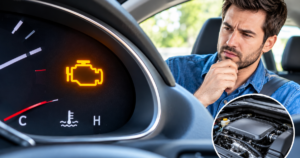
- Check-engine light – sometimes with lean fault codes such as P0171 or P0174.
- Higher fuel consumption – you refuel more often than usual.
Can a vacuum leak cause rough idling?
Yes, it can. Unmeasured air can make the mixture lean, and a lean mixture can make the idle uneven. But rough idling is also caused by things such as worn spark plugs, ignition problems, dirty throttle components or fuel delivery faults. If your car idles roughly, see our guide on why a car shakes at idle for the wider list of causes.
Can an intake leak cause high fuel consumption?
It can contribute, but it is rarely the only suspect. A leak may push the engine to run lean and the computer to compensate, which can affect fuel use in some cases. Many everyday factors matter just as much.
Symptoms of high fuel consumption: what to check first
Signs of high fuel consumption include refuelling more often, an average on the trip computer that keeps climbing, or a fuel gauge that falls faster than before. Before assuming an engine fault, check the simple things: tyre pressure, extra load in the boot, heavy aircon use, more stop-go driving than usual, and how long it has been since the last service. If consumption is still high and you also notice rough idling, hesitation or a warning light, it is reasonable to have the car inspected.
Where do intake and vacuum leaks usually happen?
Leaks tend to appear at rubber, plastic and joint points that age or loosen over time. Common areas include:
- Aged or cracked hoses. Rubber hardens and splits with age and heat.
- Intake ducting. The large pipe or flexible boot between the airflow sensor and the throttle body can crack or come loose at its clamp.
- PCV hoses and connections. The positive crankcase ventilation (PCV) system uses small hoses that can harden, split or disconnect.
- Intake manifold and throttle-body seals. Gaskets and O-rings at these joints can wear out.
The exact parts and their locations vary by vehicle, and turbocharged engines have additional pipework. That is why a technician works from your car’s own layout rather than a generic list.
Does P0171 always mean a vacuum leak?
No. A lean code is a clue, not a diagnosis. P0171 means the engine is running lean on bank 1, and P0174 is the same condition on bank 2, which applies to engines that have two banks of cylinders. A vacuum leak is a common cause, but the same codes can be set by other faults, including:
- an airflow (MAF) sensor that under-reports how much air is coming in, for example because it is dirty or failing;
- fuel delivery problems such as a clogged fuel filter or a weak fuel pump;
- clogged or dirty fuel injectors;
- other leaks, such as a faulty PCV hose or a leaking EGR valve.
Because the possible causes overlap, replacing parts based only on a code can waste money and leave the real problem in place. The list above is general. RepairPal’s P0171 and P0174 overview covers the same causes in more detail.
How a workshop investigates a suspected intake leak
A typical investigation moves from simple to specific:
- Talk through the symptoms – when they happen, which lights appeared, what work was done recently.
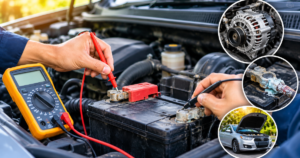
- Read the scan-tool information – stored fault codes and engine data show how the engine computer is reacting.
- Check visually – hoses, ducting, PCV connections and seals are checked for cracks, splits and loose fittings.
- Test further where suitable – for example, a smoke test.
In a smoke test, a technician seals the intake and introduces visible, low-pressure smoke into it, then watches for smoke escaping at the leak. It is done with the engine off and the system tested under controlled conditions, not while the engine is running. Trade guidance such as VehicleServicePros’ smoke machine guide describes the engine-off approach. Whether a smoke test is suitable depends on the car and on what the earlier steps show. Motoserv offers smoke leak testing at selected outlets.
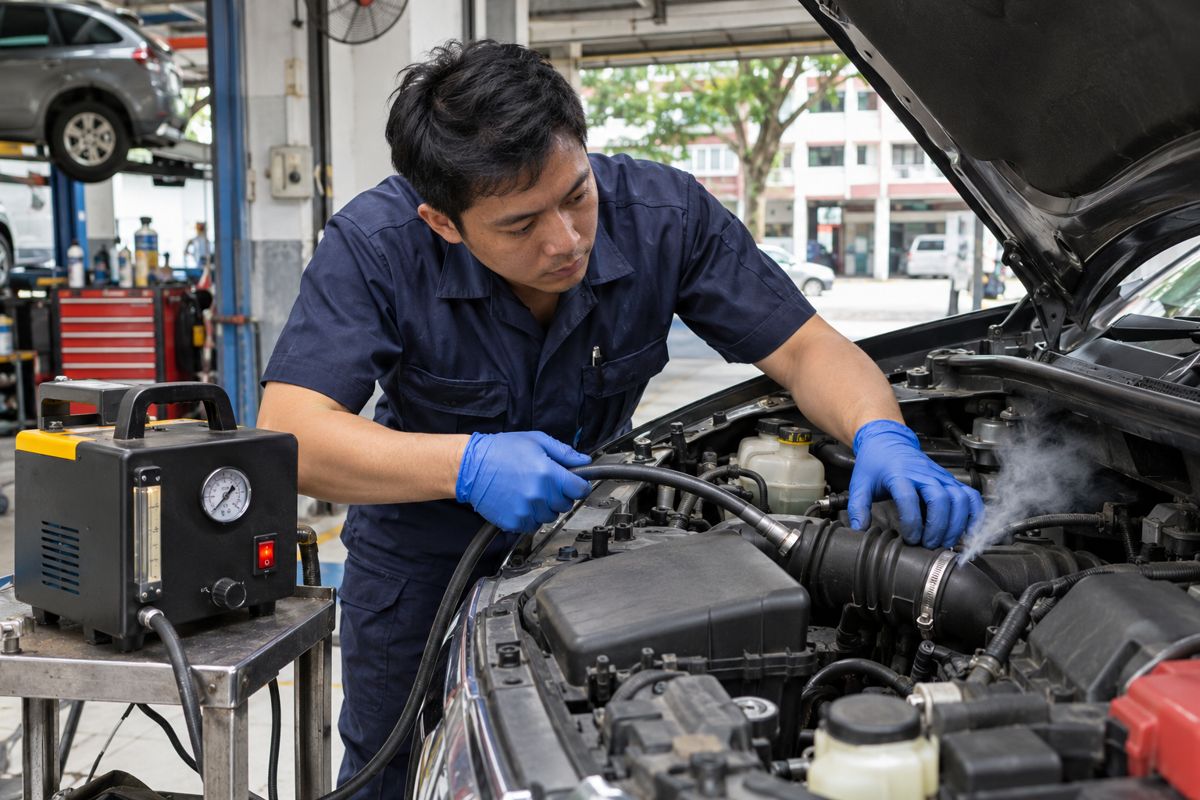
If you would like a technician to look at your car, see our engine intake and vacuum leak diagnosis service.
Why spraying flammable cleaners around a running engine isn’t a good DIY shortcut
Some online videos suggest spraying a flammable product around a running engine and listening for a change in engine speed. We don’t recommend it. An engine bay has hot exhaust parts, electrical components and moving belts and fans, so there is a real fire and injury risk. Sprays can also damage rubber, plastic and sensors, and a change in engine speed does not tell you whether a lean code comes from a leak or from something else. The result can look convincing and still point you in the wrong direction.
What should you do next?
- Note the symptoms. When do they happen: cold start, idling at a junction, accelerating, after refuelling?
- Note the warning lights. Is the check-engine light steady or flashing? A photo of the dashboard helps.
- Mention recent work, such as a service, a battery change or a repair under the bonnet.
- Avoid guessing. Don’t replace parts based only on a code, and try not to clear the codes yourself before the inspection, since stored information can help the technician.
- Arrange a professional inspection.
Is it safe to keep driving with a suspected vacuum leak?
Get the car inspected promptly. If it is running normally apart from a steady warning light or mild symptoms, a short drive to a workshop may be reasonable.
Stop safely and seek assistance if: the engine stalls repeatedly, runs extremely roughly, loses significant power, or the check-engine light is flashing. Don’t keep driving in these situations. Our guide to when to stop driving with the check-engine light on explains steady versus flashing lights.
Frequently asked questions
Can a vacuum leak cause rough idling or high fuel consumption?
It can contribute to both, because extra unmeasured air can upset the air-fuel mixture. But worn spark plugs, dirty sensors, fuel delivery faults, tyre pressure and driving conditions can cause the same symptoms, so diagnosis is needed rather than assuming a leak.
Is a hissing noise from the engine always a vacuum leak?
No. A hiss can come from an intake leak, but also from other sources in the engine bay, such as a leaking pressure or cooling system component. A technician can trace the actual source.
Will repairing a leak turn off my check-engine light?
Not necessarily. If a leak was the cause, fixing it may allow the light to go out once the system has been re-checked, but there is no guarantee, as other faults can contribute to the same code. Repairs also don’t always change fuel consumption.
Can I fix a vacuum leak myself?
Some causes are simple, such as a hose that has come loose, but finding the real source is the hard part and the possible causes overlap with other faults. We recommend a professional inspection instead of replacing parts by guesswork.
What is the difference between a check-engine light inspection and a vacuum leak diagnosis?
A check-engine inspection starts with reading the fault codes to see what the engine computer has flagged. A vacuum leak diagnosis goes on to check whether unmeasured air is entering the intake, which is one possible reason behind lean codes and idling symptoms.
Get your car checked by Motoserv
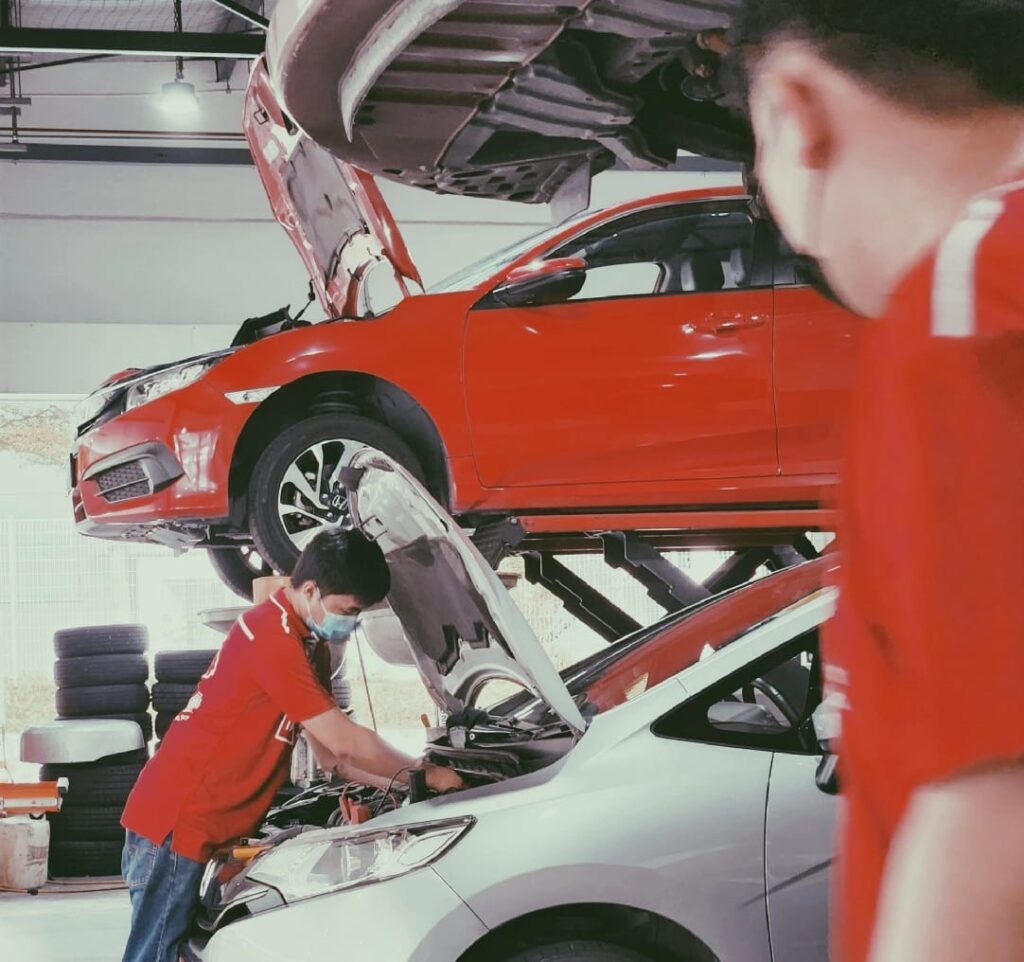
If your car is idling roughly, hissing, hesitating or showing a lean code, our vacuum leak diagnosis in Singapore is a sensible next step. It is offered at selected Motoserv outlets, so please WhatsApp or call us first and we will confirm which outlet can help.
Or call +65 6264 3832 · Contact Motoserv
Sources and further reading
- RepairPal – P0171 and P0174 (system too lean, bank 1 and bank 2)
- VehicleServicePros – Maximizing your smoke machine
This article is general information and not a diagnosis of your vehicle. Always have a qualified technician inspect your car.